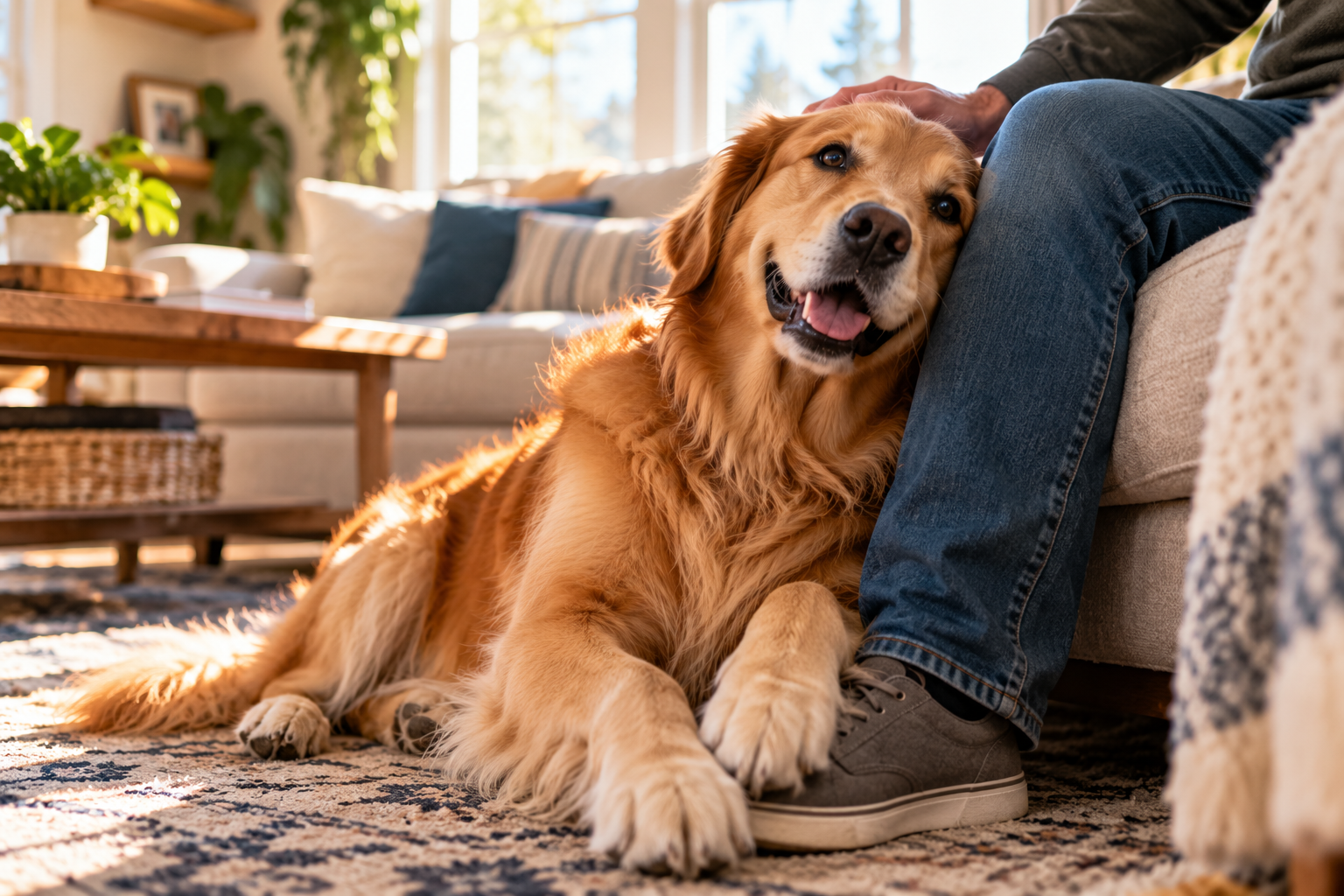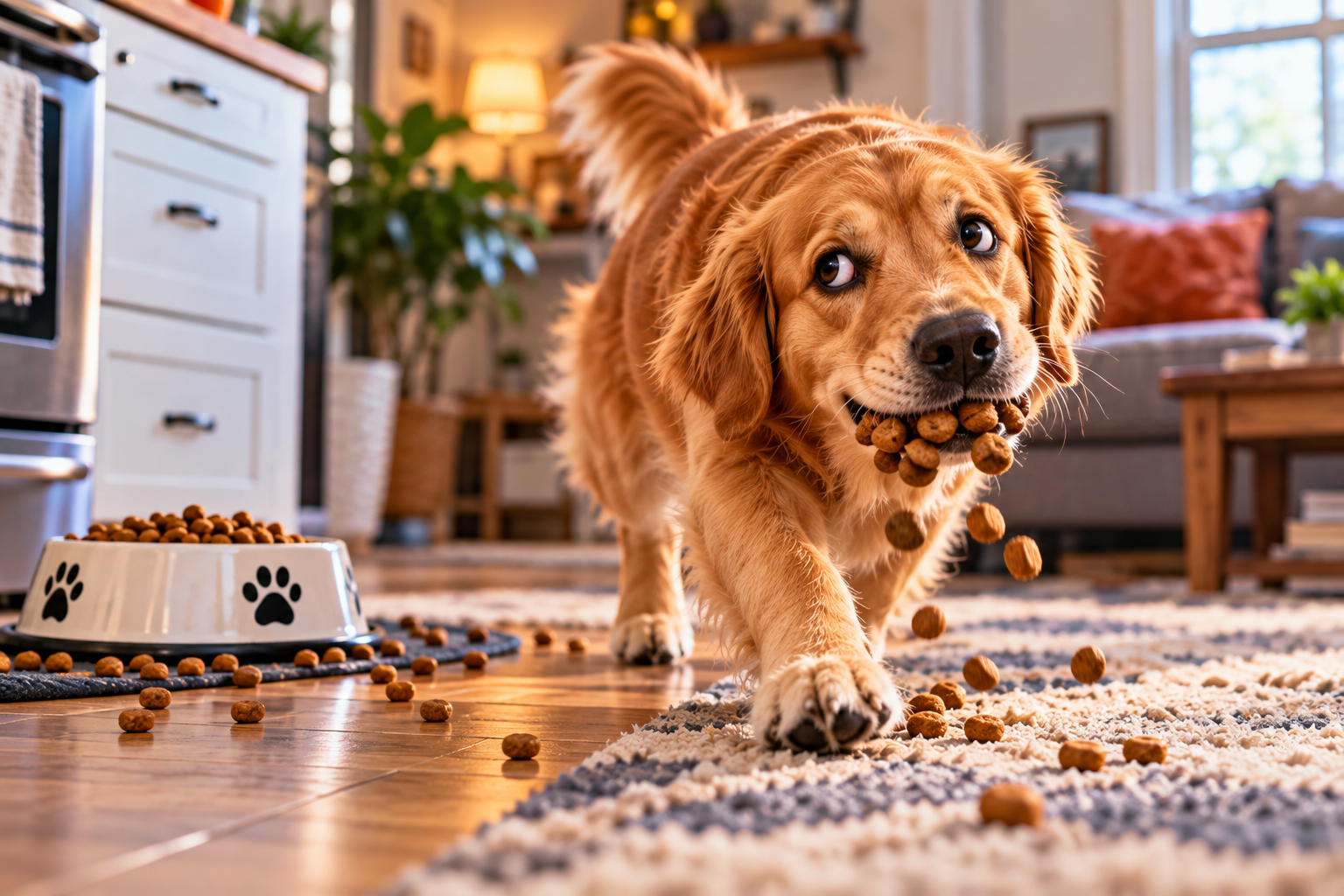
Your dog has a perfectly good food bowl.
It's clean. It's filled with their favorite kibble. You even bought one of those fancy non-slip mats to keep everything tidy.
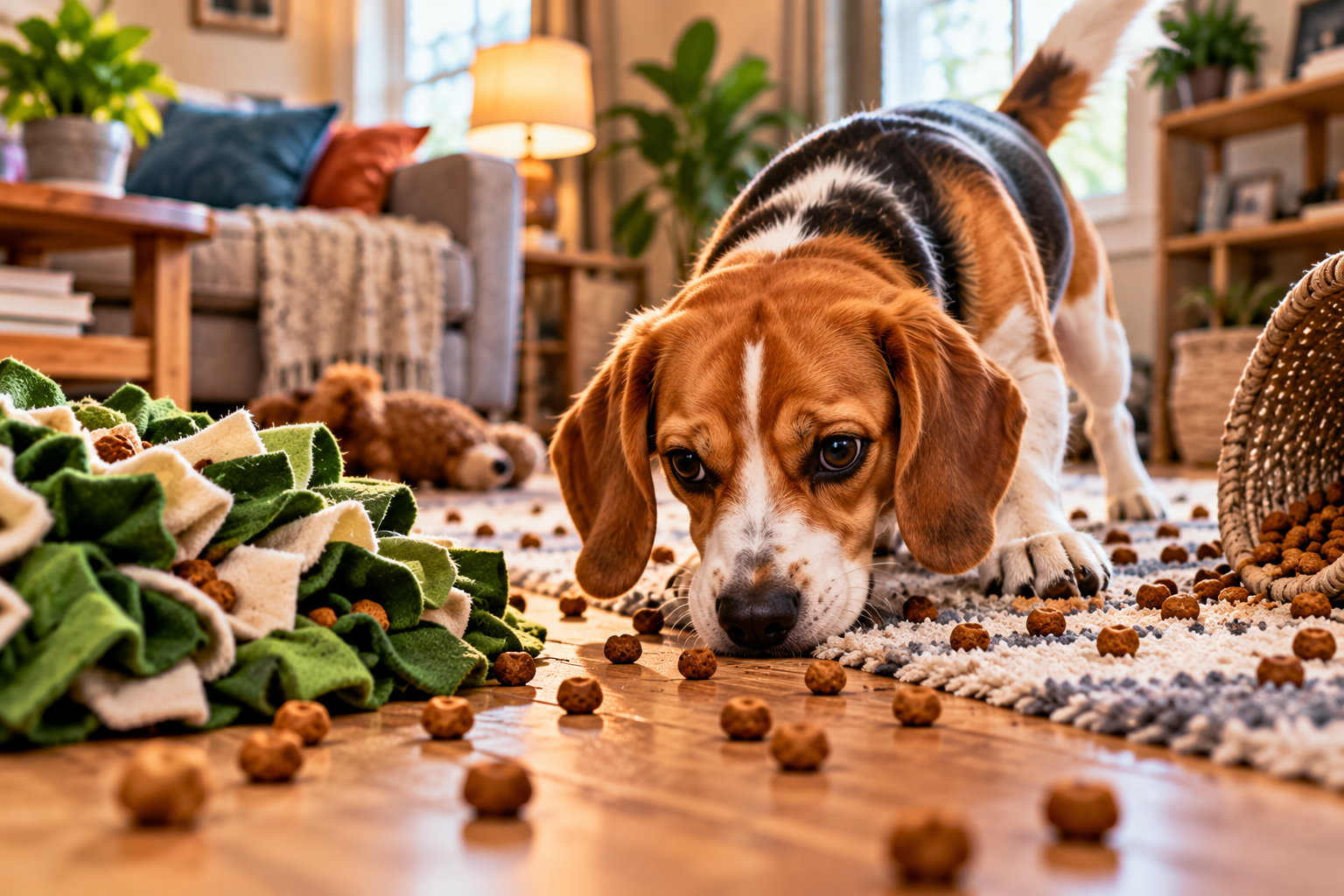
And yet, every single day, your dog grabs a mouthful of food, walks across the kitchen, and deposits it directly onto your living room carpet.
Apparently, the dining room isn't up to their standards.
If you've ever wondered why your dog takes food out of their bowl to eat somewhere else, you're not alone.
The short answer: Dogs may carry food away from their bowls because they prefer another eating surface, dislike the bowl's noise or shape, want a quieter location, or have developed a comfortable routine. Sometimes, competition with other pets or physical discomfort plays a role.
Let's investigate the mystery of the traveling kibble.
1. Your Dog Might Prefer a Different Dining Location
Imagine sitting down at a restaurant where people constantly walk past your table, someone keeps bumping your chair, and there's a television blaring nearby.
You might want to move your dinner, too.
Some dogs prefer eating in quiet, familiar locations where they aren't constantly interrupted.
If your dog's bowl sits in a busy kitchen, they may carry food to a quieter room where they feel more comfortable.
Other dogs seem to prefer eating closer to their favorite people.
What to try: Move your dog's bowl to a quiet, low-traffic area. Give them space during meals and observe whether the behavior changes.
If your dog seems tense or uncomfortable during meals, learning to recognize their body language can help.
This article explains the subtle signals dogs use to communicate discomfort, including behaviors owners sometimes overlook.
2. Your Dog Might Hate the Sound of Their Food Bowl
Here's something many dog owners never consider.
Your dog's food bowl might be making an annoying noise.
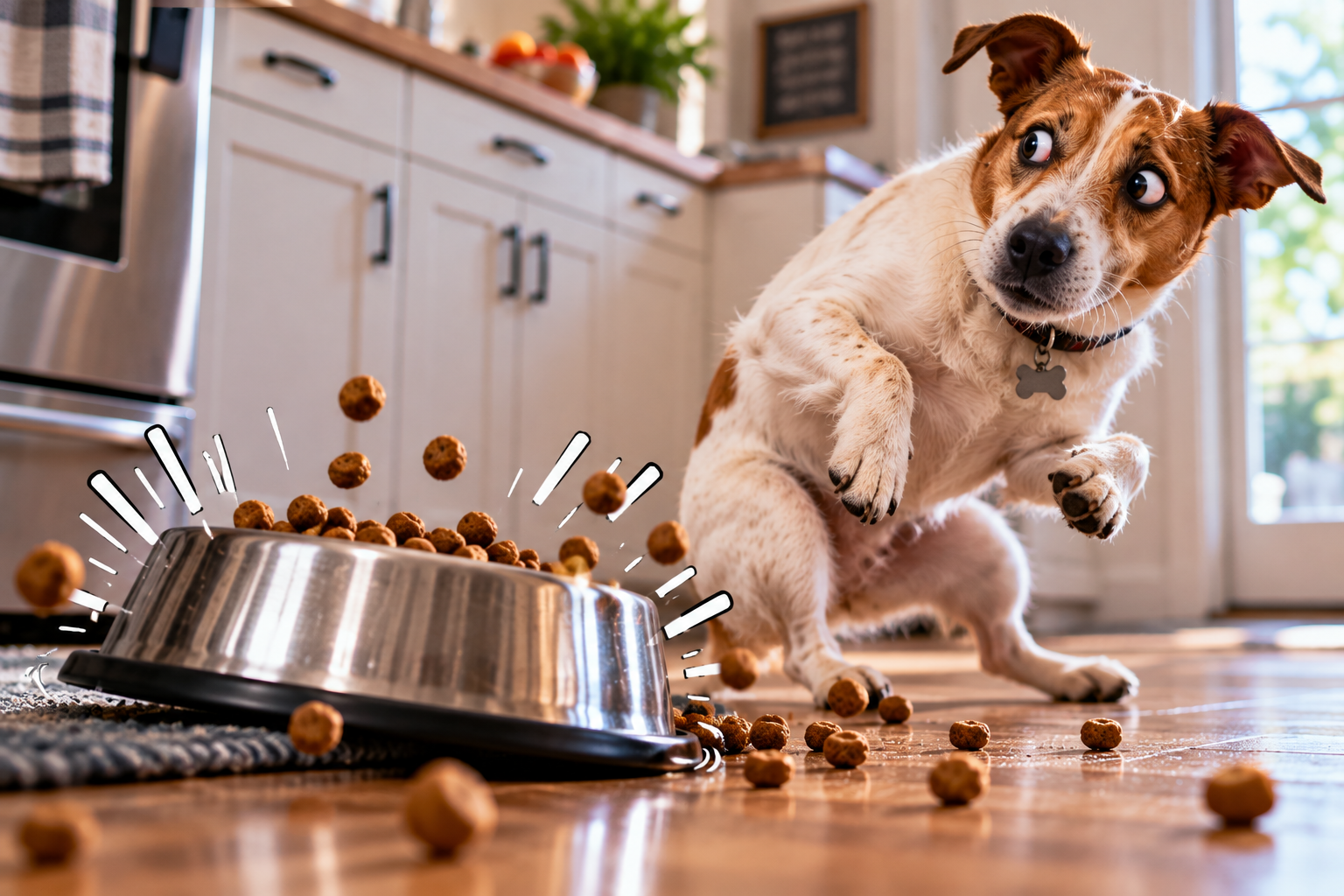
Metal bowls can scrape across tile, rattle against nearby objects, or make unexpected sounds when collar tags strike the rim.
Some dogs are more sensitive to these sounds than others.
Imagine trying to enjoy dinner while someone repeatedly bangs a spoon against your plate.
Not exactly relaxing.
Signs your dog's bowl might be bothering them
They approach the bowl cautiously.
They grab food quickly and move away.
They startle when the bowl shifts or rattles.
They eat more comfortably from a different dish.
Try placing the bowl on a non-slip mat or experimenting with a stable bowl made from another material.
If collar tags are striking the bowl, consider removing the collar during supervised meals in a secure environment.
And if your dog seems particularly sensitive to unexpected sounds, that behavior may extend beyond mealtime.
Related reading: Are Halloween Sound Effects Scaring Your Dog? 7 Ways to Help
Although this article focuses on Halloween, its guidance on recognizing sound sensitivity and helping dogs feel comfortable can be useful year-round.
3. Your Dog Might Feel Safer Eating Away From Other Pets
Does your household have multiple dogs?
Or perhaps a cat who believes every food bowl in the house belongs to them?
Some dogs move food away from their bowls because they don't feel comfortable eating near other animals.
Even when pets aren't openly fighting, another animal hovering nearby can create tension.
Your dog might grab a mouthful of kibble and retreat to a quieter location where they can eat without being disturbed.
What to watch for
Pay attention to stiff body posture, freezing, staring, growling, hurried eating, or guarding behavior around food.
These signals can suggest that mealtime has become stressful.
What to try: Feed pets separately in quiet areas, ideally where they cannot approach one another's bowls.
Don't punish growling or force dogs to share food. If food guarding becomes a concern, consult a qualified reward-based behavior professional.
Related reading: What Your Dog's Tail Is Really Telling You
A wagging tail doesn't always mean a dog is relaxed. Understanding the whole body can help you recognize tension before a situation escalates.
4. Your Dog Might Simply Prefer Eating on the Carpet
Yes. The carpet.
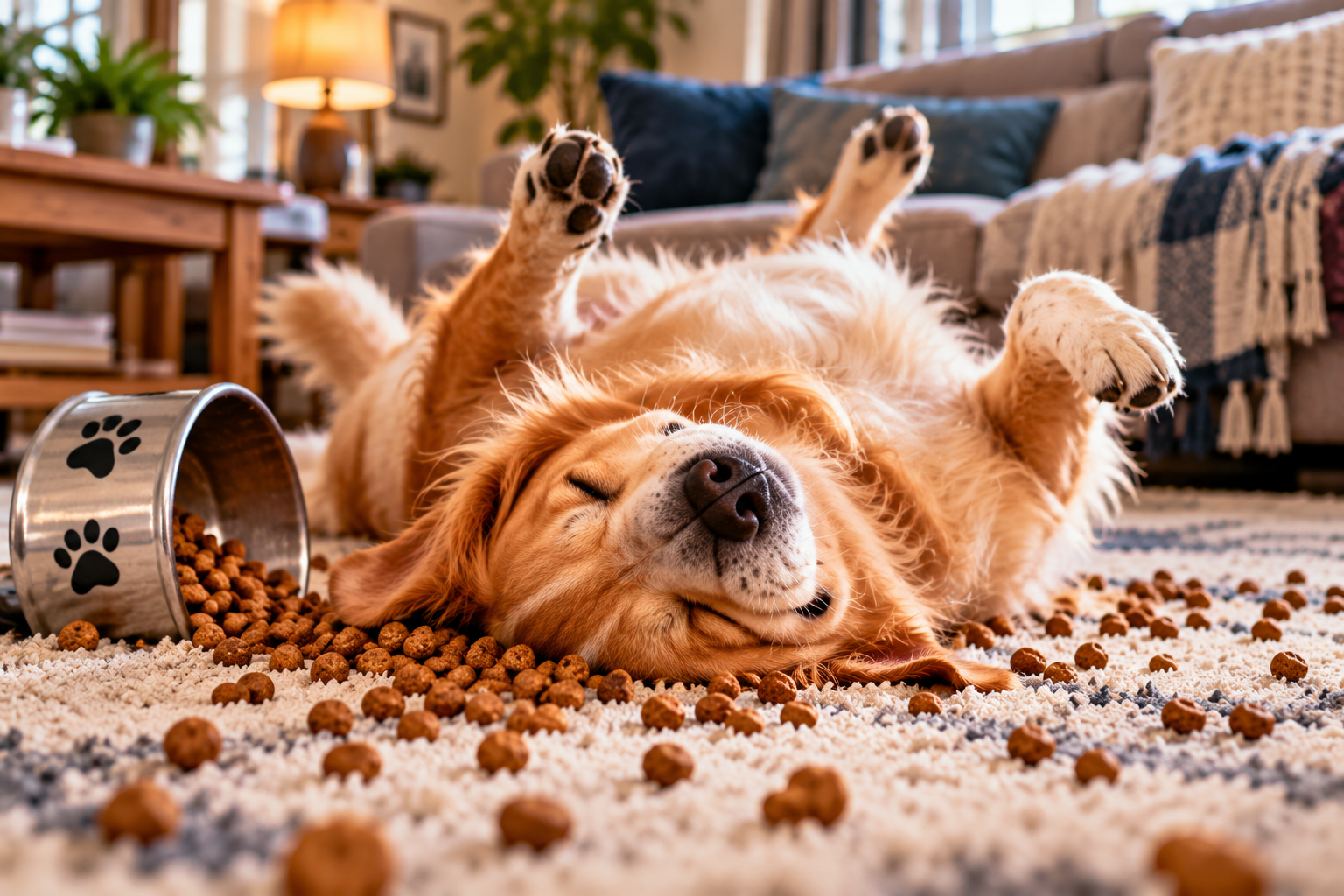
The same carpet you vacuumed approximately eleven minutes ago.
Some dogs appear to prefer eating on soft surfaces.
Carpet can prevent individual pieces of kibble from sliding around, while its texture may make food easier to pick up.
Other dogs may enjoy sniffing around for scattered pieces.
This doesn't mean eating on carpet is healthier or that every dog has the same preference.
Sometimes it's simply what they've become accustomed to.
A cleaner alternative
If your dog enjoys searching for kibble, consider trying a washable snuffle mat designed for supervised feeding.
These mats encourage dogs to use their noses to find food hidden among fabric strips.
They're not appropriate for every dog, especially those that chew or swallow fabric, so supervise their use.
Related reading: 9 Easy Scent Games for Dogs: Turn Sniffing Into Brain Games
This is a particularly natural connection because both activities involve using scent to explore and locate food.
You might discover that your dog's unusual dinner routine can be redirected into a fun enrichment activity.
5. Your Dog Might Have Turned It Into a Habit
Dogs are creatures of habit.
If your dog once dropped a few pieces of kibble onto the floor and discovered that eating there was enjoyable, they may have repeated the behavior.
Eventually, carrying food across the room can become part of their normal routine.
And if you laugh, talk to them, or follow them whenever they relocate dinner, your attention may make the activity even more rewarding.
Not every strange dog behavior has a complicated explanation.
Sometimes your dog's reasoning is essentially:
"I did this yesterday. It worked. I'm doing it again."
If your dog eats normally, maintains a healthy appetite, and has always preferred eating this way, the behavior may be harmless.
However, repeated habits can also develop when dogs aren't getting enough opportunities for mental stimulation.
This popular Bark Clinic topic is a useful next stop for readers wondering whether their dog's unusual habits might be related to boredom.
6. Your Dog May Enjoy Moving and Searching for Food
Dogs don't experience food only as something that appears in a bowl.
They also enjoy sniffing, exploring, carrying objects, and solving problems.
Some dogs find the process of searching for food rewarding.
That doesn't necessarily mean your dog is protecting dinner from imaginary predators or acting out a specific survival instinct.
Modern dogs develop feeding behaviors through a combination of individual preferences, learning, environment, and natural tendencies.
For dogs that enjoy working for food, enrichment feeding may be worth exploring.
Try making dinner more interesting
Instead of serving every meal in a traditional bowl, you could occasionally offer part of your dog's regular kibble through a suitable puzzle feeder or supervised food-search activity.
Start with easy challenges and make sure your dog can access the food without becoming frustrated.
Remember to count enrichment food as part of their daily meals rather than adding unlimited extra calories.
Related reading: 12 DIY Dog Enrichment Ideas Using Things You Already Have
This article provides inexpensive activities that can help satisfy your dog's curiosity without requiring a collection of expensive toys.
You can also explore [Are Dog Treats Making Your Dog Gain Weight? How the Calories Add Up] to learn why extra treats and enrichment rewards should be included in your dog's daily calorie intake.
7. Your Dog Might Be Experiencing Physical Discomfort
Here's the explanation you shouldn't overlook.
If your dog suddenly starts taking food out of their bowl after previously eating normally, physical discomfort may be involved.
Possible concerns include:
Dental pain or oral sensitivity
Neck discomfort when lowering the head
Difficulty reaching food in a deep or narrow bowl
Nausea or other changes affecting appetite
Stress associated with the feeding location
Some dogs continue eating despite discomfort but change how they approach their food.
When to contact your veterinarian
Schedule a veterinary examination if your dog suddenly changes eating habits, repeatedly drops food, has difficulty chewing, paws at their mouth, seems painful, or eats less than usual.
A sudden change deserves more attention than a harmless habit your dog has had for years.
How to Stop Your Dog From Carrying Food Away From the Bowl
If your dog is healthy and simply prefers eating elsewhere, you might not need to change anything.
But if you're tired of discovering surprise kibble in your socks, here are a few practical ways to encourage tidier mealtimes.
Step 1: Experiment with bowl placement
Move the bowl to a quieter location away from busy walkways and other pets.
Step 2: Check the bowl itself
Make sure it's stable, clean, and appropriately sized.
Try a different bowl if your dog appears uncomfortable with the current one.
Step 3: Create a comfortable feeding station
Place a washable, non-slip mat beneath the bowl.
This provides a consistent eating area and makes cleanup easier.
Step 4: Give your dog space
Avoid hovering over your dog, interrupting meals, or repeatedly moving their food while they're eating.
Step 5: Reinforce calm eating
If your dog voluntarily eats near the bowl, offer gentle praise.
Don't punish them for carrying food elsewhere.
Step 6: Try enrichment feeding
If your dog enjoys searching for kibble, a snuffle mat or appropriately designed puzzle feeder may provide a more satisfying outlet.
Introduce new feeding activities gradually and supervise your dog.
Is It Bad for Dogs to Eat Food Off the Floor?
Not necessarily.
Eating a few pieces of kibble from a clean, safe surface isn't automatically harmful.
However, there are practical concerns.
Carpets can collect dirt, hair, cleaning-product residue, and other debris. Leftover food can also attract pests.
Hard floors may be easier to clean, but they should still be free of chemicals and small objects.
If your dog prefers floor dining, consider offering a dedicated washable feeding mat.
And if they suddenly refuse their bowl or show signs of pain, don't assume it's simply a quirky preference.
Frequently Asked Questions
Why does my dog take one piece of food out of the bowl at a time?
Some dogs prefer eating slowly, manipulating individual pieces, or moving food to another surface. Bowl discomfort and learned habits may also contribute.
Why does my dog carry food to the living room?
Your dog may prefer being near family members, enjoy the eating surface, or feel more comfortable in that location.
Why does my dog take food to the carpet?
Carpet can keep kibble from sliding and may provide a familiar surface. Some dogs simply develop a preference for eating there.
Why does my dog bring food to me before eating it?
Your dog may prefer eating near you, enjoy carrying objects, or have learned that bringing food attracts attention. The behavior alone doesn't prove a particular emotional motivation.
Should I stop my dog from eating on the carpet?
It's reasonable to encourage eating on a clean, washable surface for hygiene and convenience. Use environmental changes and positive reinforcement instead of punishment.
Why did my dog suddenly start taking food out of their bowl?
Sudden changes can reflect environmental stress, bowl discomfort, or a medical issue. Contact your veterinarian if the behavior is new, persistent, or accompanied by appetite changes or signs of pain.
The Final Verdict: Your Dog Has Their Own Restaurant Rules
You bought the food.
You bought the bowl.
You carefully selected the perfect feeding spot.
And your dog has decided dinner tastes better approximately twelve feet away, directly on your favorite rug.
Classic dog behavior.
Fortunately, carrying food away from the bowl is often a harmless preference or learned habit.
By paying attention to your dog's environment, comfort, and overall health, you can usually identify possible reasons for the behavior.
And if your dog insists on relocating dinner?
A washable feeding mat might be the best investment you make all year.
Want to understand more of your dog's wonderfully weird habits?
Explore The Bark Clinic's Behavior & Training and Nutrition & Treats articles for practical tips, enrichment ideas, and answers to the questions every dog owner eventually asks.
This article is educational and is not a substitute for veterinary care. If your dog is unwell, contact your veterinarian.
Keep reading
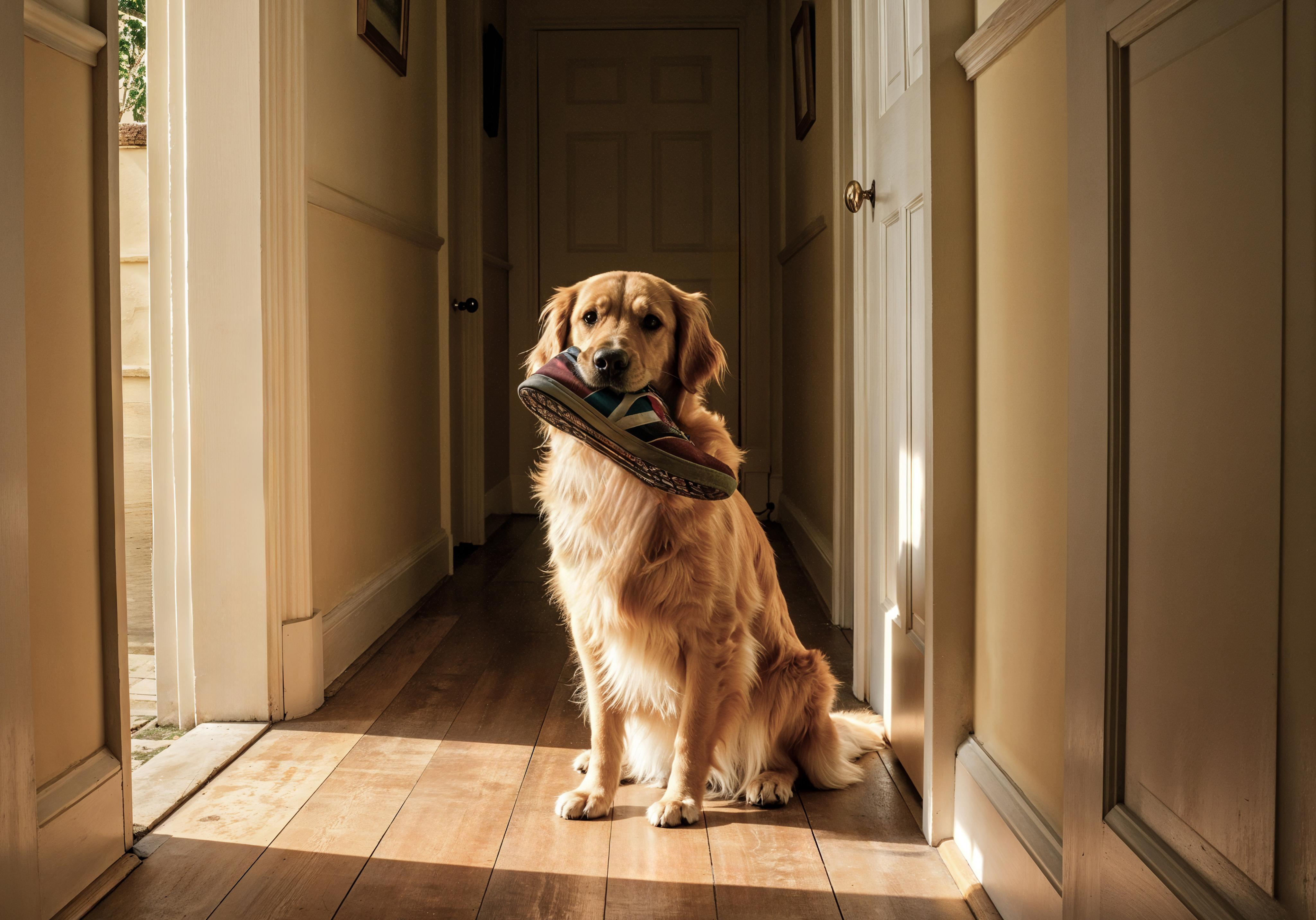
Why Does My Dog Steal My Shoes but Never Chew Them?
Your dog has a bed full of toys, yet somehow your favorite sneaker keeps disappearing. Here's why dogs steal shoes without destroying them—and what this quirky habit might mean.
Read article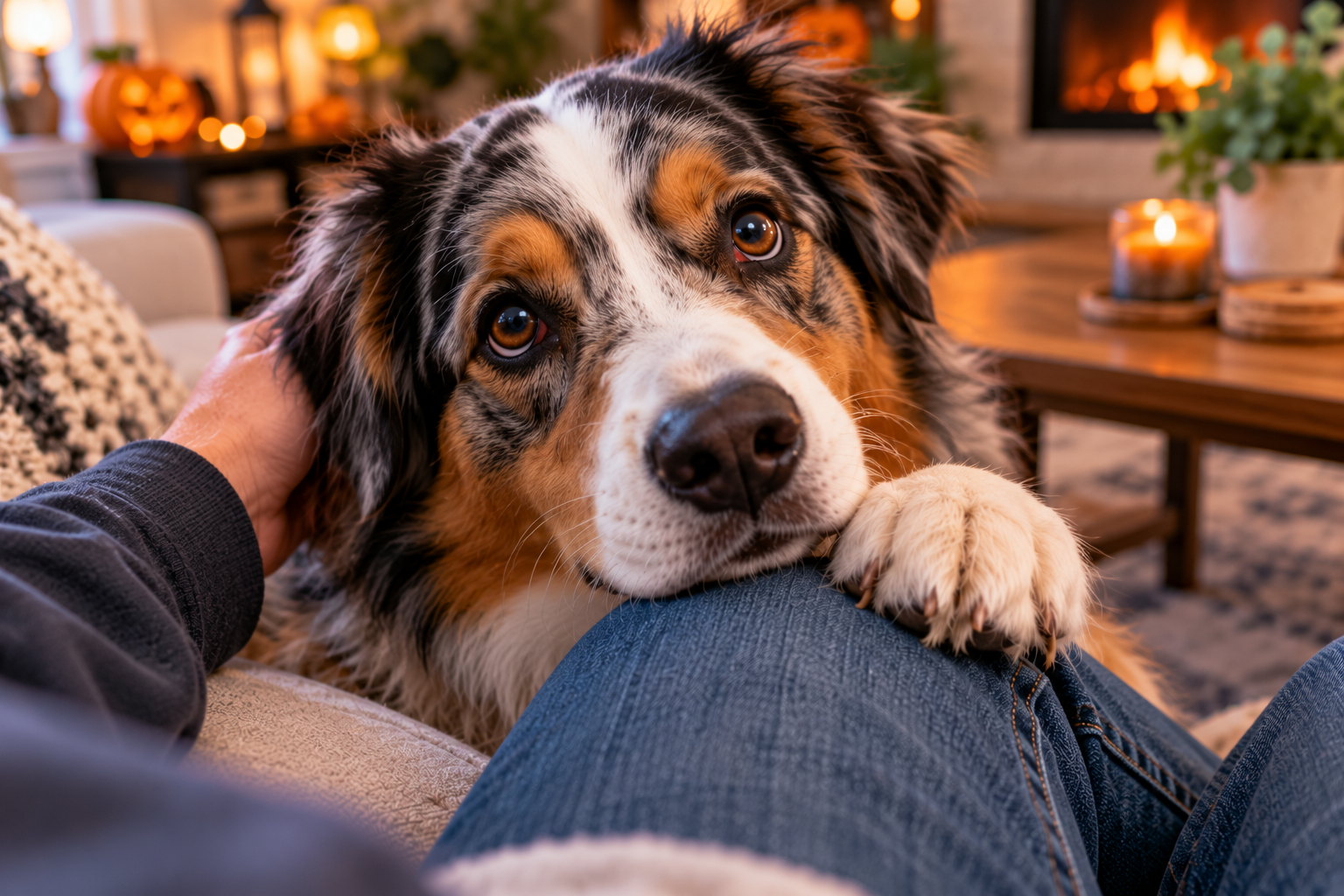
Why Does My Dog Put a Paw on Me? 6 Common Meanings
Why does your dog put a paw on you? Discover six possible meanings, from affection to attention, and how to respond to repeated pawing.
Read article