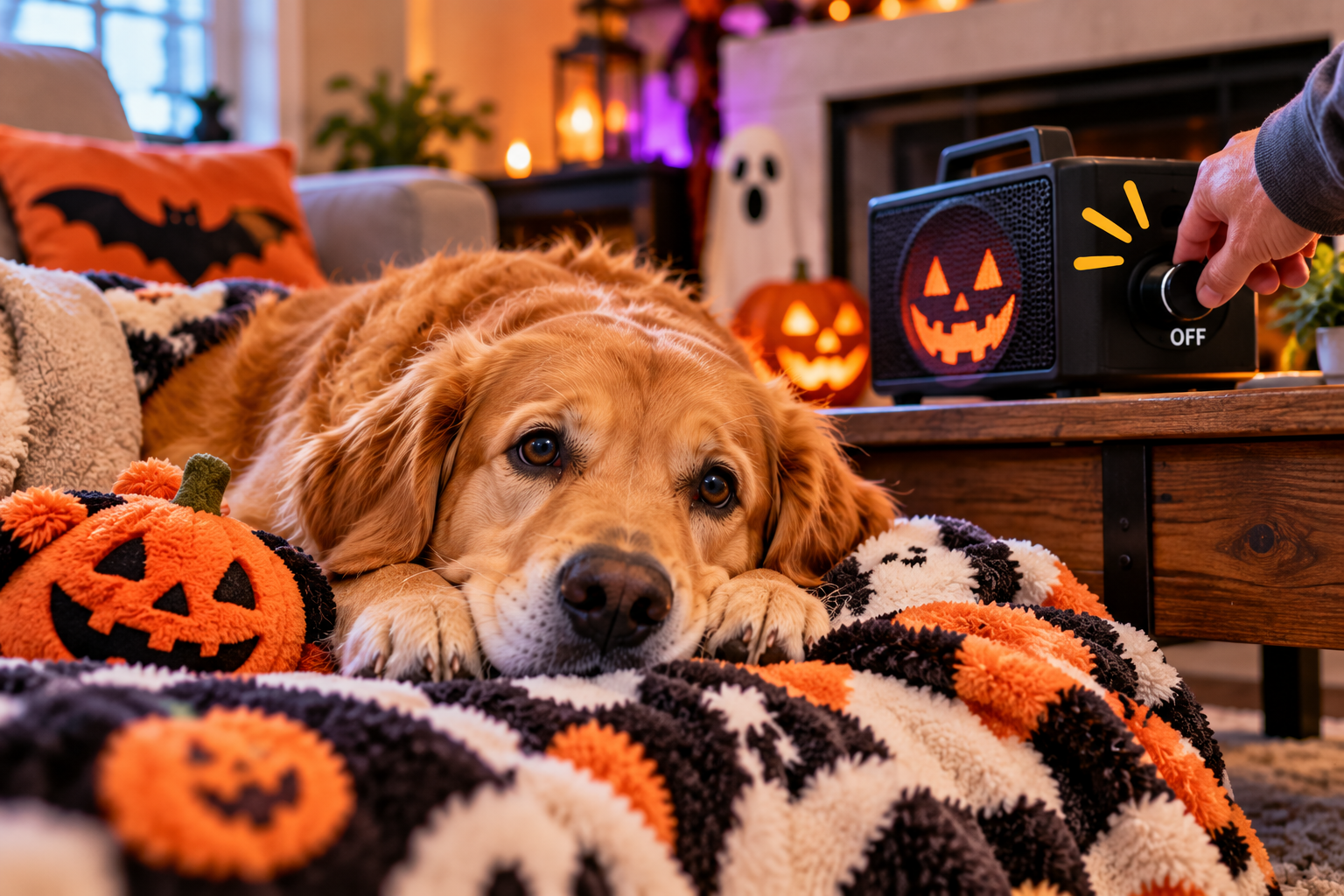
The plastic skeleton on the porch screams when someone walks past. Your dog hears it from the living room and decides the house has become a haunted emergency. For some dogs, sudden Halloween sound effects are just surprising. For others, repeated shrieks, bangs, and creepy music can cause real distress.
Why Halloween sounds hit differently
Dogs can react strongly to unexpected noises, especially when they cannot predict or control them. Motion-activated decorations, crowded sidewalks, doorbells, and amplified music can pile on top of one another. A dog who is already nervous around visitors may have a harder time coping.
Seven ways to make your home less spooky for your dog
1. Test decorations without your dog nearby
Walk through your decorations and identify anything that shrieks, moves suddenly, or flashes. Turn off the loudest effects when your dog is around, particularly during busy trick-or-treat hours.
2. Set up a quiet room before the evening starts
Choose a familiar room with water, bedding, and a favorite toy. Close curtains if outside movement is distracting. Some dogs relax with a fan or gentle background sound that helps soften abrupt noises.
3. Give your dog a choice
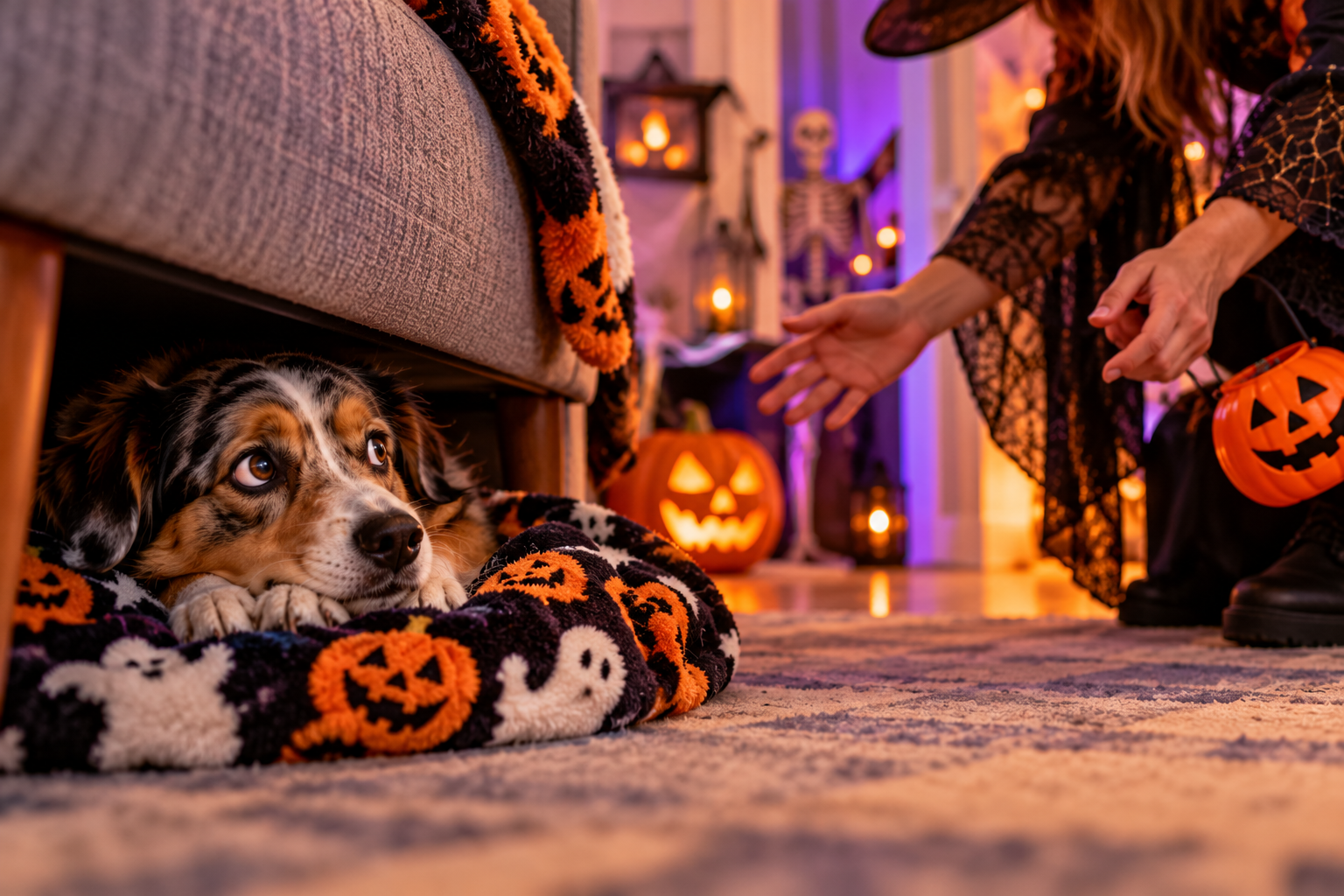
If your dog moves away from the sound, do not pull them back for a photo or an introduction. Let them retreat. A safe exit is a powerful comfort tool.
4. Offer a familiar activity
A food puzzle, lick mat, or simple scent game can occupy a dog who is still relaxed enough to participate. If your dog refuses their usual favorite treat, they may already be too worried for a game.
5. Keep volume low
If you play Halloween music indoors, use a moderate volume and avoid sudden sound effects near the dog. Your party does not need a jump scare every thirty seconds.
6. Practice gently on calm days
For mild sensitivity, a qualified trainer or veterinary professional can help plan gradual exposure to sounds at a level your dog can handle, paired with positive experiences. Do not play frightening recordings loudly to “get them used to it.”
7. Ask for help when fear is severe
Panic, frantic escape attempts, trembling that persists, or inability to settle warrant a veterinary conversation. Noise sensitivity can be managed, and some dogs benefit from individualized behavior treatment or medication.
Signs the soundtrack is too much
Look for pacing, panting when not hot, hiding, pinned ears, lip licking, shaking, or repeatedly scanning the room. A stiff dog who cannot disengage from the noise is not having fun, even if they are not barking.
The Bark Clinic takeaway
Halloween should not require your dog to tolerate a haunted-house soundtrack. The kindest decoration might be the mute button. Pair this guide with our Halloween calming tips and dog body language article to plan a quieter celebration.
FAQ: Will a white-noise machine fix Halloween anxiety?
It may help mask some sounds, but it is not a cure for noise fear. Severe reactions deserve individualized veterinary advice.
FAQ: Should I comfort my dog if they are scared?
Offer calm support and a safe place. Avoid forcing contact if your dog prefers distance.
This article is educational and is not a substitute for veterinary care. If your dog is unwell, contact your veterinarian.
Keep reading
Why Dogs Bark at Halloween Masks (And How to Help Them Feel Safe)
Why do dogs bark at Halloween masks? Learn why costumes can worry dogs, how to introduce masks gently, and when to give your pup space.
Read article
7 Ways to Keep Your Dog Calm on Halloween (Without Missing the Fun)
Doorbells, spooky costumes, and nonstop trick-or-treaters? Halloween can overwhelm even the friendliest dogs. Discover seven simple ways to help your pup feel safe, comfortable, and calm during the festivities.
Read article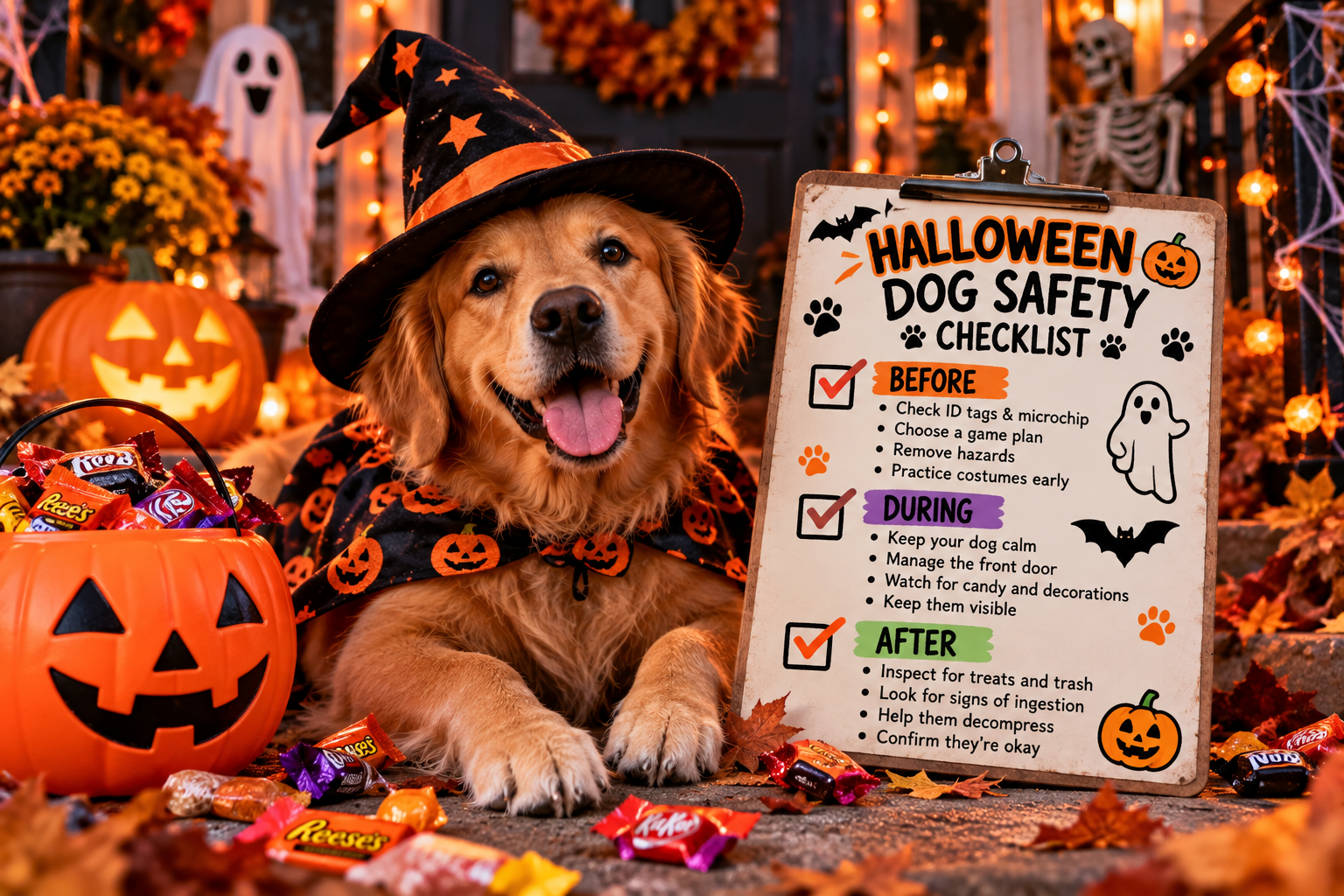
The Ultimate Halloween Dog Safety Checklist: Before, During & After Trick-or-Treating
Halloween is full of fun—and a surprising number of dog hazards. Use this before-during-after checklist to keep the candy, costumes and chaos from becoming an emergency.
Read article