
Every dog owner has had this conversation with themselves:
“Is this a call-the-vet thing… or a keep-an-eye-on-it thing?”
And dogs aren’t exactly helpful.
They can spend the morning acting perfectly normal, steal half your breakfast, bark at the mail carrier, take a nap—and then suddenly do something that has you wondering whether you should be grabbing the car keys.
Knowing when to wait, when to call your regular vet, and when to seek emergency care is one of the harder parts of being a dog parent.
A good place to start is with three things:
How severe is it? How quickly did it happen? And how is your dog acting overall?
One loose stool from a happy adult dog who immediately asks for dinner is very different from repeated vomiting in a puppy who suddenly seems weak.
A slight limp after an overly ambitious game of fetch isn’t the same as a dog who can’t put any weight on a leg or cries when you touch it.
Context matters.
When You Shouldn’t Wait
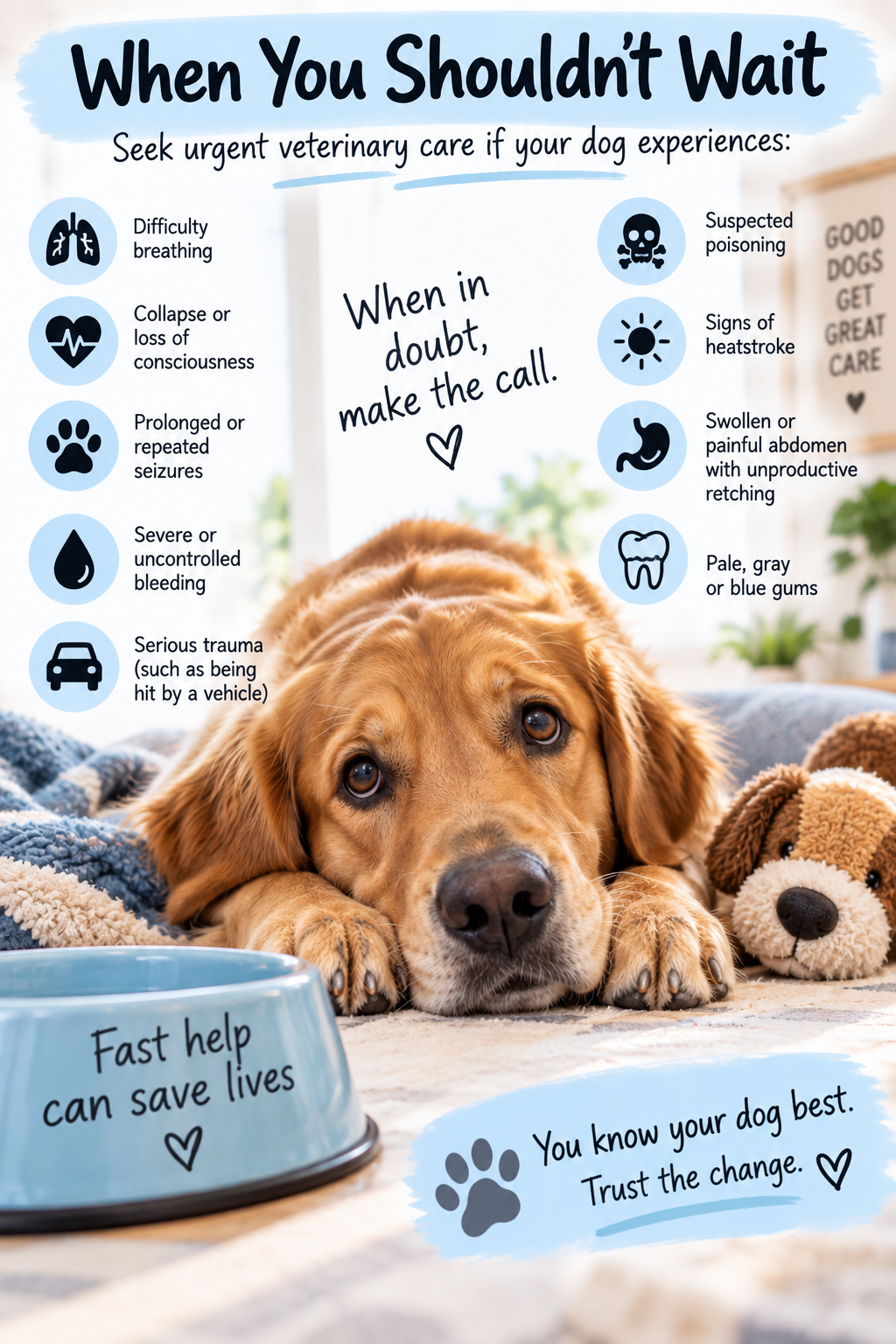
Some situations aren’t good candidates for the “let’s see how they look tomorrow” approach.
Seek urgent veterinary care if your dog experiences things like:
● Difficulty breathing
● Collapse or loss of consciousness
● Prolonged or repeated seizures
● Severe or uncontrolled bleeding
● Serious trauma, such as being hit by a vehicle
● Suspected poisoning
● Signs of heatstroke
● Pale, gray or blue gums
● A suddenly swollen or painful abdomen, especially with repeated attempts to vomit without bringing anything up
If your dog is struggling to breathe, collapsing, or experiencing another obvious emergency, this isn’t the time for an hour-long Google investigation.
Call the nearest emergency veterinary hospital and start getting ready to leave.
What About Vomiting and Diarrhea?
This is where things get a little trickier.
Dogs occasionally vomit. They occasionally have diarrhea. They also occasionally eat something from the backyard that makes you question every decision they’ve ever made.
A single mild episode in an otherwise happy, energetic adult dog may be something you can monitor.
But repeated vomiting or diarrhea becomes more concerning when your dog can’t keep water down, blood is present, they become noticeably weak or lethargic, or other symptoms begin appearing.
Age matters, too.
Puppies, senior dogs, and dogs with existing medical problems may have less room for the “wait and see” approach. Puppies in particular can become dehydrated or develop low blood sugar more quickly than healthy adult dogs.
When you’re unsure, calling your veterinarian is completely reasonable.
Not Every Vet Visit Is an Emergency
Some health problems don’t require racing to an emergency hospital—but they shouldn’t be ignored for weeks either.
Schedule a veterinary appointment for changes such as:
● A new or changing lump
● Persistent itching
● Recurring ear odor or irritation
● A limp that isn’t improving
● Drinking or urinating noticeably more
● Unexplained weight loss or gain
● Ongoing coughing
● Bad breath accompanied by difficulty or pain while eating
● A persistent change in appetite
The common thread here is change.
If something is new, keeps happening, or isn’t getting better, it’s worth figuring out why.
“Acting Weird” Counts, Too
Dogs can’t point to their hip and tell us it hurts.
Sometimes pain shows up as behavior instead.
Maybe your normally social dog suddenly wants to be alone.
Maybe they growl when you touch an area they usually don’t mind having touched.
Maybe your couch-loving dog suddenly stops jumping onto the furniture.
Or perhaps they’re pacing around the house at night when they normally sleep until morning.
Those changes don’t automatically mean something serious is wrong. But they can be your dog’s way of telling you that something feels different.
Don’t dismiss a sudden personality or behavior change just because you can’t see an obvious injury.
Help Your Vet Help Your Dog

If you’re calling your veterinarian, you don’t need to arrive with your own diagnosis.
You just need good information.
Try to remember when the problem started, how often it’s happening, whether it’s getting better or worse, and whether your dog is still eating, drinking, peeing and pooping normally.
Also tell your veterinarian about any medications or supplements your dog takes.
And here’s an underrated dog-parent trick:
Grab your phone.
Short videos can be incredibly helpful when you’re dealing with symptoms that disappear the second you walk into the veterinary clinic.
Film that strange limp. Record the unusual cough. Capture the tremor or odd breathing pattern if you can do so safely.
Your dog may magically walk into the vet’s office acting like they’ve never had a problem in their entire life.
The video can’t.
If Your Dog May Have Eaten Something Toxic
Save the packaging.
If you can’t bring it with you, take clear pictures of the product name, ingredient list, and any other useful information on the label.
That information can help veterinary professionals determine exactly what your dog may have been exposed to.
And importantly:
Don’t make your dog vomit unless a veterinarian or animal poison professional specifically tells you to.
The appropriate response depends on what your dog swallowed, and inducing vomiting isn’t safe in every situation.
The Bark Clinic Takeaway
You don’t need to rush your dog to the emergency vet because they sneezed twice and looked at you funny.
But you also don’t need to wait until your dog checks every box on an internet symptom list before asking for help.
Pay attention to changes from your dog’s normal.
You know how excited they usually are for breakfast.
You know how they normally walk.
You know where they sleep, how much they drink, how much energy they have, and approximately how ridiculous they become when someone says the word treat.
That everyday knowledge matters.
If something is getting worse quickly, your dog seems distressed, or something simply feels significantly different from their normal behavior, call your veterinarian.
Sometimes they’ll tell you it’s okay to monitor things at home.
Sometimes they’ll want to see your dog.
Either way, making the call is better than spending the next six hours asking the internet whether your dog’s left ear has always looked like that.
This article is educational and is not a substitute for veterinary care. If your dog is unwell, contact your veterinarian.