Dogs are actually pretty good at telling us when they're uncomfortable.
Humans aren't always quite as good at listening.
A stressed dog doesn't necessarily growl, hide under the bed, or dramatically announce that they've had enough. Often, the first signs of stress in dogs are surprisingly small.
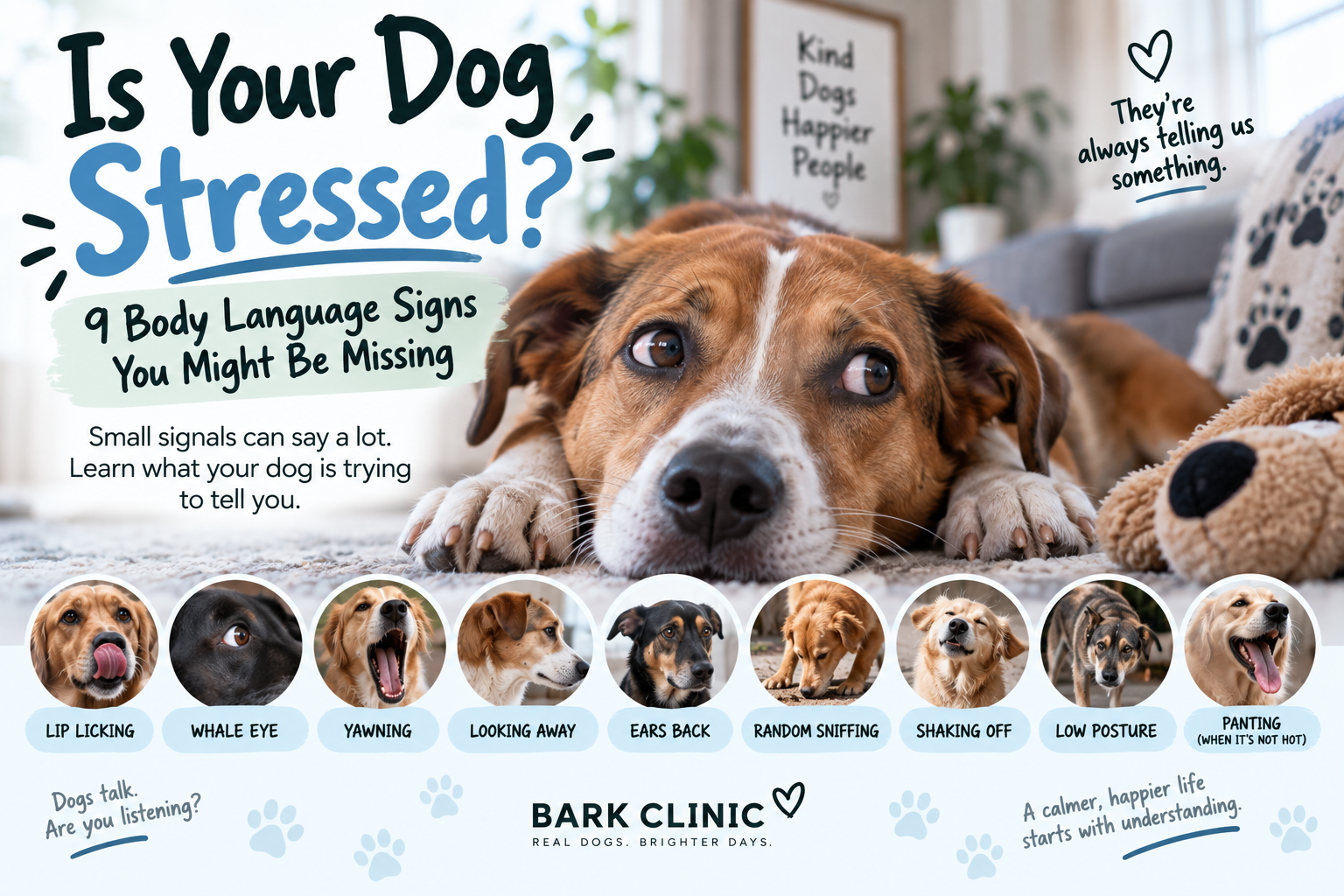
A quick lip lick. A yawn. Ears shifting backward. Suddenly looking away. Showing the whites of their eyes.
It's easy to see these behaviors and think, Well, dogs are weird.
And, to be fair, dogs are weird.
But subtle changes in your dog's body language can sometimes be their polite way of saying:
“I'm not comfortable with this.”
Learning how to read dog body language can help you recognize stress earlier, give your dog space when they need it, and potentially prevent a nervous dog from feeling like they have to communicate much louder.
Why Dog Body Language Matters
Dogs can't tell us, “Hey, this situation is making me uncomfortable.”
Instead, they communicate through their bodies.
Their eyes, ears, mouth, tail, posture, movement, and even seemingly random behaviors can provide clues about how they're feeling.
The important word here is clues.
No single behavior automatically means your dog is stressed.
A dog yawning after waking up probably isn't having an emotional crisis. A dog licking their lips after eating peanut butter probably isn't asking you for personal space.
Context matters.
What you're looking for are behaviors that seem unusual for the situation, appear repeatedly, or happen alongside other signs of tension or discomfort.
Here are nine subtle dog stress signals worth learning.
1. Lip Licking When There's No Food Around
Dogs lick their lips for plenty of perfectly ordinary reasons.
Sometimes there's chicken involved.
Fair enough.
But quick, repeated lip licking can also appear when a dog feels uncomfortable or uncertain.
You might notice it during a veterinary exam, around an unfamiliar person, when another dog approaches, or during an interaction your dog isn't entirely comfortable with.
What your dog might be saying:
“I'm not completely comfortable with what's happening.”
Instead of correcting the behavior, look around and ask what changed immediately before it started.
2. Showing the Whites of Their Eyes — “Whale Eye”
Whale eye in dogs describes a situation where you can see more of the white portion of a dog's eye than usual, often because the dog has turned their head while continuing to watch something.
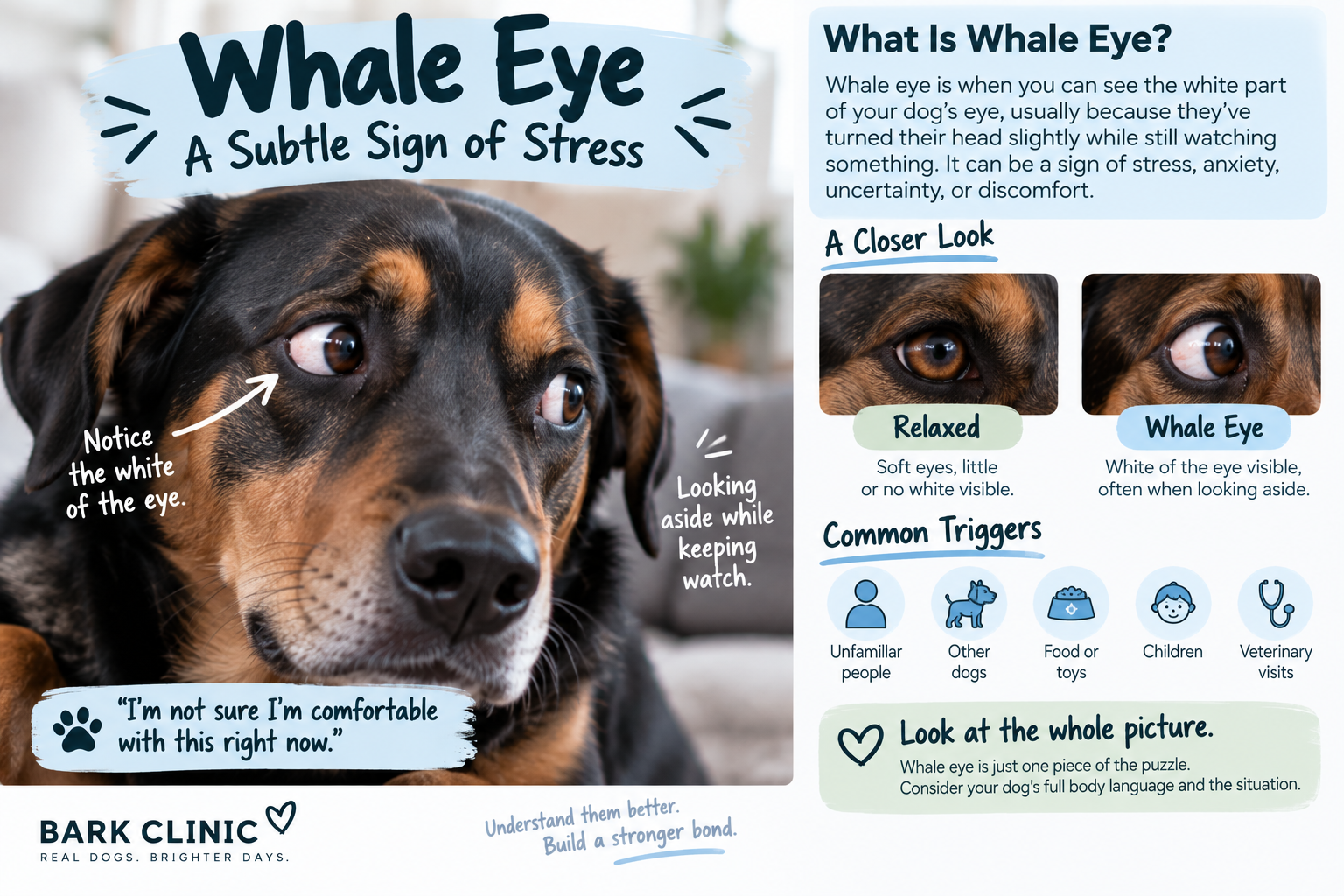
It can occur when a dog feels worried, guarded, conflicted, or uncomfortable.
Context is especially important here because the amount of visible white varies naturally between dogs and breeds.
But if your dog's body becomes stiff while they're watching something from the corner of their eye, pay attention.
What your dog might be saying:
“I'm keeping an eye on this because I'm not sure I like it.”
Whale eye can be particularly important to notice during close interactions involving food, toys, unfamiliar people, children, or other dogs.
3. Yawning When Your Dog Isn't Tired
Dogs yawn when they're sleepy.
They may also yawn during situations involving tension or uncertainty.
Imagine your dog is sitting in the waiting room at the veterinarian.
They're wide awake.
Suddenly:
YAAAAAAAWN.
Then another one.
That yawn may be worth noticing.
Repeated yawning can sometimes occur alongside other stress-related body language such as lip licking, panting, looking away, or lowered posture.
What your dog might be saying:
“This is getting a little overwhelming.”
Again, one yawn isn't a diagnosis.
Look at the entire dog and what's happening around them.
4. Suddenly Looking or Turning Away
One of the easiest stress signals to overlook is also one of the simplest.
Your dog looks away.
Dogs may turn their head or body away from something when they're uncomfortable and trying to disengage.
You might see this when someone leans over them, hugs them, gets close to their face, or continues interacting when the dog would rather have some space.
Humans sometimes respond by moving closer.
Come on, buddy! Look at me!
Your dog may have been politely asking for exactly the opposite.
What your dog might be saying:
“Can we take this down a notch?”
Giving your dog the ability to move away from uncomfortable interactions can be incredibly valuable.
5. Ears Pulled Back
Your dog's ears can reveal quite a bit about how they're feeling.
Depending on the dog's natural ear shape, ears pulled backward or flattened against the head may accompany fear, uncertainty, appeasement, or stress.
But ears need context too.
Some dogs pull their ears back during happy greetings.
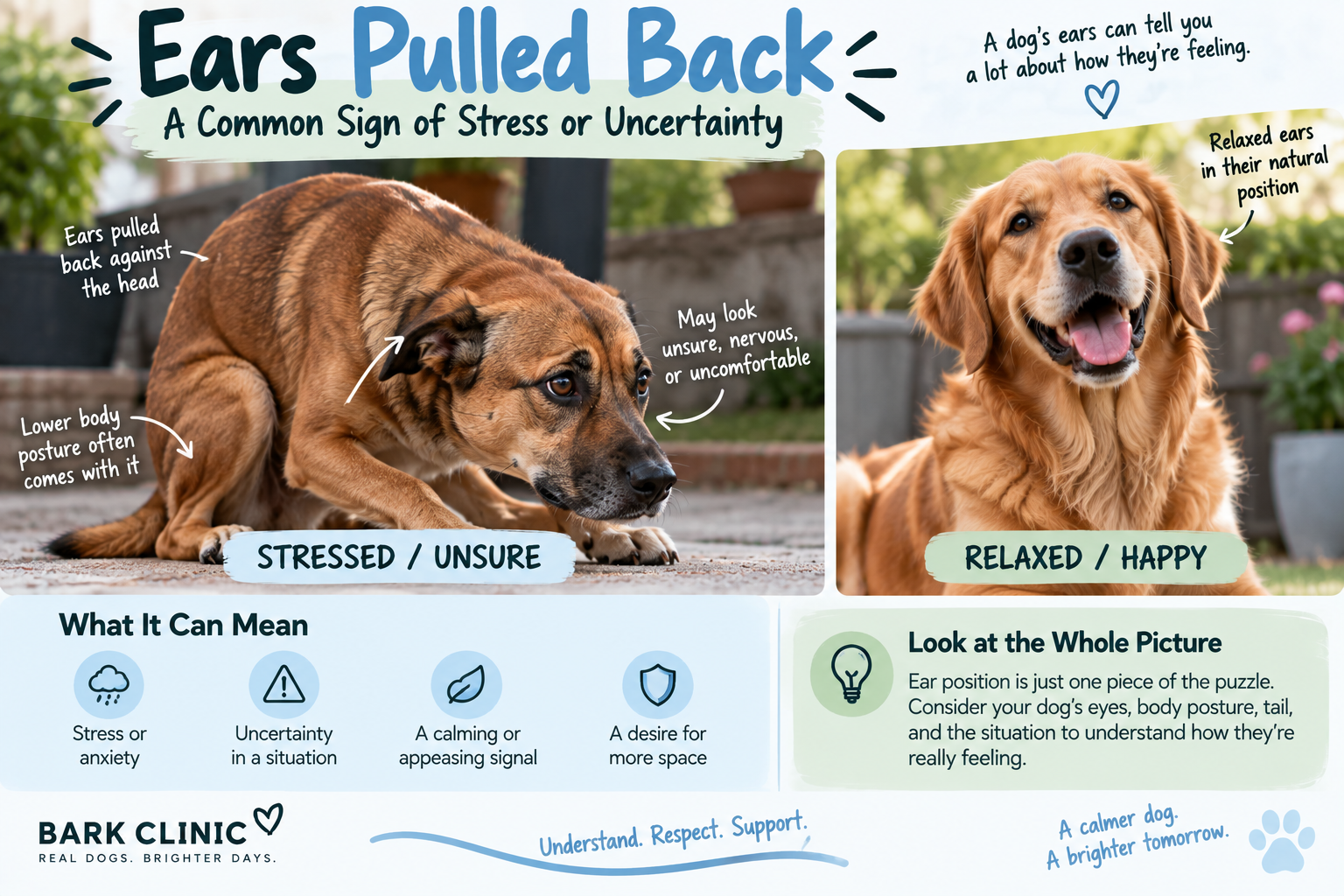
That's why you shouldn't judge your dog's emotional state from their ears alone.
Look at everything else.
Is their body loose and wiggly?
Or stiff and lowered?
Are their eyes soft?
Or wide and watchful?
The whole dog tells the story.
What your dog might be saying:
“I'm unsure about this situation.”
6. Random Sniffing, Scratching or Other “Out of Nowhere” Behaviors
This one is fascinating because it can look completely unrelated to stress.
Your dog is facing something uncomfortable and suddenly decides:
You know what? I desperately need to sniff this exact patch of carpet.
Dogs sometimes perform seemingly unrelated behaviors during moments of uncertainty or conflict. These are sometimes described as displacement behaviors.
You might notice sudden sniffing, scratching, grooming, or other behaviors that seem oddly timed.
Of course, dogs also sniff because they're dogs and scratch because something itches.
The situation surrounding the behavior is what makes it meaningful.
What your dog might be saying:
“I'm not quite sure what to do right now.”
7. Shaking Off When Your Dog Isn't Wet
You know the full-body shake dogs perform after a bath?
Sometimes dogs do something similar when they're completely dry.
A dog shaking off after a stressful situation can happen as they transition out of an intense or exciting interaction.
You might notice it after play gets a little wild, after meeting another dog, after being handled, or when leaving an uncomfortable situation.
Think of it less as definitive proof of stress and more as another piece of information.
What your dog might be saying:
“Okay. That was a lot.”
Honestly, humans could probably use a full-body shake after certain meetings too.
8. Changes in Body Posture
Sometimes the clearest sign of stress isn't one tiny behavior.
It's the dog's entire body.
A relaxed dog generally looks, well, relaxed.
Their movements may be loose. Their face looks softer. Their body isn't rigidly preparing for whatever happens next.
A nervous or uncomfortable dog may:
Lower their body
Tuck their tail
Shift their weight backward
Freeze or become unusually still
Lean away
Become noticeably stiff
Attempt to hide or retreat
Freezing deserves particular attention.
People sometimes interpret a motionless dog as a calm dog.
Those aren't necessarily the same thing.
If a dog suddenly becomes very still during an interaction, especially alongside other signs of discomfort, give them space.
What your dog might be saying:
“I really don't want this situation to continue.”
9. Panting When It Isn't Hot
Panting is completely normal when a dog is hot or has been exercising.
But excessive panting in dogs can sometimes accompany stress, fear, excitement, or discomfort.
If your dog starts panting heavily while sitting in an air-conditioned veterinary waiting room, for example, temperature probably isn't the only possibility worth considering.
Look for other changes such as pacing, trembling, lip licking, tucked posture, inability to settle, or repeated attempts to leave.
What your dog might be saying:
“I'm having trouble relaxing here.”
Unexplained or persistent panting can also have medical causes, so significant changes—particularly when accompanied by other symptoms—deserve a conversation with your veterinarian.
Don't Read One Signal — Read the Whole Dog
This might be the most important takeaway from the entire article.
Dog body language isn't a checklist where one behavior equals one emotion.
A dog licking their lips isn't automatically anxious.
A dog yawning isn't automatically stressed.
A dog with their ears back isn't automatically afraid.
Instead, look for clusters of signals and consider what's happening around your dog.
For example:
Your dog yawns while stretched across the couch at 10 p.m.
Probably sleepy.
Your dog yawns repeatedly while hiding behind your legs at a crowded outdoor festival, panting heavily and refusing treats.
That's a very different picture.
The more pieces you have, the better you'll understand what your dog may be communicating.
What Should You Do When Your Dog Shows Signs of Stress?
You don't need to panic every time your dog licks their lips.
Instead, become curious.
Ask yourself:
What just happened?
Did someone approach?
Did another dog get closer?
Did a child hug them?
Did you enter a loud environment?
Did someone reach toward their food or favorite toy?
Did something suddenly change?
When possible, give your dog more distance from whatever seems to be causing discomfort.
Allow them an escape route rather than forcing interaction. Reward calm behavior and give them time to observe situations from a distance where they feel safer.
For recurring fears or behavior problems, a qualified trainer or veterinary behavior professional can help you develop an appropriate plan.
And if your dog's behavior changes suddenly without an obvious environmental explanation, contact your veterinarian. Pain and other medical conditions can cause behavioral changes too.
Growling Isn't Your Dog Being “Bad”
There's another reason recognizing early stress signals matters.
Dogs often communicate before they growl, snap, or bite.
Those earlier signals may simply have been missed.
If a dog eventually growls, resist the urge to punish the warning.
A growl communicates valuable information:
“I need this to stop.”
Punishing the growl may suppress the warning without changing the dog's underlying discomfort.
Instead, create distance and figure out what caused the reaction.
The goal isn't to teach your dog that they're forbidden from communicating.
It's to notice what they're saying early enough that they don't need to shout.
Learning Your Dog's Language Takes Practice
You don't need to become a canine behavior expert overnight.
Start watching.
Notice your dog's ears when they're relaxed. Watch their eyes when they're comfortable. Pay attention to how they carry their tail, how loose their body feels, and what they do when something makes them uncertain.
Learning what normal looks like for your dog makes changes much easier to spot.
And once you start noticing those little signals, you'll probably wonder how you ever missed them.
Your dog has been talking to you the whole time.
They just weren't using words.
This article is educational and is not a substitute for veterinary care. If your dog is unwell, contact your veterinarian.