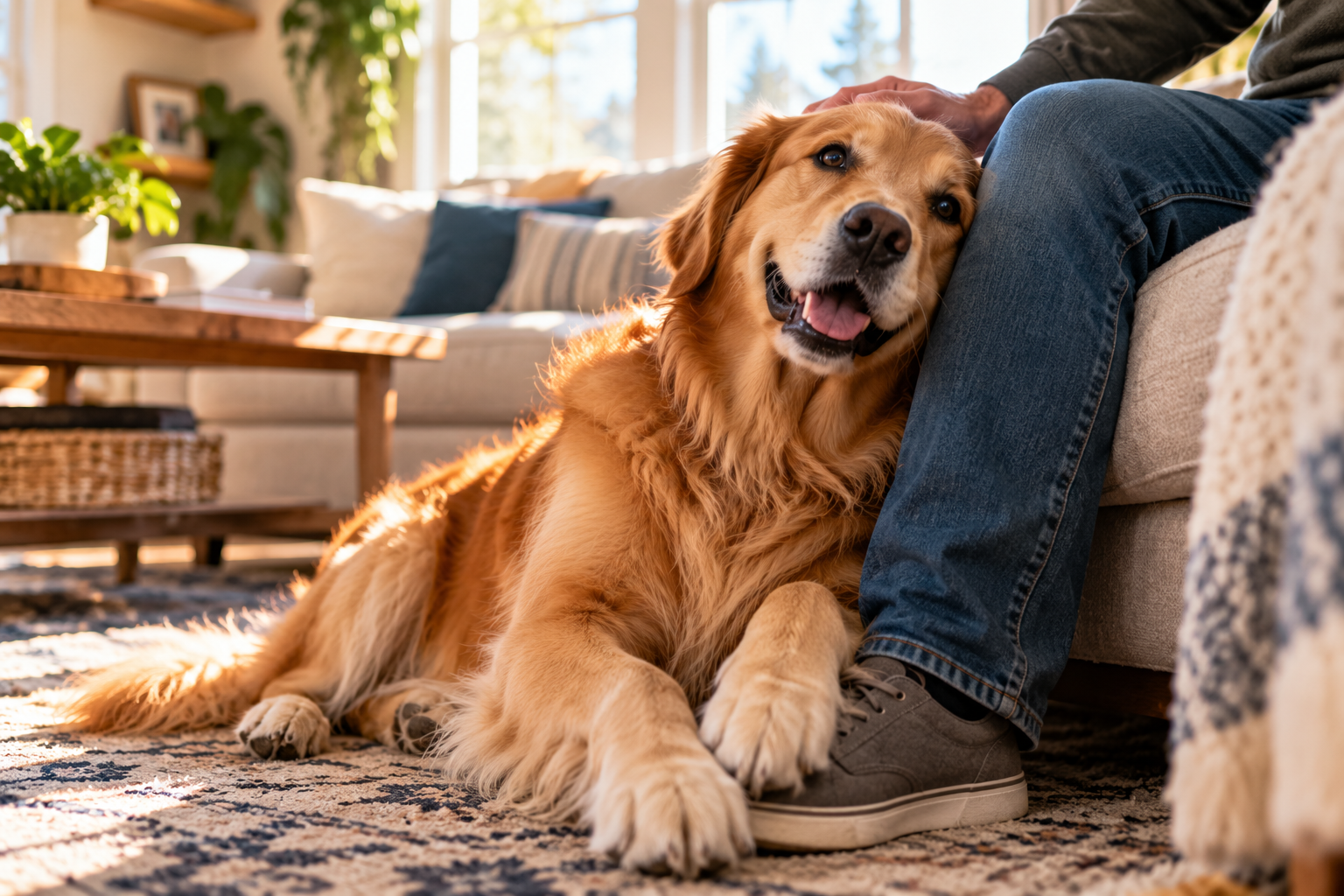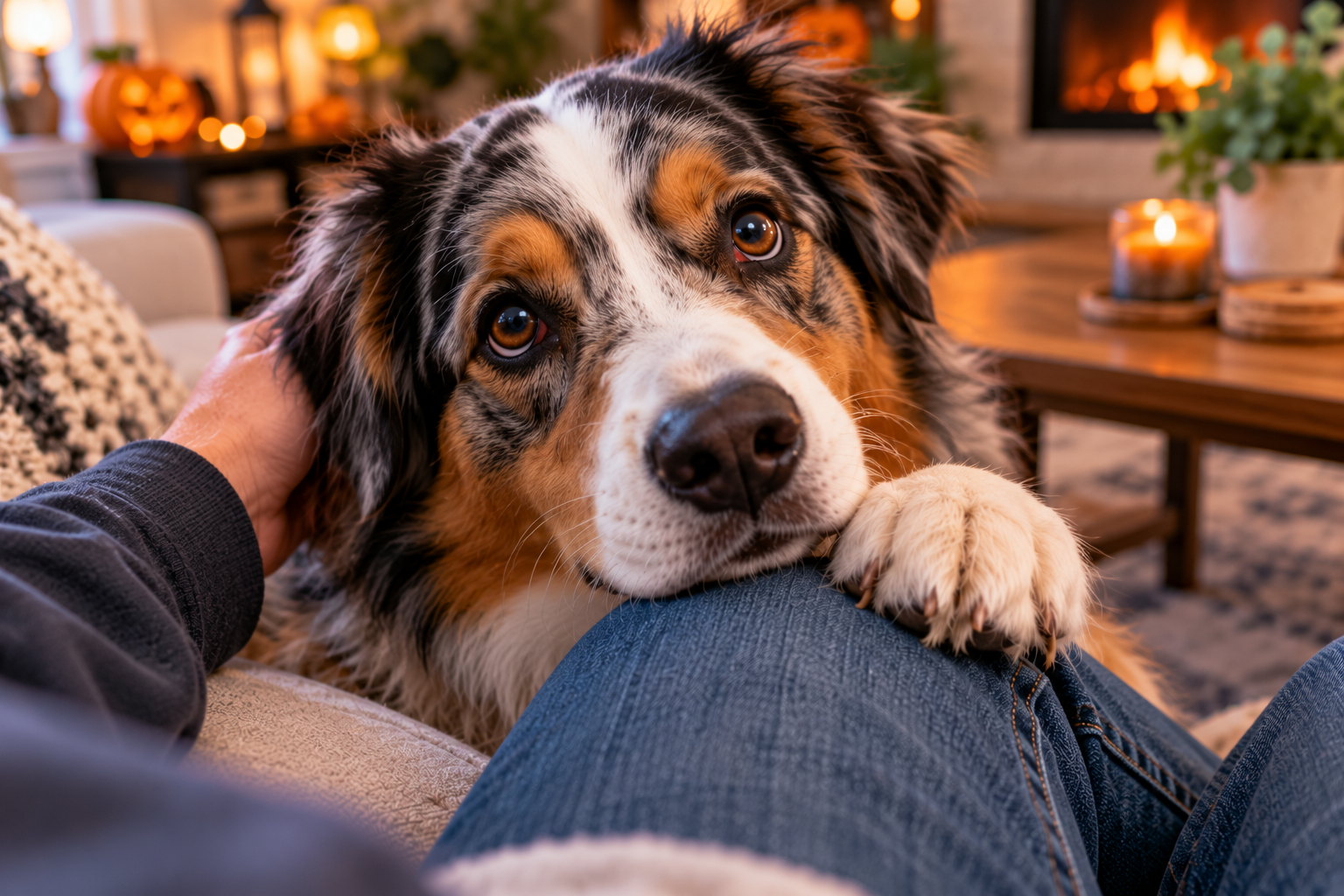
You stop petting your dog. A paw appears on your arm. You stop again. The paw returns, now with the confidence of someone pressing an elevator button for the fourth time. Cute? Absolutely. But what is your dog actually saying?
1. “Please keep petting me”
If pawing reliably gets your attention, your dog may use it to request more contact. A loose body, soft expression, and relaxed approach suggest the interaction is welcome. If you enjoy the exchange, there is nothing wrong with a little canine hand-holding.
2. “Can we play?”
Some dogs tap a person and then bounce toward a toy or the door. The paw is the opening line; the next movement gives away the rest of the message. Try offering an appropriate play session when your dog is calm enough to enjoy it.
3. “Something is due”
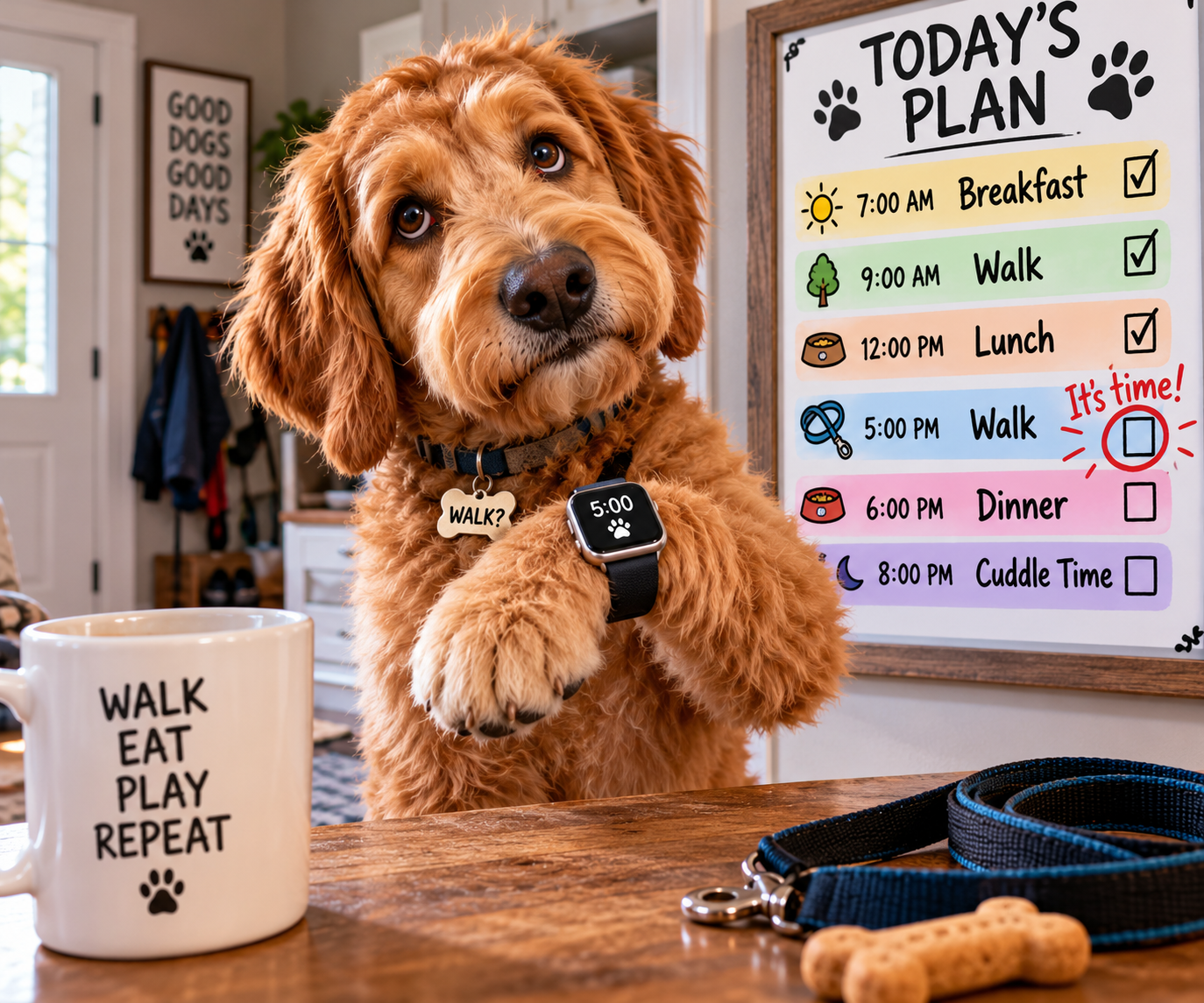
Dogs learn household patterns. A paw just before dinner, a walk, or a potty break may be a learned request. Check the clock and your dog’s usual routine before deciding they are simply being needy.
4. “I am a little unsure”
A dog may seek contact when they are worried by thunder, visitors, or an unfamiliar place. If the paw comes with trembling, a tucked tail, tense muscles, or pacing, focus on creating safety and reducing the stressor rather than demanding a trick.
5. “This worked yesterday”
Sometimes the explanation is wonderfully unromantic: pawing gets results. If every tap earns a snack, the behavior may become more frequent. Dogs are quick to repeat actions that reliably pay off.
6. “I want a little connection”
A gentle paw during a quiet moment can be part of a dog’s social interaction with a trusted person. It might feel like affection, but no single gesture proves an emotion on its own. Body language and context matter.
What if the pawing gets annoying?
Teach a replacement request, such as sitting quietly or touching a target with their nose. Reward the behavior you want before the paw taps begin. Avoid yelling or pushing your dog away, which may increase excitement or distress. Make sure their needs for attention, exercise, rest, and bathroom breaks are being met.
When pawing deserves a closer look
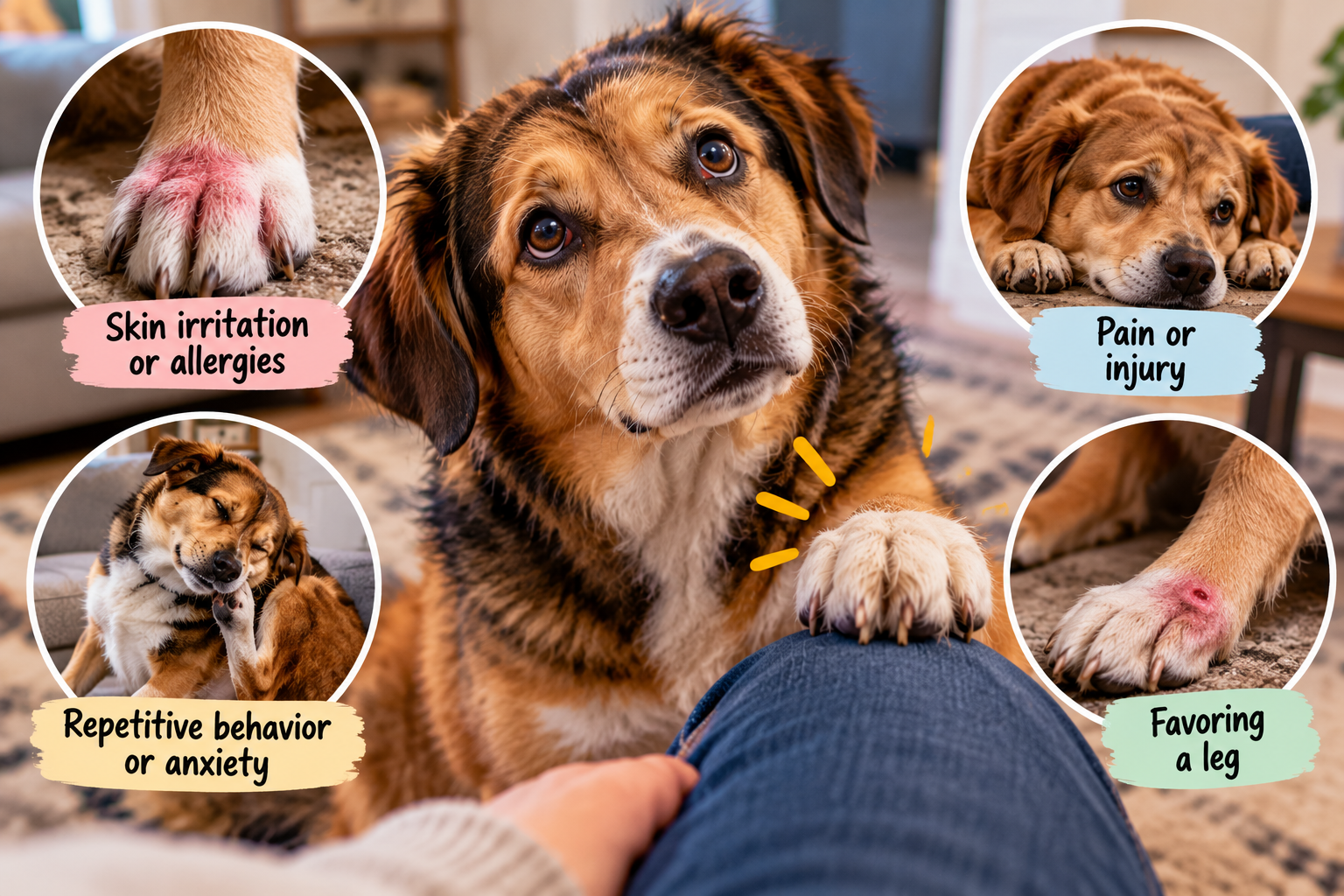
If your dog suddenly paws obsessively, seems uncomfortable, or favors a leg, talk with your veterinarian. Repetitive behavior paired with pain, skin irritation, or anxiety deserves more than a training fix.
The Bark Clinic takeaway
A paw on your arm is a conversation starter, not a perfect translation. Pay attention to what happened before and after, and you will get better at understanding your dog’s favorite requests. Read our dog body language guide for more clues.
FAQ: Is pawing always a sign of love?
No. It can be affectionate, but it can also request food, play, comfort, or attention.
FAQ: Should I ignore pawing?
If it is an attention habit you want to reduce, reward a calmer alternative. Do not ignore possible distress, pain, or urgent needs.
This article is educational and is not a substitute for veterinary care. If your dog is unwell, contact your veterinarian.
Keep reading
Why Does My Dog Take Food Out of Their Bowl to Eat Somewhere Else?
Your dog has a perfectly good food bowl, so why does dinner always end up on the carpet? Discover seven possible explanations for this quirky habit and when it might signal a problem.
Read article
Why Does My Dog Steal My Shoes but Never Chew Them?
Your dog has a bed full of toys, yet somehow your favorite sneaker keeps disappearing. Here's why dogs steal shoes without destroying them—and what this quirky habit might mean.
Read article