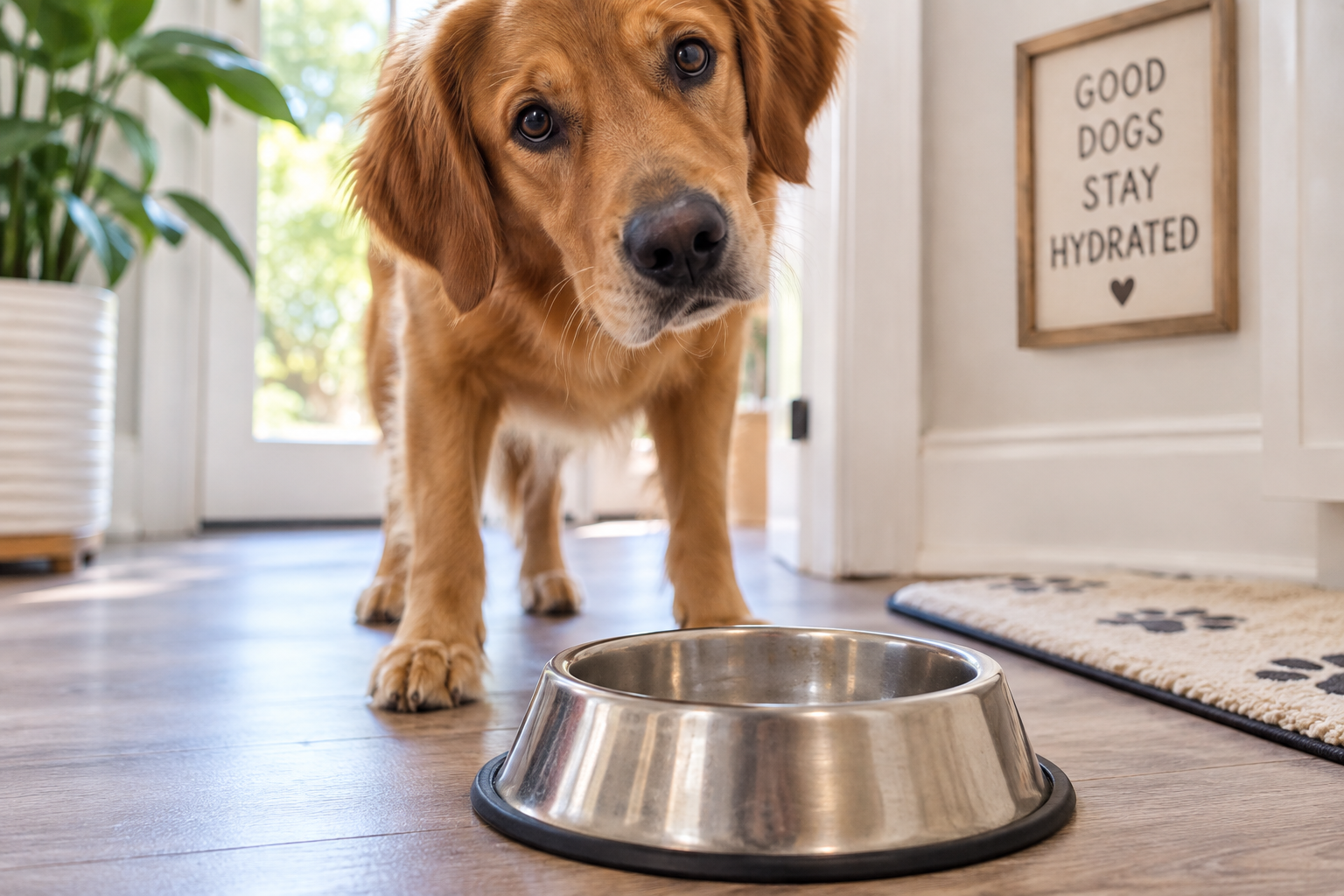
You filled your dog’s water bowl this morning.
Now it’s empty. Again.
Before your brain immediately jumps to “Something’s wrong with my dog,” there are plenty of completely normal reasons dogs suddenly drink more water.
Maybe it’s hot outside. Maybe you took a longer walk than usual. Maybe your dog spent the afternoon doing zoomies around the house like they were training for the Olympics.
But sometimes, drinking noticeably more water can be one of the first little clues that something isn’t quite right.
The important question isn’t really:
“Does my dog drink a lot of water?”
It’s:
“Is my dog drinking more water than usual?”
That difference matters.
Start With the Simple Explanation
Think about what your dog has been doing lately.
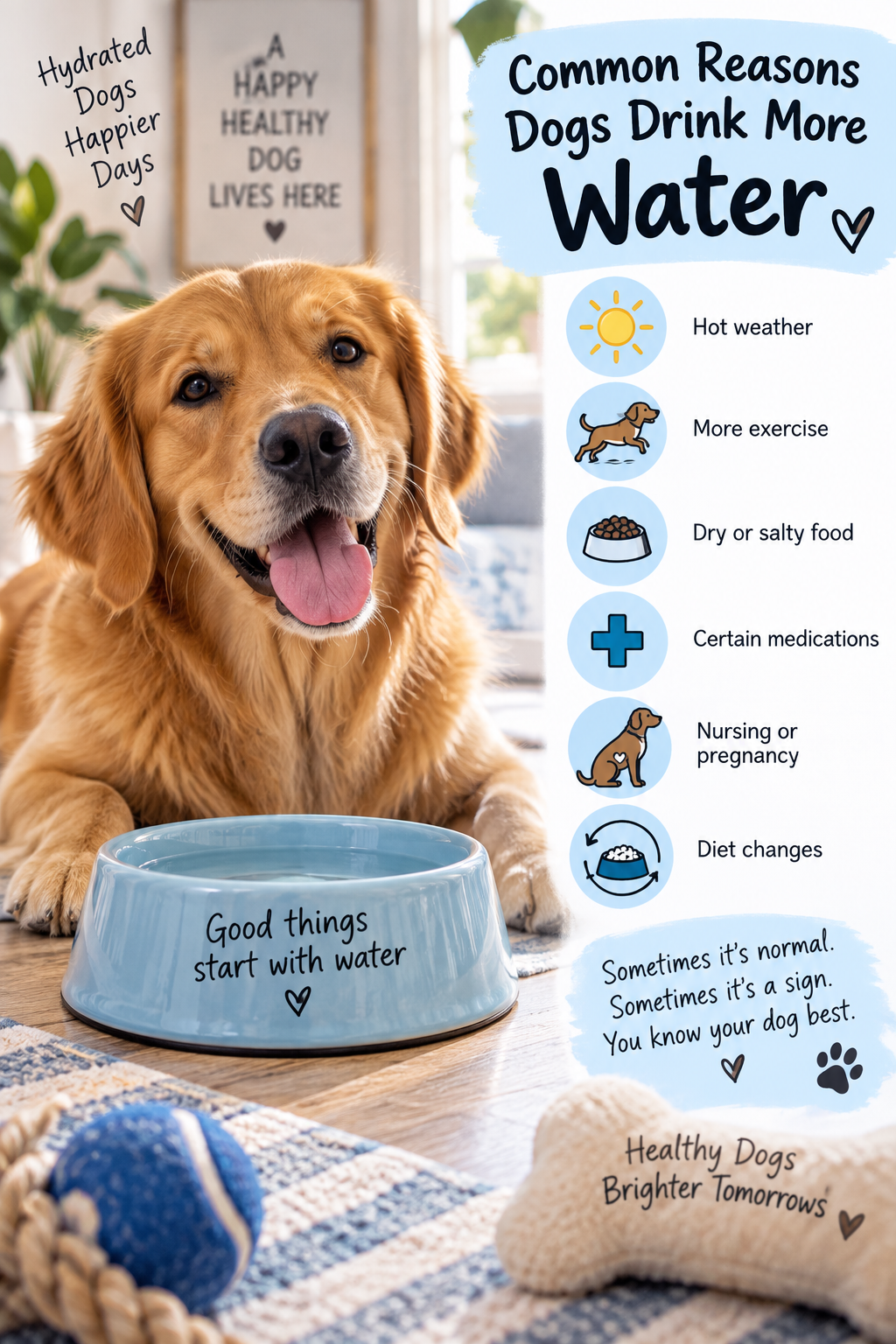
Dogs naturally drink more after exercise, during hot weather, after eating dry or salty food, or when their diet changes. Nursing dogs also need considerably more water.
So if your pup just spent an hour chasing a ball around the backyard on a warm afternoon, an empty water bowl probably isn’t surprising.
What you’re looking for is a change from your dog’s normal routine that sticks around.
One important note: don’t limit your dog’s access to water because you think they’re drinking too much.
If an underlying health problem is causing the increased thirst, restricting water could potentially make things worse.
When Should You Pay More Attention?
One extra-thirsty afternoon usually isn’t a reason to panic.
But if you’re constantly refilling a bowl that used to last much longer, it’s worth paying attention—especially if your dog is also peeing more.
Persistent increases in thirst and urination can sometimes be associated with problems involving the kidneys, liver, urinary tract, hormones, blood sugar, and other parts of the body. Certain medications can also make dogs noticeably thirstier.
Keep an eye out for other changes, including:
Weight loss
Eating much more or less than usual
Peeing in the house
Asking to go outside more often
Producing much larger amounts of urine
Vomiting
Low energy
Cloudy or bloody urine
Waking up during the night to pee or drink
One symptom by itself doesn’t tell you exactly what’s happening. But several changes appearing together are useful information to share with your veterinarian.
Stop Guessing and Measure It
Here’s one of the easiest things you can do at home.
Instead of telling your vet, “I swear this dog is drinking a TON,” actually measure it.
For a day or two, keep track of how much water you put into your dog’s bowl and how much remains at the end of the day.
Just remember that dogs are surprisingly talented at finding unofficial water sources.
If you have multiple pets, outdoor water bowls, an accessible toilet, puddles in the yard, or a dog who considers your unattended glass of water community property, your measurements won’t be perfect.
That’s okay.
You’re simply trying to get a better idea of what’s normal.
Pay attention to bathroom habits at the same time. Is your dog asking to go outside more? Are the puddles noticeably larger? Are they straining to pee? Are they suddenly waking you up at 2 a.m. for a bathroom trip?
Those little details can be extremely helpful.
What Might Your Veterinarian Check?
If the increased drinking continues, your veterinarian will probably start by asking about the changes you’ve noticed at home.
Depending on your dog’s history and physical exam, they may recommend bloodwork, a urine test, or other testing.
These tests can provide clues about things like kidney function, blood sugar, urine concentration, infection, and other possible causes of increased thirst.
And this is exactly why noticing changes in your dog’s everyday habits is so valuable.
The Bark Clinic Takeaway
An empty water bowl after a hot afternoon?
Probably not something to lose sleep over.
An empty water bowl every afternoon when that never used to happen?
That deserves your attention.
You know your dog’s routines better than anyone. Their appetite, energy, bathroom habits, sleeping patterns—and yes, even how often you normally refill that water bowl.
Dogs can’t exactly walk into the kitchen and say, “Hey, I’ve been feeling a little weird lately.”
Sometimes they tell us in smaller ways.
And sometimes, the water bowl tells us first.
This article is educational and is not a substitute for veterinary care. If your dog is unwell, contact your veterinarian.