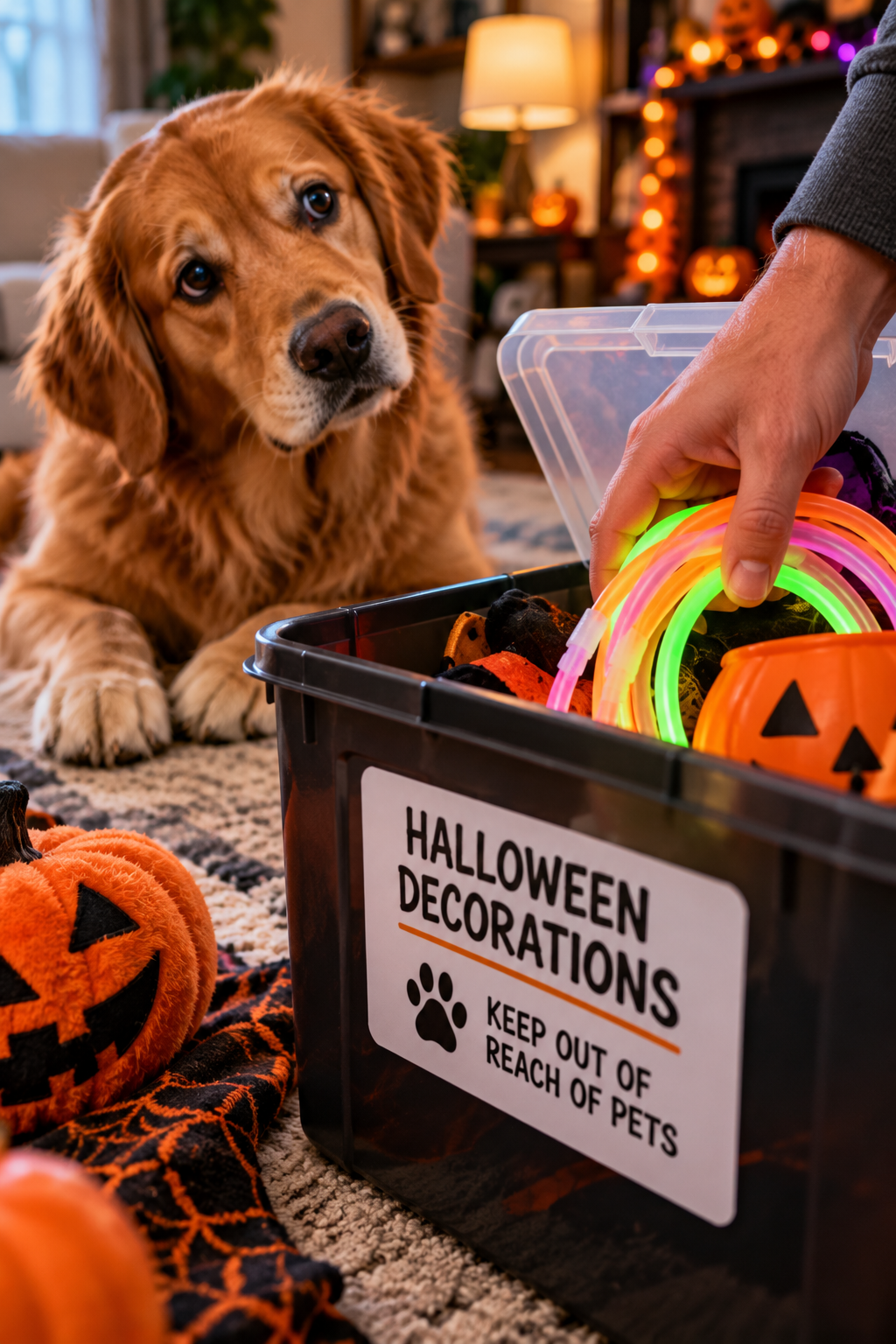
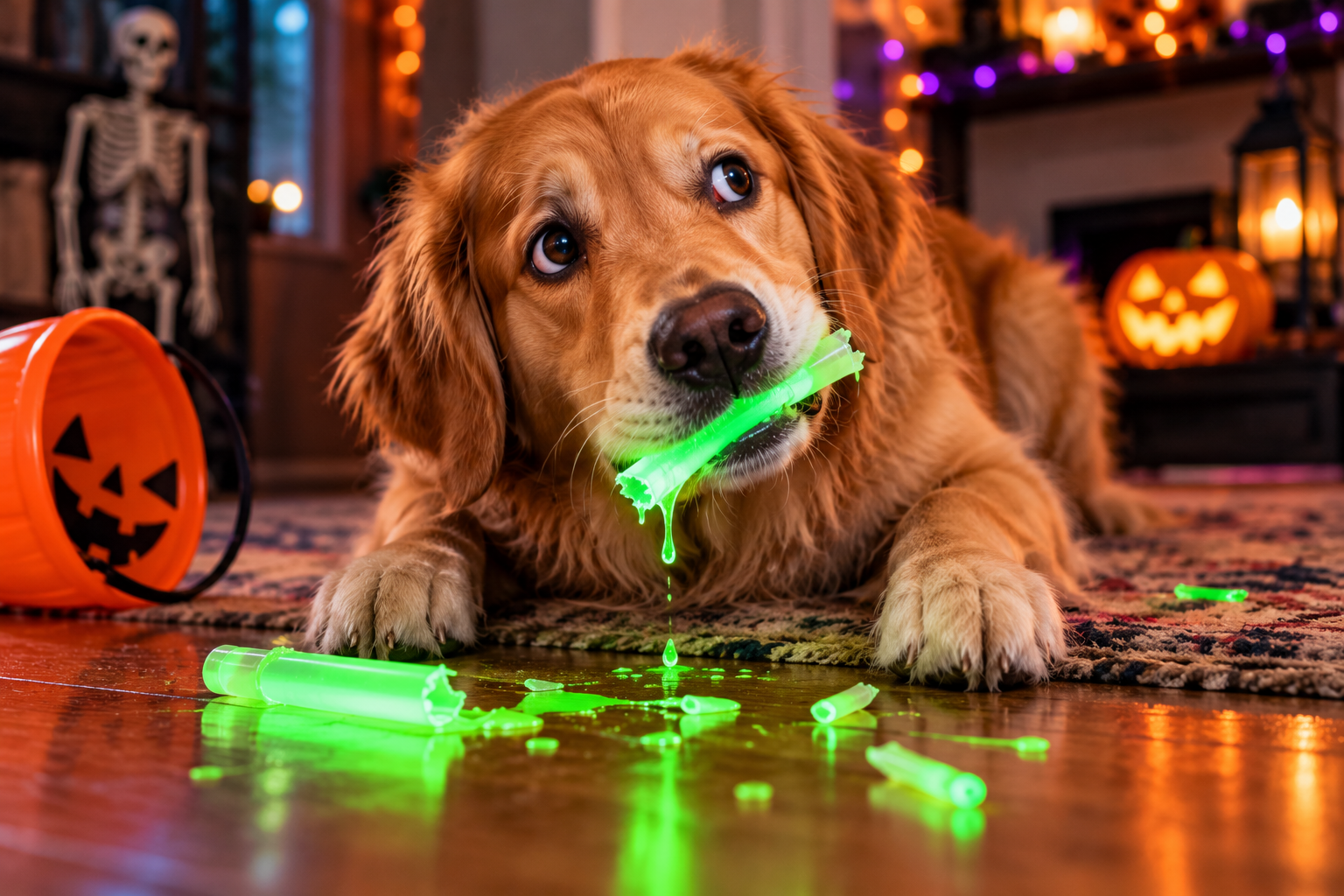
A glowing necklace looks like a toy. Your dog thinks so, too. One crunch later, they may start drooling dramatically and you may start imagining the worst. The good news is that glow-stick liquid usually causes a very bitter taste and irritation rather than severe whole-body poisoning. But that does not make every exposure harmless: the plastic container, glass components in some products, and the amount swallowed still matter.
First: move the glow product out of reach
Keep your dog from chewing more of the item. Check whether the tube or necklace is broken, whether pieces are missing, and whether any liquid is on your dog’s coat or face. If your dog is choking, having trouble breathing, collapsing, or showing severe distress, seek emergency veterinary care immediately.
Why dogs drool or foam after biting a glow stick
The liquid inside common glow products tastes intensely unpleasant and can irritate the mouth. Some dogs react with sudden drooling, gagging, or foaming. The reaction can look alarming even when the chemical exposure itself is relatively limited. Never use appearance alone to decide that your dog is fine.
What to do right away
1. Gently wipe the mouth
If your dog allows it safely, use a clean damp cloth to remove visible residue from the lips, tongue, and mouth. Do not force your fingers into a distressed dog’s mouth or risk a bite.
2. Offer water
Offer fresh water. A small amount of your dog’s normal food or a suitable treat may help replace the bitter taste if your dog is alert, swallowing normally, and your veterinarian has not advised otherwise.
3. Clean any liquid from fur
If liquid got on the coat, wipe or wash it away so your dog cannot lick it off later. Keep the pet warm and comfortable while you assess the situation.
4. Call for individualized advice
Contact your veterinarian or Pet Poison Helpline if you are uncertain what was swallowed, your dog continues to seem unwell, or pieces of the plastic tube are missing. Tell them the product type, your dog’s size, the approximate time, and what symptoms you see.
When the plastic matters more than the glow
A swallowed tube, cap, or fragment can create a choking or digestive-tract problem. Persistent vomiting, abdominal pain, refusal to eat, lethargy, or difficulty passing stool warrant urgent veterinary assessment. Do not induce vomiting unless a veterinary professional directs you to do so.
Preventing another glow-stick surprise
Use reflective leashes or other pet-safe visibility products instead of hanging chewable glow jewelry where your dog can reach it. Keep party favors in closed containers, and check the floor after visitors leave.
The Bark Clinic takeaway
A mouthful of glow liquid can trigger impressive drooling, but missing plastic pieces or ongoing symptoms change the picture. When in doubt, call your vet rather than guessing. For other seasonal risks, read our Halloween dog safety checklist and dog first aid kit guide.
FAQ: Can glow-stick liquid kill a dog?
Common glow-stick liquid is usually associated with mouth irritation and bitter taste rather than severe systemic poisoning, but product formulations and swallowed parts vary. Get professional advice for a specific exposure.
FAQ: Should I make my dog vomit?
No. Do not induce vomiting unless your veterinarian or animal poison specialist specifically tells you to.
This article is educational and is not a substitute for veterinary care. If your dog is unwell, contact your veterinarian.
Keep reading
Why Is My Dog Limping? A Calm Guide to What to Check
A dog can go from sprinting across the yard to three-legged drama in approximately half a second. Limping has many causes, from a tiny burr between the toes to a serious orthopedic...
Read article
When Should I Take My Dog to the Vet? Red Flags You Shouldn’t Ignore
Dogs are talented at acting normal right up until they are very much not normal. That makes one of the hardest parts of dog ownership deciding whether a strange symptom deserves a quiet...
Read article
Why Is My Dog Drinking So Much Water?
A suddenly empty water bowl gets your attention. Sometimes there is an innocent explanation: a hot afternoon, a long hike, dry food, or a rowdy play session. But a sustained increase in...
Read article