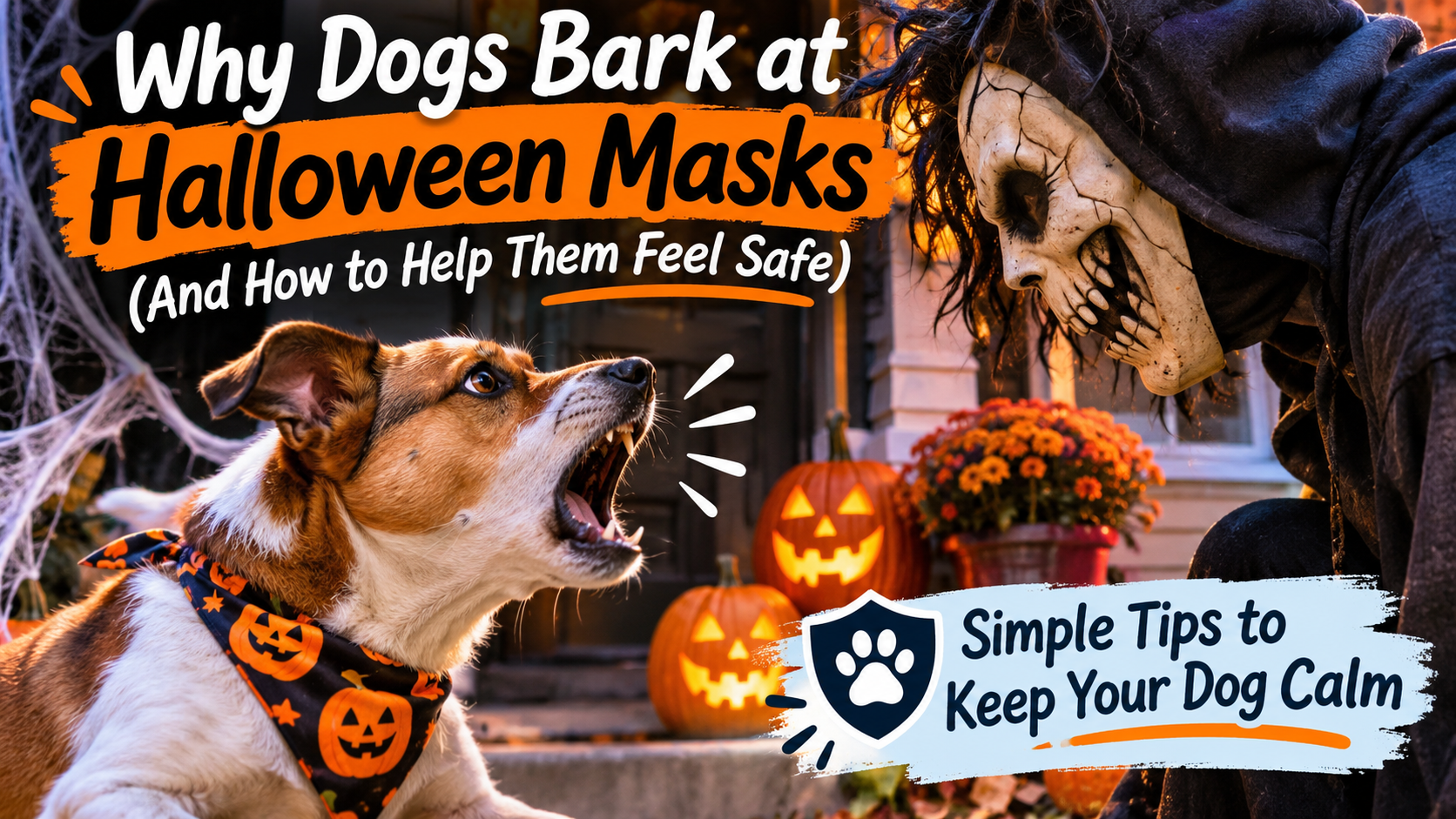
Your dog knows your face, your voice, and your usual routine. Then Halloween arrives and suddenly someone who looks vaguely like a giant pumpkin is standing in the hallway. If your dog barks at a mask, it does not mean they are being dramatic or “bad.” They may simply be unsure what they are seeing.
Why Halloween masks can worry dogs
Dogs pay attention to the whole picture: movement, posture, voice, scent, and familiar visual cues. A mask can hide part of a person’s face, while a cape, oversized hat, or unusual walk changes the silhouette your dog expects. Add a noisy party or a crowd at the door, and an ordinary greeting can become overwhelming.
Barking may be an alert, a request for distance, or a sign of excitement. The bark alone does not tell you which. Look at the rest of the dog: are their muscles loose and their movements bouncy, or are they stiff, backing away, or repeatedly looking for an exit?
Five ways to make masks less intimidating
1. Start with the mask off
Let your dog notice the mask sitting still at a comfortable distance. There is no need to push it toward their nose. Reward relaxed behavior with a treat or a calm “good dog.” If they hesitate, move the mask farther away.
2. Keep the person recognizable
Have a familiar family member speak normally and hold the mask beside their face before trying it on. If your dog is comfortable, the person can briefly put it on while remaining at a distance. Stop before your dog becomes worried.
3. Pair the sight with something pleasant
For a dog who remains relaxed, a few tiny treats or an easy game can help build a better association. This is not a contest to see how close the masked person can get. Comfort, not proximity, is the goal.
4. Give your dog an exit
An open route to a quiet room, a familiar bed, or a barrier between the dog and the activity is a good thing. A dog who chooses to leave is communicating clearly. Respect that choice.
5. Skip surprise scares
Do not jump out, chase your dog, loom over them, or ask children in masks to approach for a photo. Halloween is already plenty weird from a dog’s point of view.
Signs your dog has had enough
Watch for a tucked tail, pinned ears, lip licking when no food is present, yawning, freezing, backing away, hiding, growling, or refusing treats they usually enjoy. A wagging tail does not automatically mean a dog is comfortable. Read the whole body and the situation.
What if your dog barks anyway?
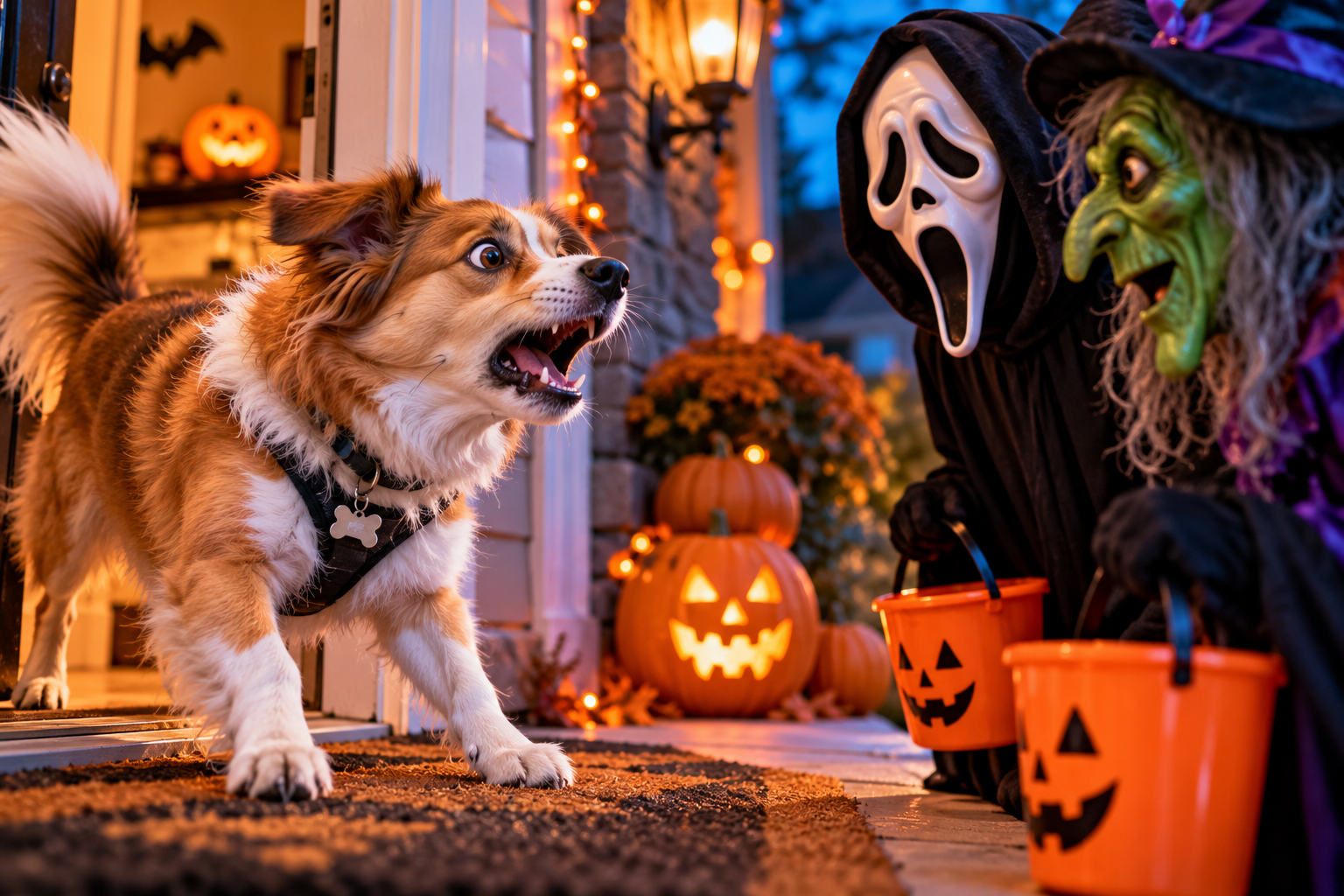
Create distance and lower the excitement. Calmly guide your dog to a familiar safe area and let them settle. Avoid scolding a frightened dog; punishment can make a scary situation feel even worse. If fear around visitors is intense or recurring, ask your veterinarian about qualified, reward-based behavior support.
The Bark Clinic takeaway
Your dog does not need to become best friends with a werewolf to have a good Halloween. A peaceful evening behind a baby gate counts as a win. For more ways to protect your pup’s comfort, explore our Halloween dog safety checklist and dog body language guide.
FAQ: Can dogs recognize someone wearing a mask?
They may still recognize familiar sounds, smells, and movements, but a costume can change enough cues to make them uncertain. Give your dog time to investigate at their own pace.
FAQ: Should I force my dog to sniff the mask?
No. Offer space and choice. Forced exposure can increase fear instead of building confidence.
This article is educational and is not a substitute for veterinary care. If your dog is unwell, contact your veterinarian.
Keep reading
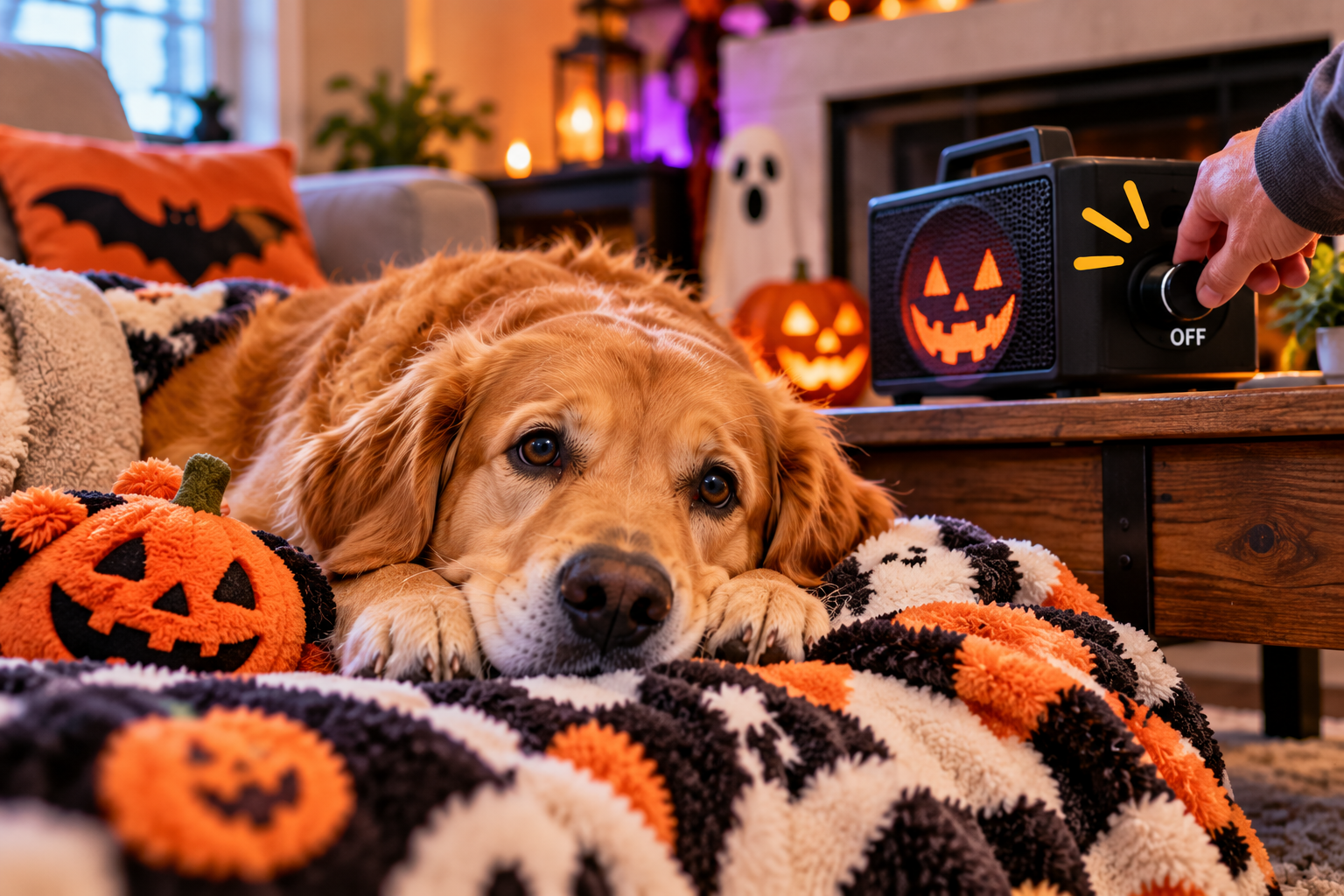
Are Halloween Sound Effects Scaring Your Dog? 7 Ways to Help
Halloween sound effects can frighten some dogs. Learn seven practical ways to reduce noise stress and recognize when your dog needs a quieter space.
Read article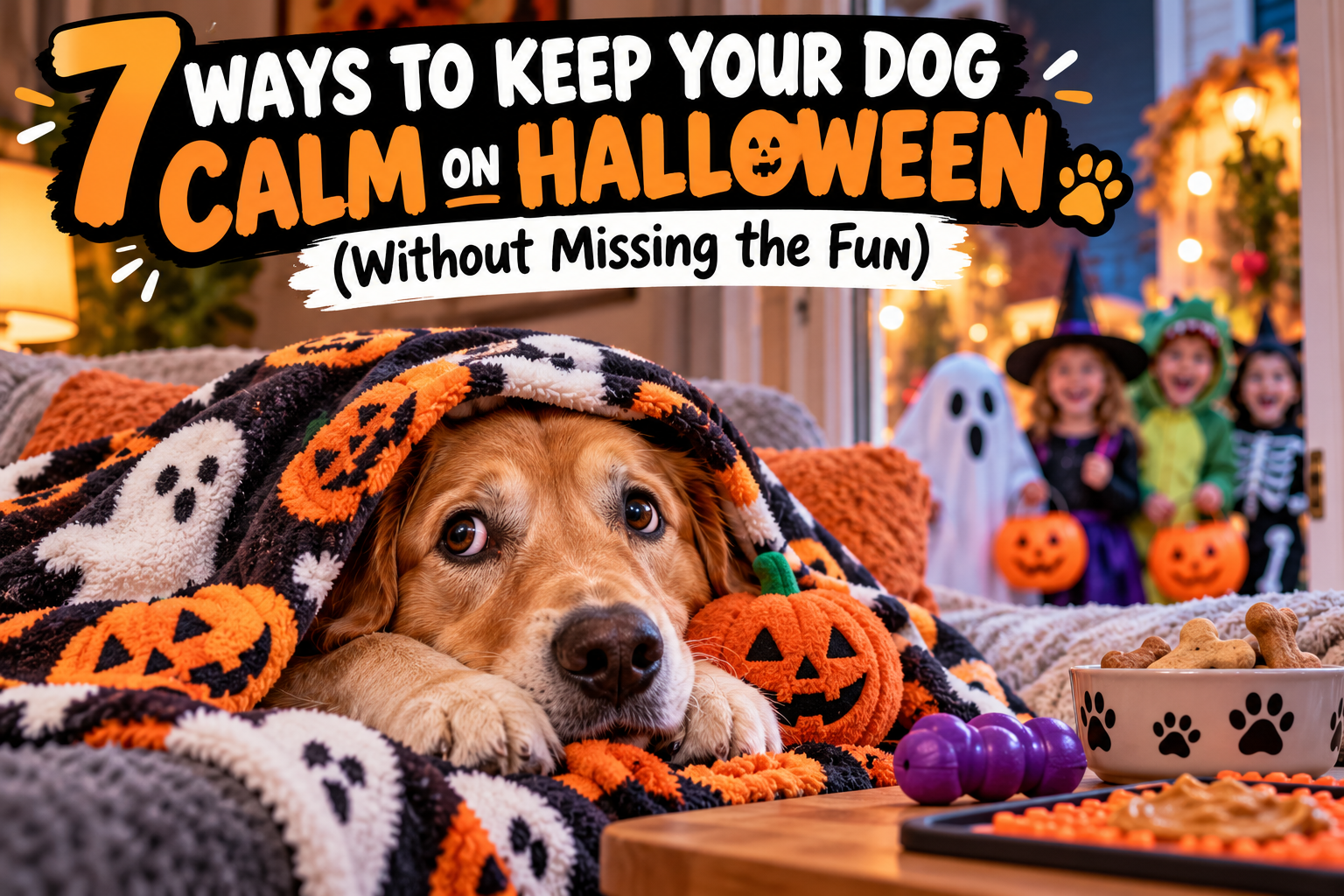
7 Ways to Keep Your Dog Calm on Halloween (Without Missing the Fun)
Doorbells, spooky costumes, and nonstop trick-or-treaters? Halloween can overwhelm even the friendliest dogs. Discover seven simple ways to help your pup feel safe, comfortable, and calm during the festivities.
Read article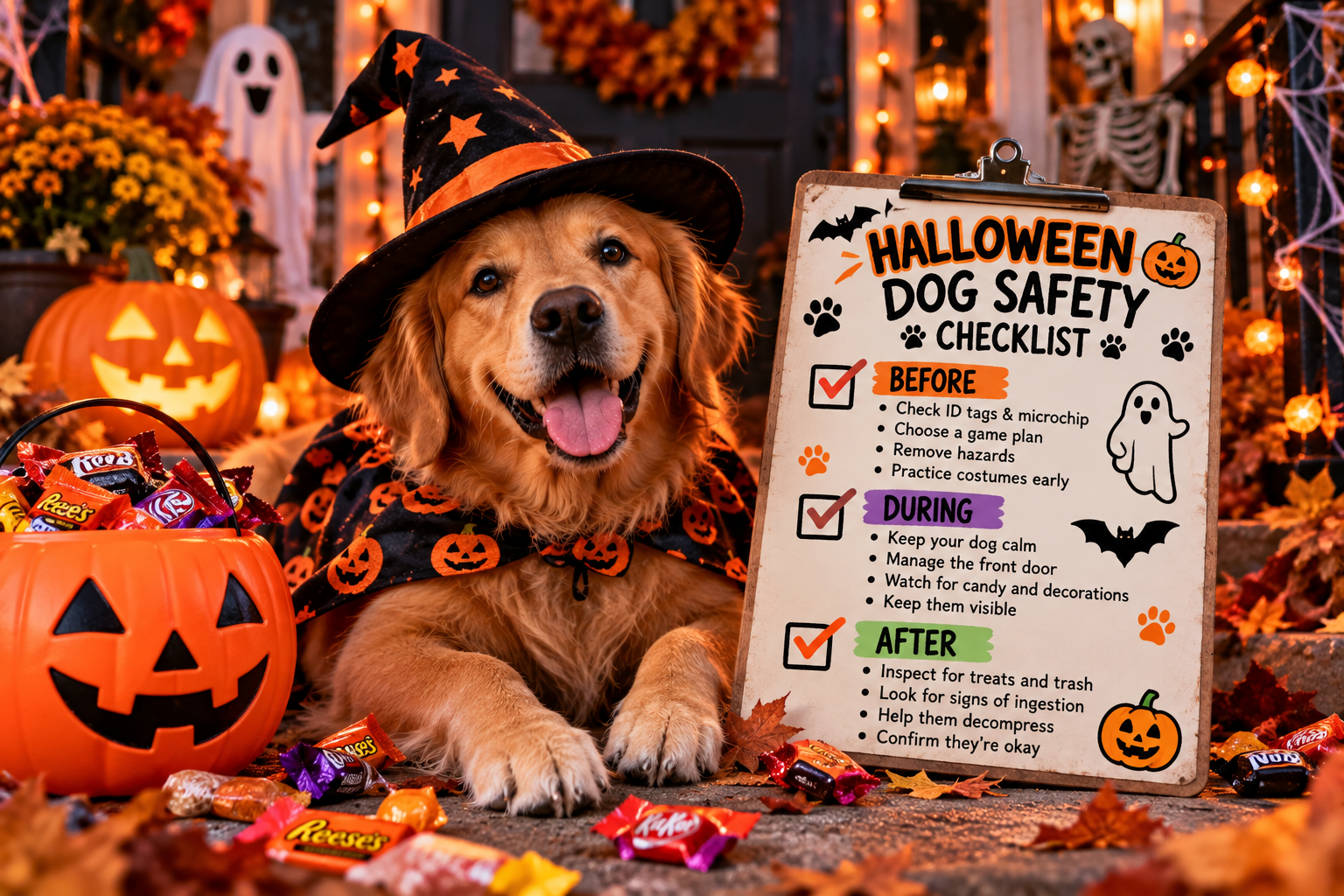
The Ultimate Halloween Dog Safety Checklist: Before, During & After Trick-or-Treating
Halloween is full of fun—and a surprising number of dog hazards. Use this before-during-after checklist to keep the candy, costumes and chaos from becoming an emergency.
Read article