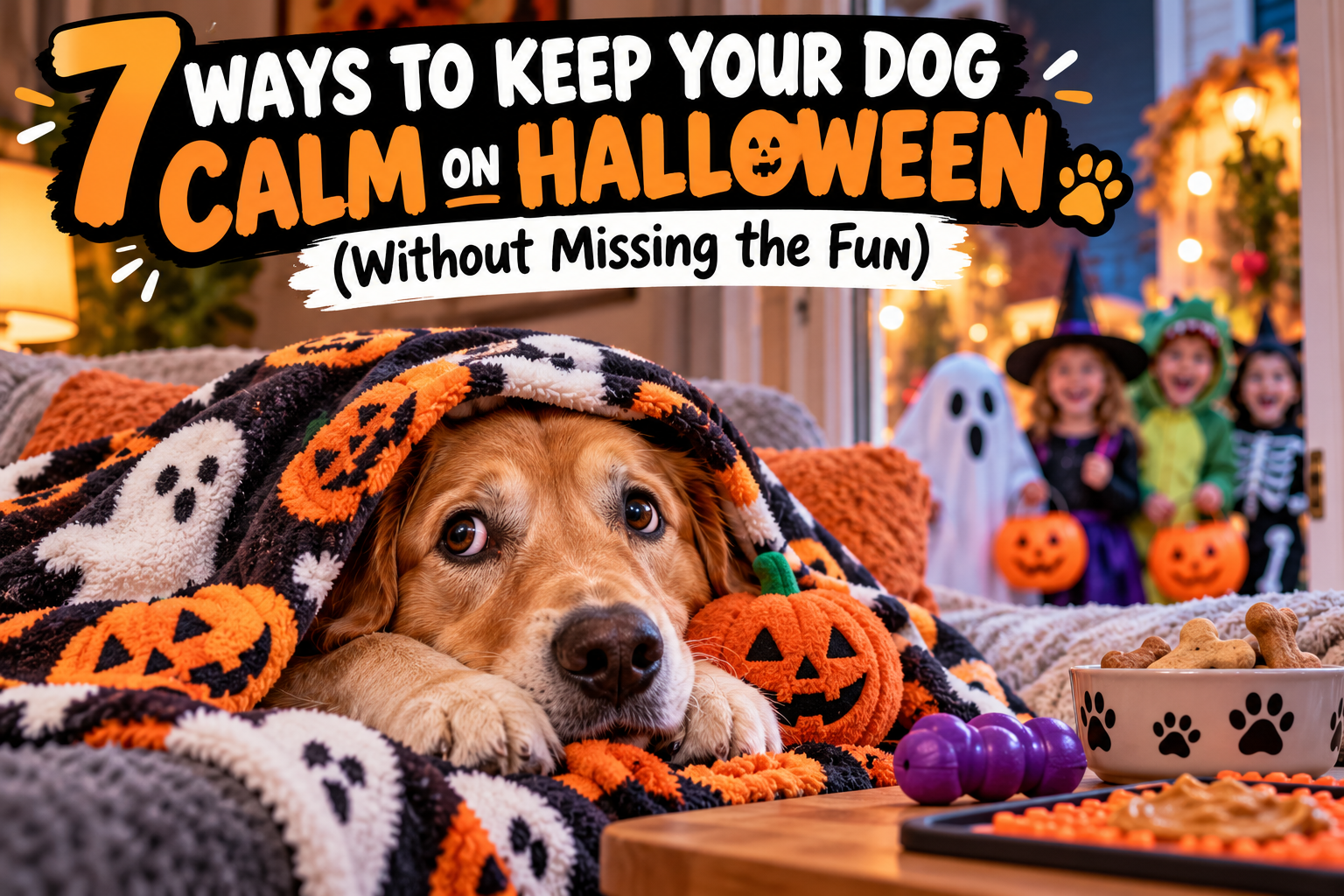
Because your dog didn't agree to spend October 31 surrounded by tiny monsters ringing the doorbell.
Halloween is wonderful. You've got pumpkins glowing on the porch, candy waiting by the front door, and an adorable little dinosaur making his way up your sidewalk.
Your dog, meanwhile, is convinced the neighborhood has been invaded.
Think about it from their perspective. The doorbell won't stop ringing. Strangers are wearing enormous masks. The decorations are making suspicious noises. And everyone keeps acting like this is perfectly normal.
For some dogs, Halloween is exciting. For others, it's an evening of confusion, barking, pacing, and wondering why their humans have completely lost their minds.
Fortunately, keeping your dog calm on Halloween doesn't mean canceling the festivities. A little preparation can make the evening much more comfortable for everyone.
Here are seven ways to help your pup handle the spooky season.
Why Do Dogs Get Anxious on Halloween?
Dogs thrive on familiarity. They learn which sounds belong in their homes, recognize regular visitors, and develop routines that help them feel secure.
Halloween changes practically everything.
Suddenly, your normally quiet front porch becomes a revolving door of ghosts, superheroes, and miniature serial killers asking for candy.
Some common Halloween anxiety triggers include:
Repeated doorbell ringing and knocking
Strangers approaching the house
Unfamiliar costumes, masks, and decorations
Loud voices, laughter, and excited children
Changes to the family's normal routine
Flashing lights and unexpected sounds
Not every dog reacts the same way. Some bark at the door. Others hide behind furniture, pace around the house, or follow their owners everywhere.
The goal isn't to convince your dog that Halloween is the greatest holiday ever. It's to help them feel safe while the neighborhood celebrates.
1. Create a Halloween Hideaway Before the Chaos Begins
Imagine trying to relax in your living room while someone rings your doorbell 87 times.
Now imagine having much better hearing.
Your dog deserves somewhere to escape the madness.
Choose a quiet room away from the front entrance and turn it into a comfortable retreat. Include their favorite bed, a familiar blanket, fresh water, and a few toys.
Close the curtains if passing trick-or-treaters make your dog nervous.
A little background music or white noise may help soften the sounds coming from outside.
If your dog already loves their crate, you can make it available. Just don't suddenly confine a frightened dog in an unfamiliar crate.
The Bark Clinic tip: Set up the room several days before Halloween. Give your dog treats and opportunities to relax there so it already feels like a happy place.
The ASPCA also recommends keeping most pets away from the front door during busy trick-or-treating hours.
2. Give Your Dog Something Better to Do Than Bark at Ghosts
Your dog hears the doorbell.
Your dog barks.
You open the door.
Your dog sees a six-foot inflatable chicken.
Naturally, your dog barks again.
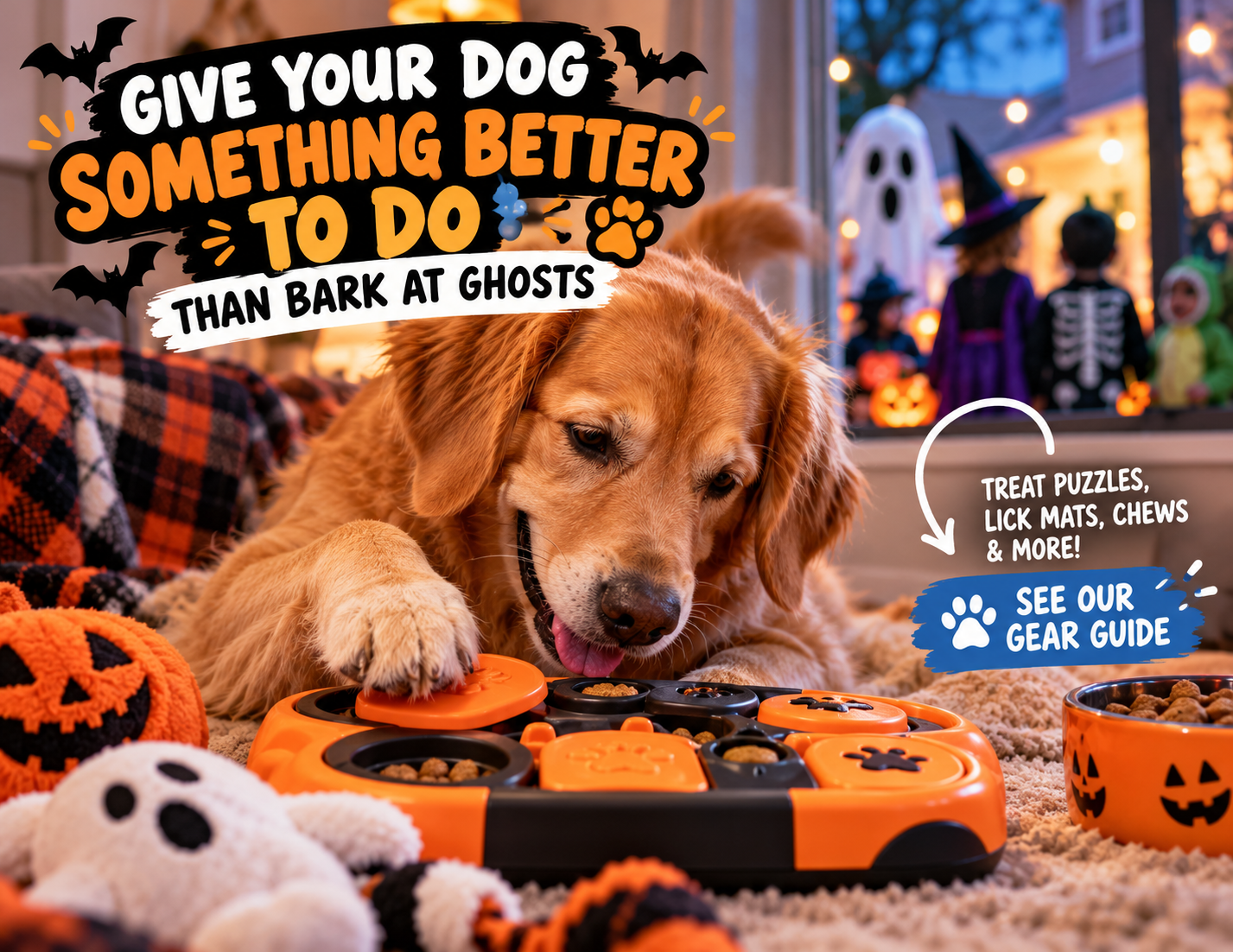
Instead of expecting your pup to ignore the excitement, give them something enjoyable to focus on.
Try a stuffed food puzzle, a lick mat, or a favorite chew that is appropriate for their size and chewing habits.
You can also scatter a few treats around a safe room and let your dog sniff them out.
Sniffing and food-based enrichment can provide a rewarding activity and help some dogs settle.
Try this: Prepare a food toy ahead of time using ingredients your dog already tolerates. Offer it before the trick-or-treating rush begins, rather than waiting until your dog is overwhelmed.
Always supervise items that could break apart or become choking hazards.
And remember, a dog who is too frightened to eat needs less exposure to the scary situation, not a more exciting treat.
3. Stop the Doorbell From Becoming Your Dog's Personal Nightmare
For many dogs, the doorbell is already an announcement that something extremely important is happening.
On Halloween, that announcement repeats approximately every 30 seconds.
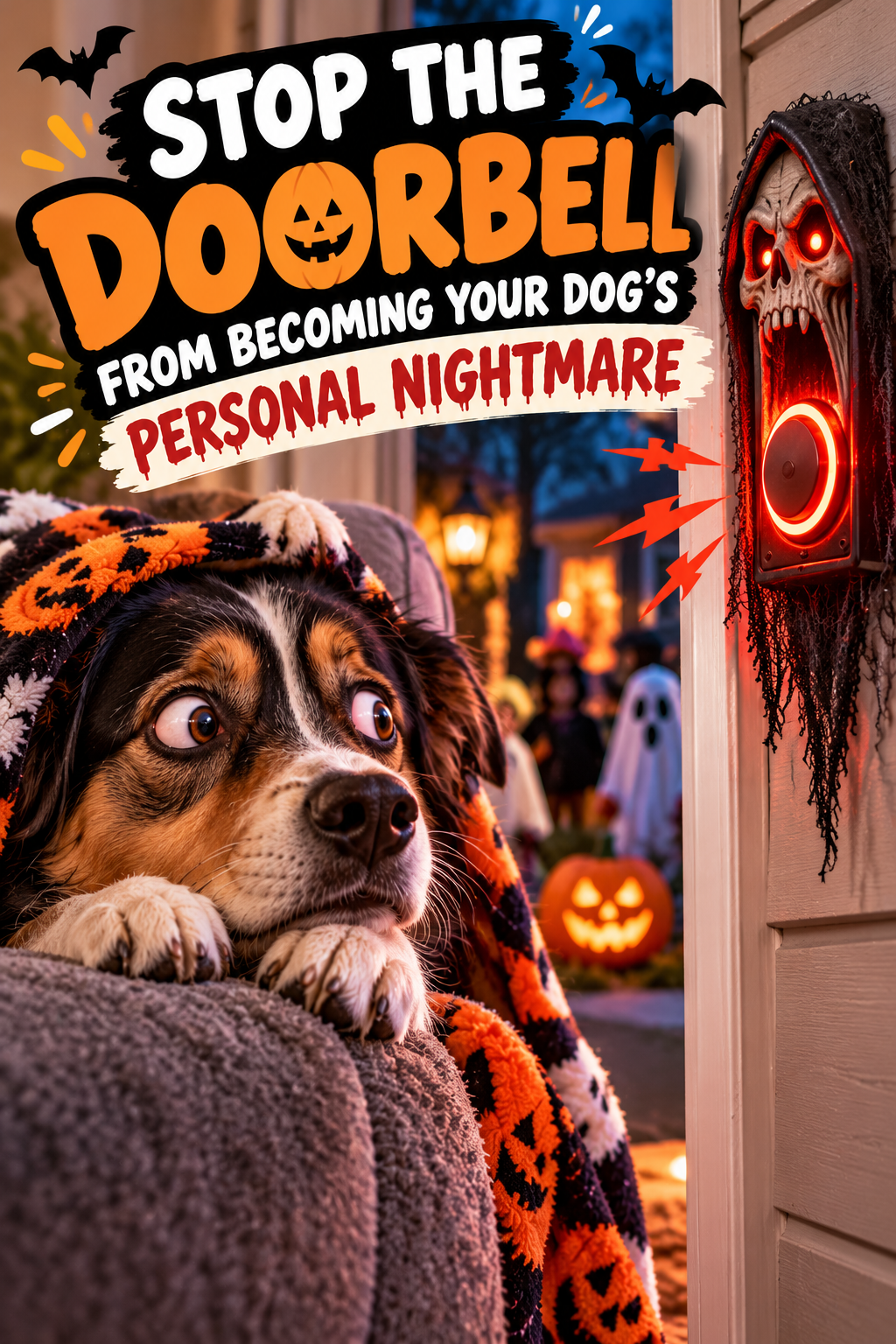
One simple solution? Remove the doorbell from the equation.
You can sit outside to distribute candy, place a bowl on the porch if appropriate, or hang a friendly sign asking visitors not to ring.
If your dog has mild doorbell anxiety, you can practice beforehand.
Play a quiet recording of a doorbell at a level that doesn't upset your dog, then reward relaxed behavior with a small treat.
Gradually work toward realistic sounds over multiple short sessions, only while your dog remains comfortable.
Don't repeatedly ring the real doorbell while your dog panics. That's not training. That's just giving your dog a terrible afternoon.
Important: Dogs with severe noise fears may need a training plan developed with a qualified professional. Forcing exposure can make anxiety worse.
4. Take Your Halloween Walk Before the Neighborhood Gets Weird
Your dog probably enjoys a familiar evening stroll.
But on Halloween, that peaceful sidewalk might suddenly contain a moving skeleton, a fog machine, and a group of screaming children dressed as zombies.
Not exactly the usual sniff-and-stroll experience.
Consider taking your dog's main walk earlier in the afternoon, before trick-or-treaters arrive.
Give them plenty of time to sniff, explore, and enjoy some age-appropriate physical activity.
A satisfying walk can help meet their exercise and enrichment needs before the evening festivities.
Just don't try to exhaust your dog into submission with an unusually intense workout.
If your dog needs a bathroom break after dark, keep it brief and choose a quiet area. Use a secure leash and harness, and make sure identification tags and microchip details are current.
5. Let Your Dog Skip the Costume Contest
We know. Your dog would look absolutely magnificent dressed as a tiny vampire.
But does your dog agree?
Some dogs happily wear costumes. Others act as though a lightweight pumpkin hat is an elaborate medieval torture device.
Watch your dog's body language.
If they're freezing, repeatedly trying to remove the outfit, lowering their tail, or attempting to hide, it's time to abandon the fashion show.
You can still take adorable Halloween pictures without dressing your dog.
Try a festive blanket, pumpkins positioned safely nearby, or a seasonal backdrop.
If your dog genuinely enjoys wearing clothes, choose something lightweight that doesn't interfere with movement, vision, hearing, breathing, or normal behavior.
Never leave a costumed dog unattended.
Remember: Your dog doesn't have to participate in every human tradition to be part of the family.
6. Learn the Signs Your Dog Has Had Enough
Dogs can't tell us, "Excuse me, but this haunted-house situation is getting ridiculous."
They communicate through body language instead.
Some Halloween stress signals are obvious. Others are surprisingly easy to miss.
Watch for:
Repeated lip licking or yawning when not tired
Panting without exercise or heat
Pacing or restlessness
Trembling or hiding
Ears pulled back and a tucked tail
Refusing treats they normally love
Growling, freezing, or trying to escape
A dog showing these behaviors may be uncomfortable or frightened.
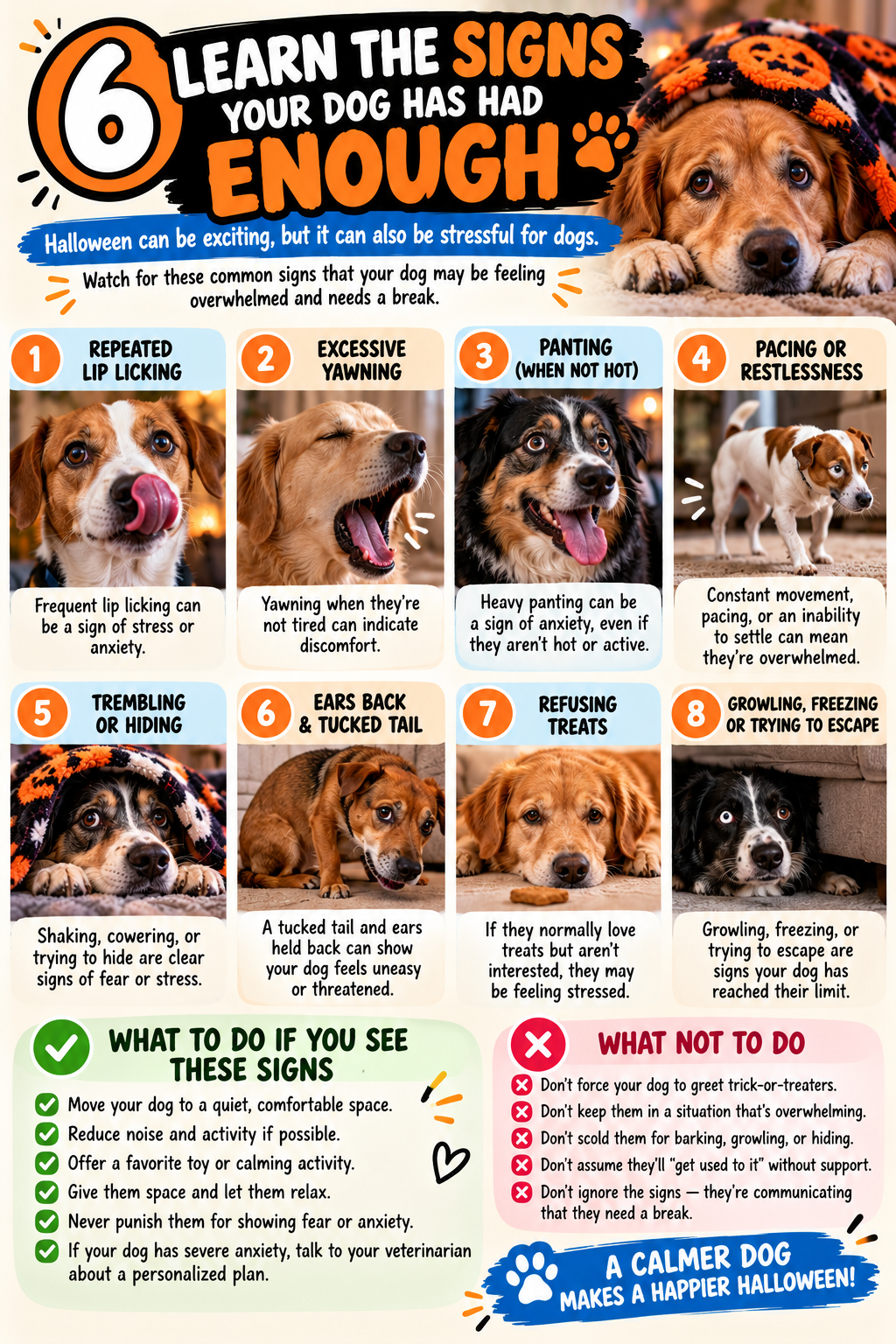
If you notice them, reduce the stimulation. Move your dog somewhere quieter, give them space, and let them choose whether they want gentle reassurance.
Never punish your dog for barking, growling, or showing fear.
Growling is communication, not an act of rebellion.
And forcing a frightened dog to greet strangers can increase stress rather than build confidence.
If your dog experiences intense fear, panics, or has a history of severe anxiety, speak with your veterinarian before Halloween about a personalized management plan.
7. Keep Halloween Night as Normal as Possible
Dogs don't care that it's October 31.
They care that dinner usually happens at six, their favorite human sits on the couch at seven, and bedtime involves a very specific blanket arrangement.
Try to preserve as much of that routine as possible.
Serve meals at the usual time. Keep familiar resting areas available. Offer normal bathroom breaks and spend some quiet time together.
If your dog prefers to sleep through the festivities in another room, that's perfectly fine.
You don't need to make them part of the action.
Sometimes the kindest Halloween gift you can give your dog is permission to completely ignore Halloween.
And really, who among us hasn't wanted to skip a party and stay home with snacks?
Your Dog's Halloween Calm-Down Checklist
Before the first trick-or-treater arrives, run through this quick checklist:
Take your dog for an earlier walk or sniffing session.
Prepare a quiet room away from the front door.
Close curtains and reduce unnecessary noise.
Have familiar enrichment toys ready.
Decide how you'll handle doorbell ringing.
Check identification tags and secure exterior doors.
Keep Halloween candy and decorations out of reach.
Watch your dog's body language throughout the evening.
A few small changes can make a surprisingly big difference.
Frequently Asked Questions
How can I calm my dog during trick-or-treating?
Move your dog to a quiet, familiar space away from the front entrance. Provide comfortable bedding, fresh water, and a favorite food toy if they are relaxed enough to enjoy it. White noise or soft music may help reduce outside distractions.
Should I let my dog greet trick-or-treaters?
Only if your dog is genuinely comfortable around unfamiliar people, costumes, and excited children. Even friendly dogs can become overwhelmed. Keeping your dog safely away from the entrance is often the easier option.
Can I give my dog something for Halloween anxiety?
Speak with your veterinarian before giving your dog calming supplements, medications, or human products. Some dogs with significant anxiety benefit from a veterinary treatment plan arranged before Halloween.
Why does my dog bark more on Halloween?
Unusual sounds, unfamiliar visitors, repeated doorbell ringing, and changes in routine can trigger alert barking or fear-related barking. Reducing exposure and rewarding calm behavior can help, depending on the underlying cause.
What if my dog is terrified of Halloween?
Don't force your dog to participate. Give them access to a secure, quiet space and minimize exposure to triggers. If your dog experiences severe or recurring fear, contact your veterinarian for guidance.
A Happy Halloween Doesn't Have to Be a Loud One
Halloween should be fun, but your dog doesn't need to love every costume, decoration, or unexpected visitor.
Some pups will happily supervise the festivities from the couch. Others would prefer to disappear into their favorite blanket until November.
Both are perfectly reasonable.
By preparing a calm environment, offering enjoyable activities, and respecting your dog's comfort level, you can help make Halloween less stressful.
And if your dog decides that the safest place in the house is directly beside you?
Well, that's not the worst way to spend a spooky evening.
Want more ways to protect your pup this Halloween? Explore The Bark Clinic's Halloween collection for costume ideas, seasonal activities, and our Ultimate Halloween Dog Safety Checklist.
Sources and further reading
The Bark Clinic provides general dog-care education, not individualized veterinary advice. Contact your veterinarian for concerns about severe anxiety or unusual behavior.
This article is educational and is not a substitute for veterinary care. If your dog is unwell, contact your veterinarian.
Keep reading
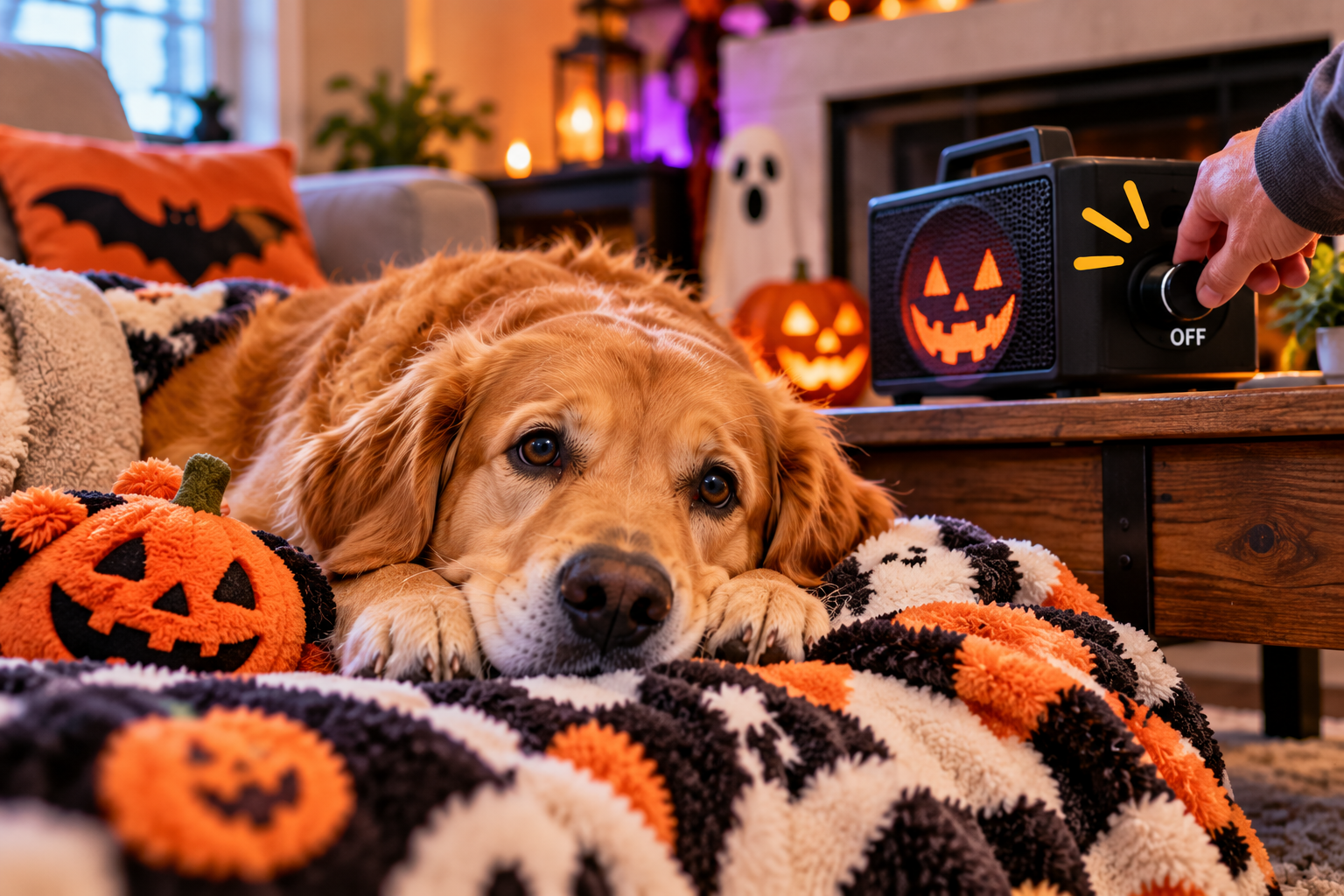
Are Halloween Sound Effects Scaring Your Dog? 7 Ways to Help
Halloween sound effects can frighten some dogs. Learn seven practical ways to reduce noise stress and recognize when your dog needs a quieter space.
Read article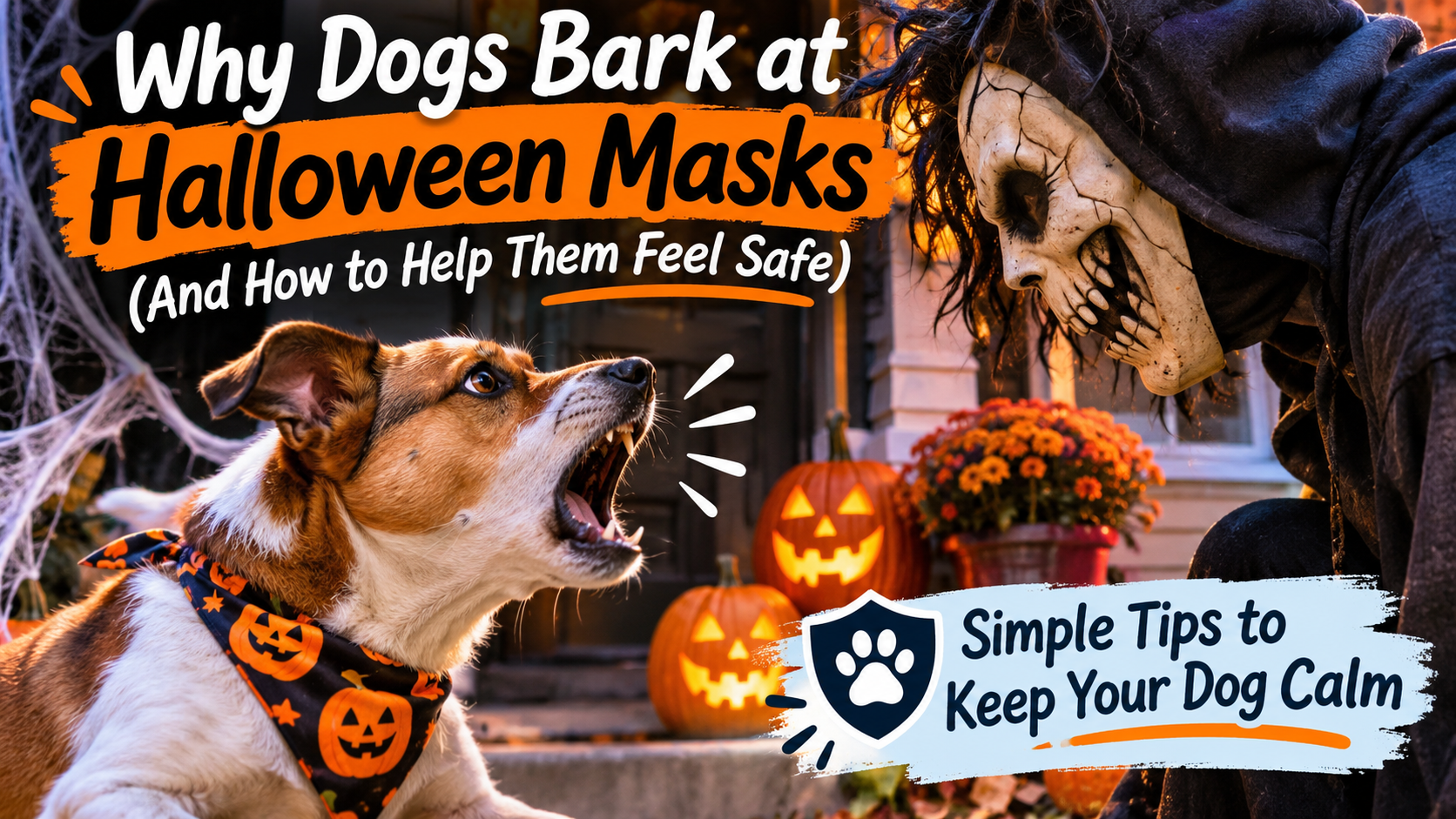
Why Dogs Bark at Halloween Masks (And How to Help Them Feel Safe)
Why do dogs bark at Halloween masks? Learn why costumes can worry dogs, how to introduce masks gently, and when to give your pup space.
Read article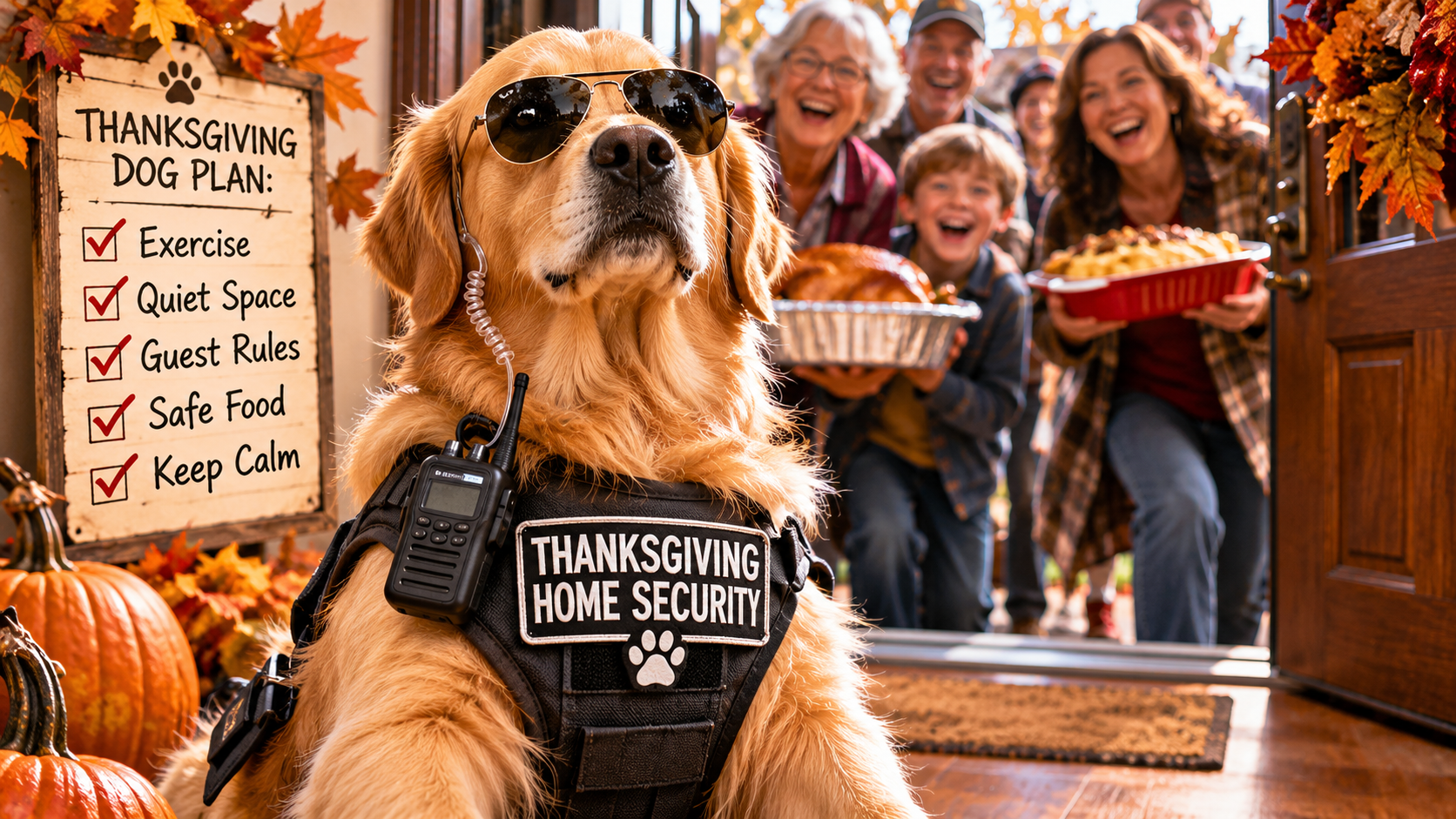
How to Keep Your Dog Calm During Thanksgiving (When Your Family Is Anything But)
The turkey is roasting, the doorbell won't stop ringing, and your dog has appointed themselves head of security. Here's how to survive Thanksgiving with your pup's sanity intact.
Read article