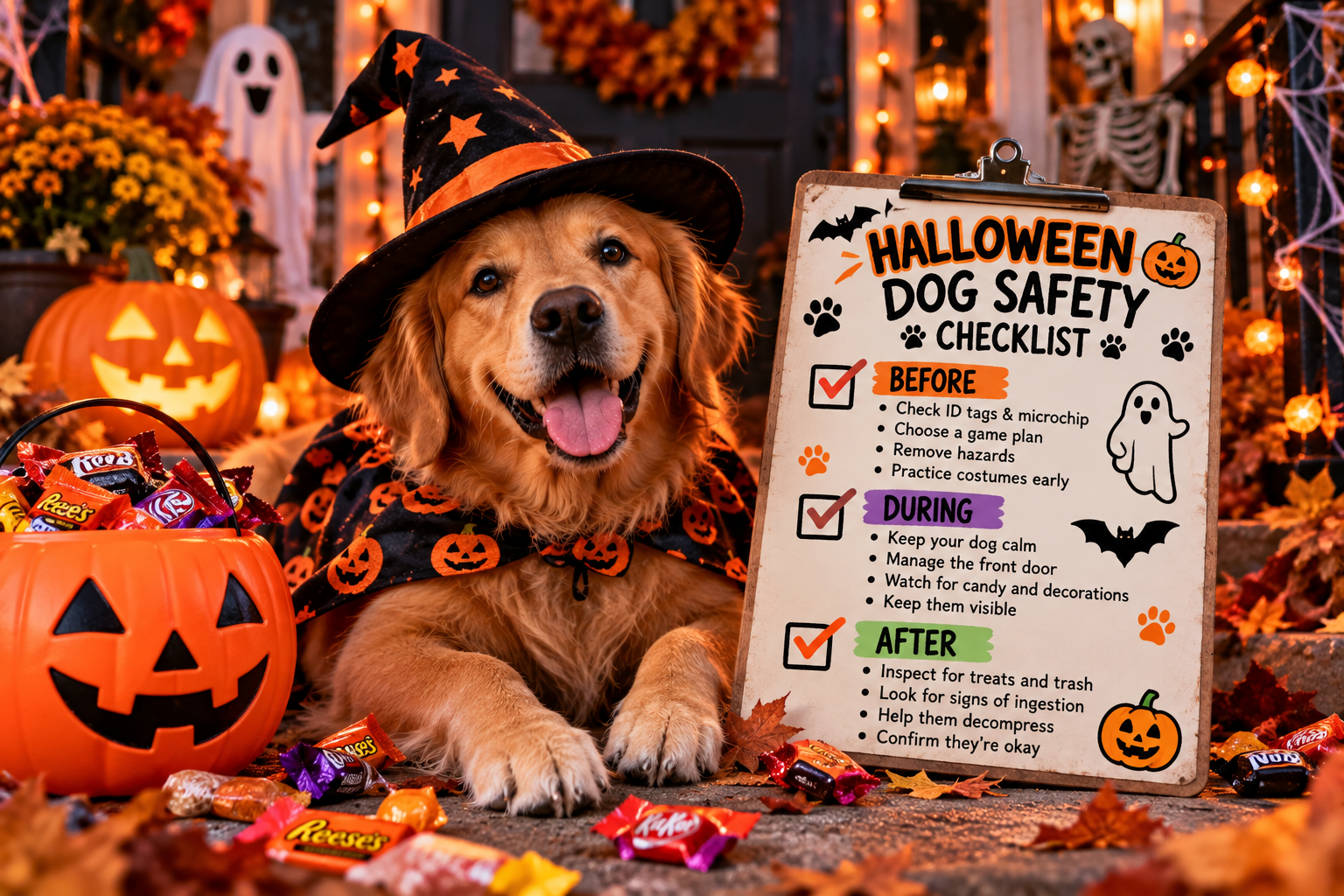
Spooky Season Is Great. Emergency Vet Visits Are Not.
A glow-in-the-dark skeleton on your porch? Fun. A dog who snatches a whole dark chocolate bar while you admire said skeleton? Much less fun.
Halloween combines everything that confuses canine logic: a front door ringing every 45 seconds, small humans disguised as giant dinosaurs, low-hanging snacks, and spooky dangling props. A little prep keeps your pup safe and sane.
This checklist draws on Halloween guidance from the ASPCA, VCA Animal Hospitals, and Pet Poison Helpline.
One Week Before Halloween: Set Up for Success
Check ID tags & microchips
Constant door opening means prime escape opportunities. Make sure tags are readable, microchip info is updated, and you have a clear, recent photo handy.
Pick your dog's Halloween game plan
Decide now whether your pup will hang out in a quiet back room, relax behind a baby gate, or skip the festivities entirely. Winging it while six superheroes demand candy is a recipe for chaos.
Practice the quiet-room routine
Set up a comfy bed, water, and favorite toys in a quiet room away from the front door. Visit it together during normal hours so it feels like a cozy sanctuary, not doggy jail.
Test any costume in advance
Ensure it doesn't restrict vision, hearing, breathing, movement, or potty access. If your dog freezes or looks miserable, ditch the costume—a seasonal bandana is just as cute.
Save emergency contacts
Store your regular veterinarian, nearest 24-hour emergency hospital, and an animal poison-control number in your phone. The ASPCA Animal Poison Control Center is 888-426-4435; Pet Poison Helpline is 855-764-7661. Fees may apply.
Halloween Morning: Dog-Proof the House
Lock down the candy stash
Coffee tables are not safe zones. Chocolate and sugar-free treats containing xylitol (often listed as birch sugar or wood sugar) are toxic. Keep all loot high and inside closed cabinets.
Check for raisins and other risky snacks
Raisin snack boxes, grapes, macadamia nuts, alcohol, and party dips containing onion or garlic can all cause serious medical emergencies. Keep party spreads out of counter-surfing range.
Plan for candy wrappers
Dogs aren't known for unwrapping snacks first. Foil and plastic wrappers cause life-threatening intestinal blockages. Keep a lidded trash can right by your trick-or-treat bowl.
Secure decorations, wires, and batteries
Keep light cords, fake cobwebs, glow sticks, and battery-powered props out of reach. Chewed batteries cause severe chemical burns, and glow-stick fluid causes intense mouth irritation.
Use flameless pumpkin lighting
An enthusiastic tail wag can turn a real candle into a fire hazard instantly. Use flameless LED lights, and toss out carving pumpkins before they turn into moldy dog snacks.
Keep party food and drinks off low tables
The Halloween buffet is not a dog buffet. Secure alcohol, chocolate desserts, bones, skewers, greasy leftovers, and foods seasoned with onion or garlic.
Before the First Trick-or-Treater Arrives
Take your dog for an early walk
Burn off energy before dark and before costumed crowds hit the streets. Keep a watchful eye out for dropped treats on sidewalks.
Feed dinner on the normal schedule
Stick to your normal feeding routine to keep digestive systems happy. Don't introduce wild new treats on an already hectic night.
Set up the calm zone
Close blinds to block spooky shadows, turn on ambient TV or music to drown out constant doorbells, and offer a slow-feeder toy with familiar food.
Put a barrier between your dog and the front door
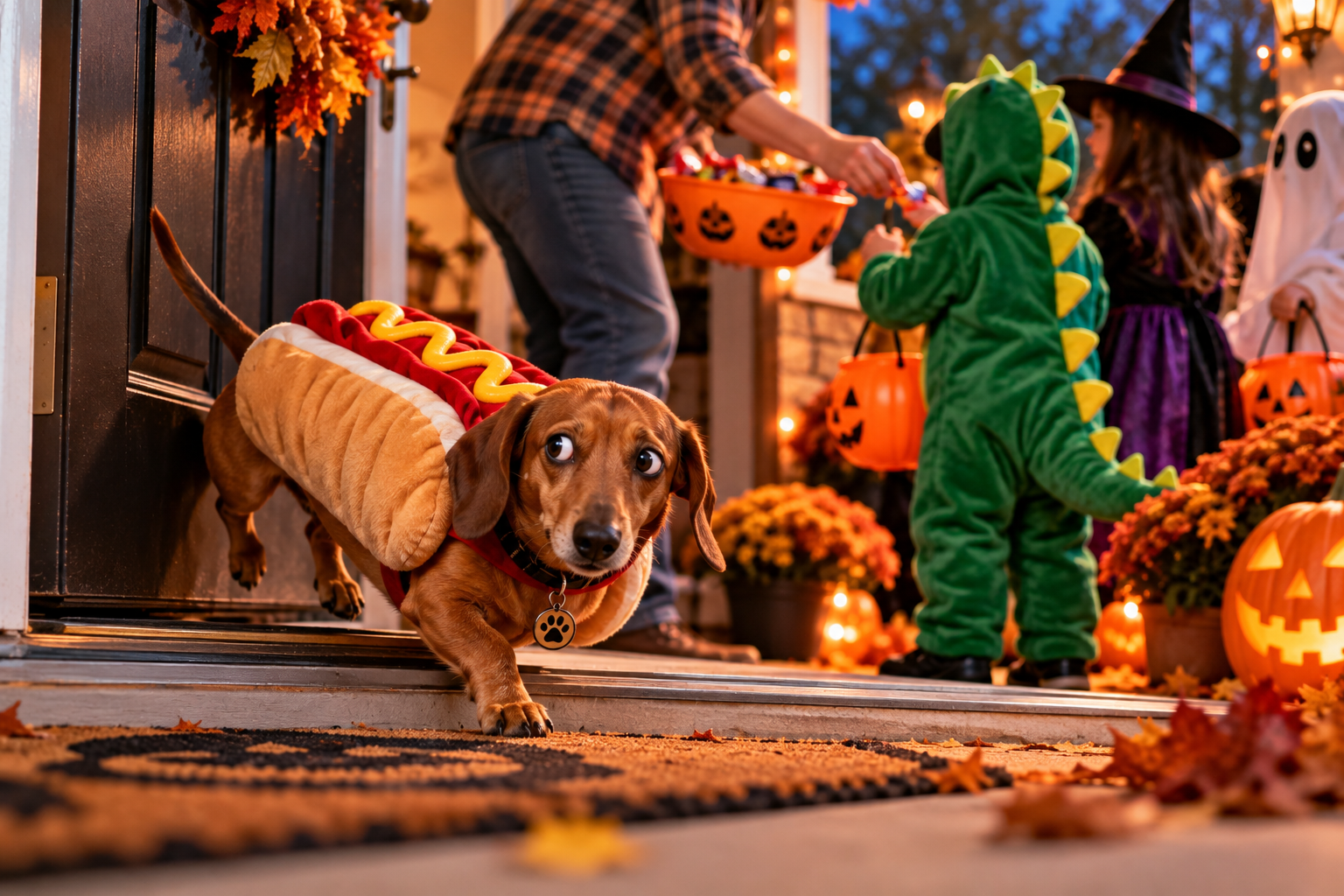
Relying on "stay" when a spooky skeleton shows up at the door is risky. Use a secure baby gate or a closed door so nobody darts out into the night.
During Trick-or-Treating: Keep the Night Predictable
Don't force greetings
Masks, wigs, and weird noises can alarm even friendly dogs. Never force interactions or photo ops if your pup shows fear signals like lip-licking, yawning, or a tucked tail.
Supervise costumes and accessories
Remove the costume if your dog pants heavily, freezes, paws at it, or tries to escape. Watch for overheating, particularly in thick-coated dogs or warm houses.
Keep dogs indoors, not unattended in the yard
Crowds, noise, open gates, and people passing by make a yard less predictable than usual. Even a normally calm dog can panic or bark at strangers.
Check the floor and doorstep periodically
Dropped candies, loose wrappers, and stray glow sticks accumulate fast near entryways. Do quick floor sweeps throughout the evening.
Do a final post-Halloween sweep
Before heading to bed, check trick-or-treat bags, under living room furniture, porch steps, and trash cans. The candy risk doesn't end when the doorbell stops ringing.
Emergency Box: What If Your Dog Eats Something Dangerous?
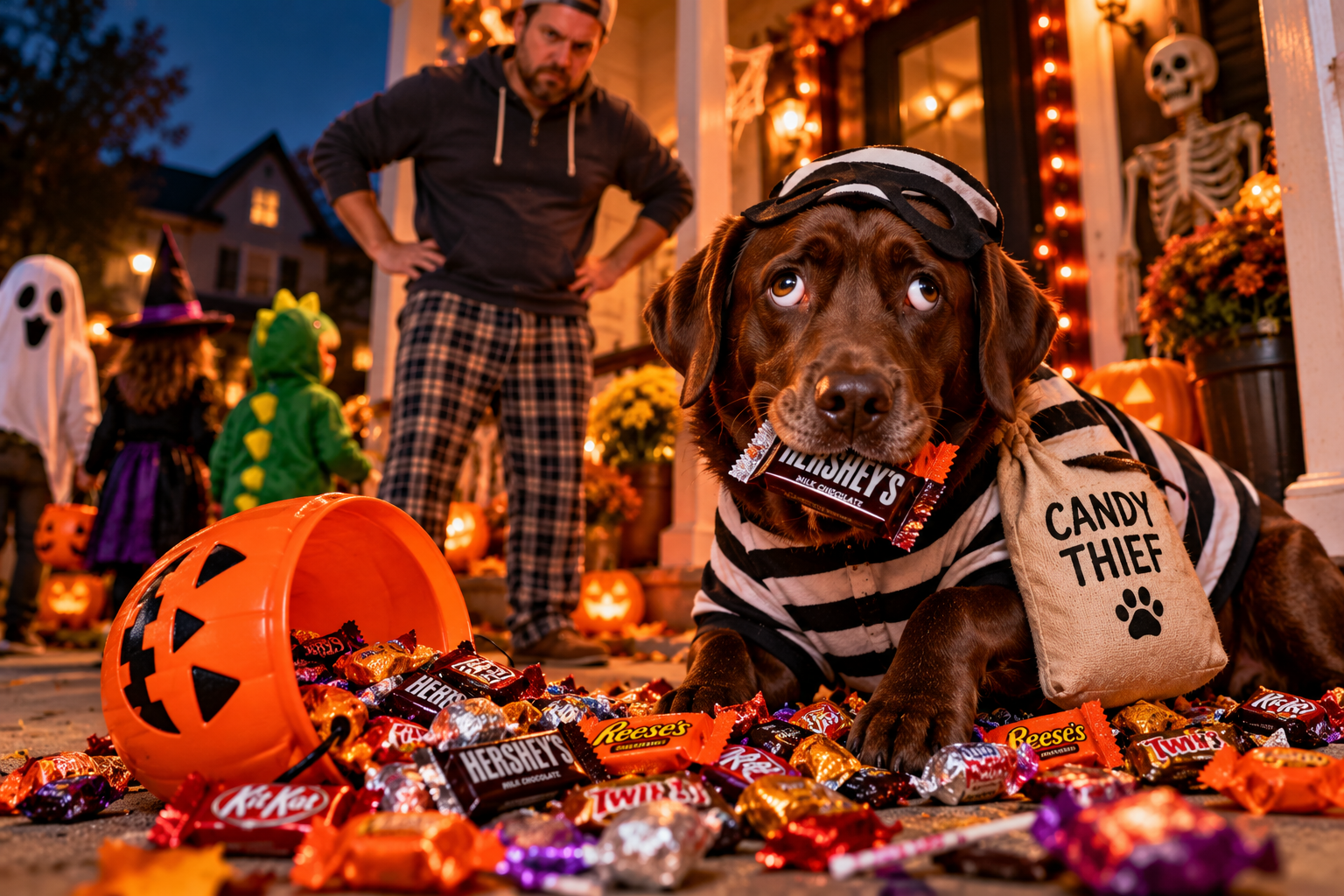
Call a veterinarian or animal poison-control service right away if you suspect your dog ate chocolate, xylitol, grapes or raisins, a battery, medication, or another potentially toxic substance—even if they look normal. Go to an emergency veterinary hospital immediately for collapse, seizures, trouble breathing, severe weakness, or serious injury. Collect the packaging, estimate the amount and time, and note your dog's weight. Do not induce vomiting or administer home remedies unless instructed by a veterinary professional. The ASPCA warns that some poisonings have delayed effects.
The Bark Clinic Bottom Line
You don't need a perfectly quiet dog to have a successful Halloween—just a safe one with zero access to chocolate. Plan ahead so Halloween brings good memories instead of a midnight emergency vet run.
FAQs
Is it safe to take my dog trick-or-treating?
For many dogs, staying home in a calm, secure space is the better choice. If your dog is genuinely comfortable with crowds, keep them securely leashed and away from candy, decorations, and unfamiliar dogs. Leave at the first sign of stress.
What Halloween candy is toxic to dogs?
Chocolate, sugar-free products containing xylitol, and raisins are major concerns. Other candy and wrappers can still cause digestive illness, choking, or obstruction. Call a veterinary professional if any potentially harmful candy was eaten.
Are glow sticks poisonous to dogs?
The liquid often causes painful mouth irritation and drooling, while the plastic pieces may cause choking or injury. Contact your veterinarian or animal poison-control service for exposure-specific advice.
Should my dog wear a costume on Halloween?
Only if your dog is comfortable, the costume fits safely, and you supervise continuously. A seasonal bandana—or no costume—is a perfectly good alternative.
This article is educational and is not a substitute for veterinary care. If your dog is unwell, contact your veterinarian.
Keep reading
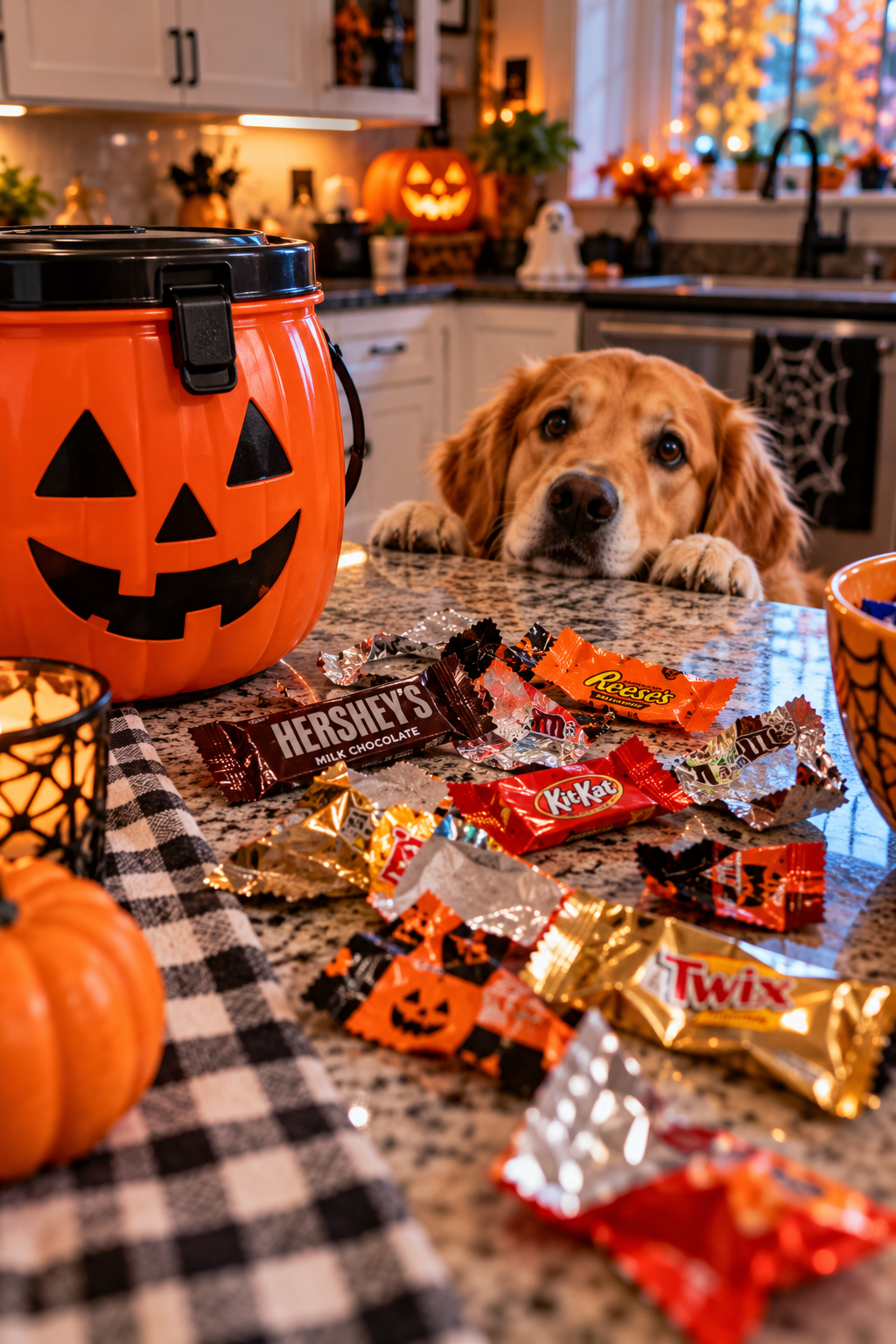
Dog Ate a Candy Wrapper? Warning Signs and Next Steps
Dog ate a candy wrapper? Learn the risks of swallowed candy wrappers, warning signs of intestinal blockage, and when to contact your veterinarian\.
Read article
The 10-Minute Fall Backyard Dog Safety Check
Closing up the backyard for fall? Take 10 minutes to walk through it from your dog’s point of view and catch the things hiding under furniture, behind planters and around the yard before your dog does
Read article
Your Dog Thinks the Christmas Tree Is a Giant Toy: 10 Ways to Prevent Holiday Disasters
Your Christmas tree is a festive masterpiece. Your dog thinks it's an amusement park. Here's how to keep your decorations standing and your pup safe this holiday season.
Read article