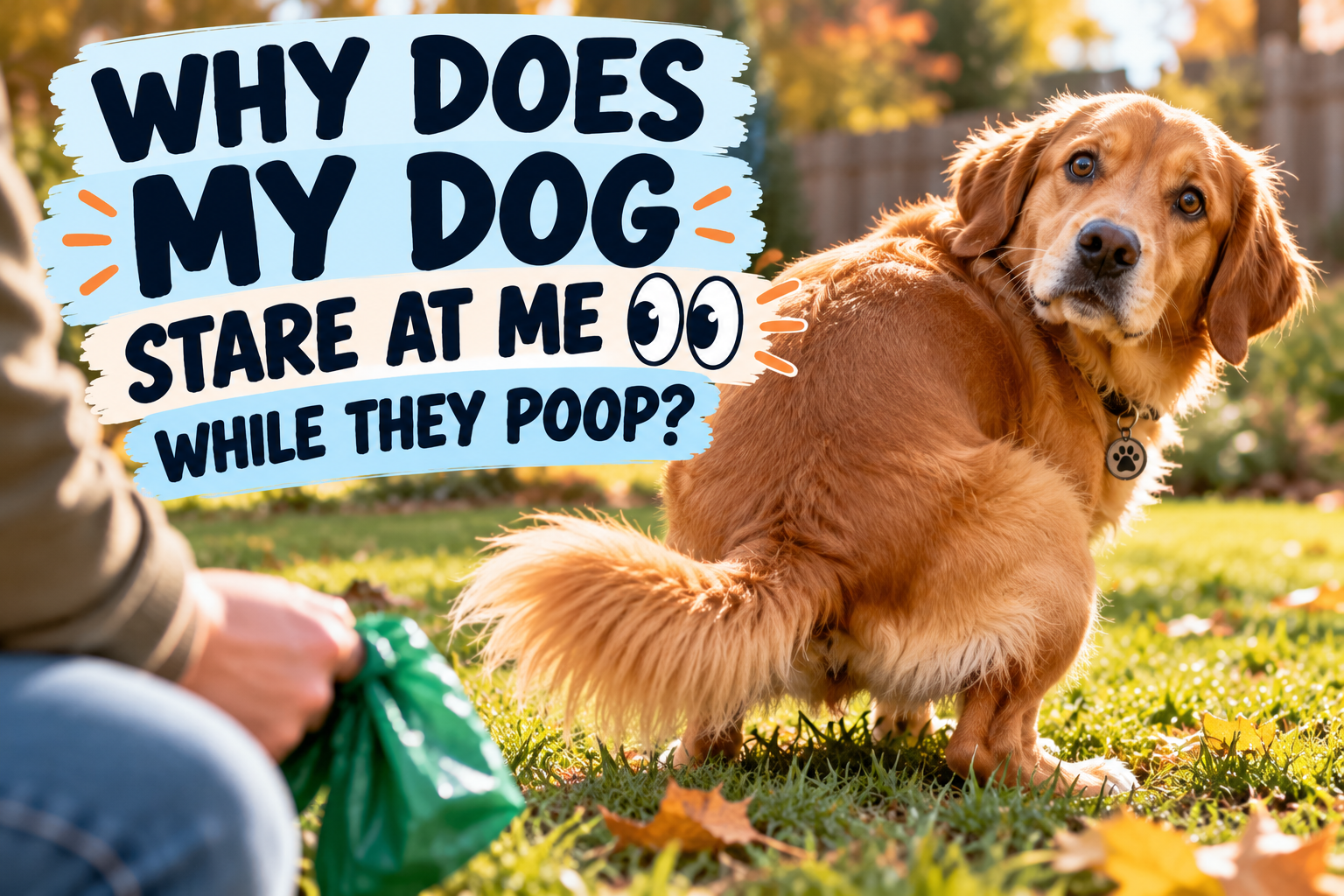
There are certain moments in dog ownership that nobody prepares you for.
The first time you pull something disgusting out of your dog’s mouth, or an innocent sock from another region (looking at you, Teddy.) The first time you realize half your camera roll is pictures of them sleeping. The first time you have a serious conversation with another adult about the consistency of your dog’s poop.
And then there’s the stare.
You take your dog outside. They spend five minutes investigating seventeen apparently unacceptable patches of grass. Finally, they find The Spot.
They squat.
You get the poop bag ready.
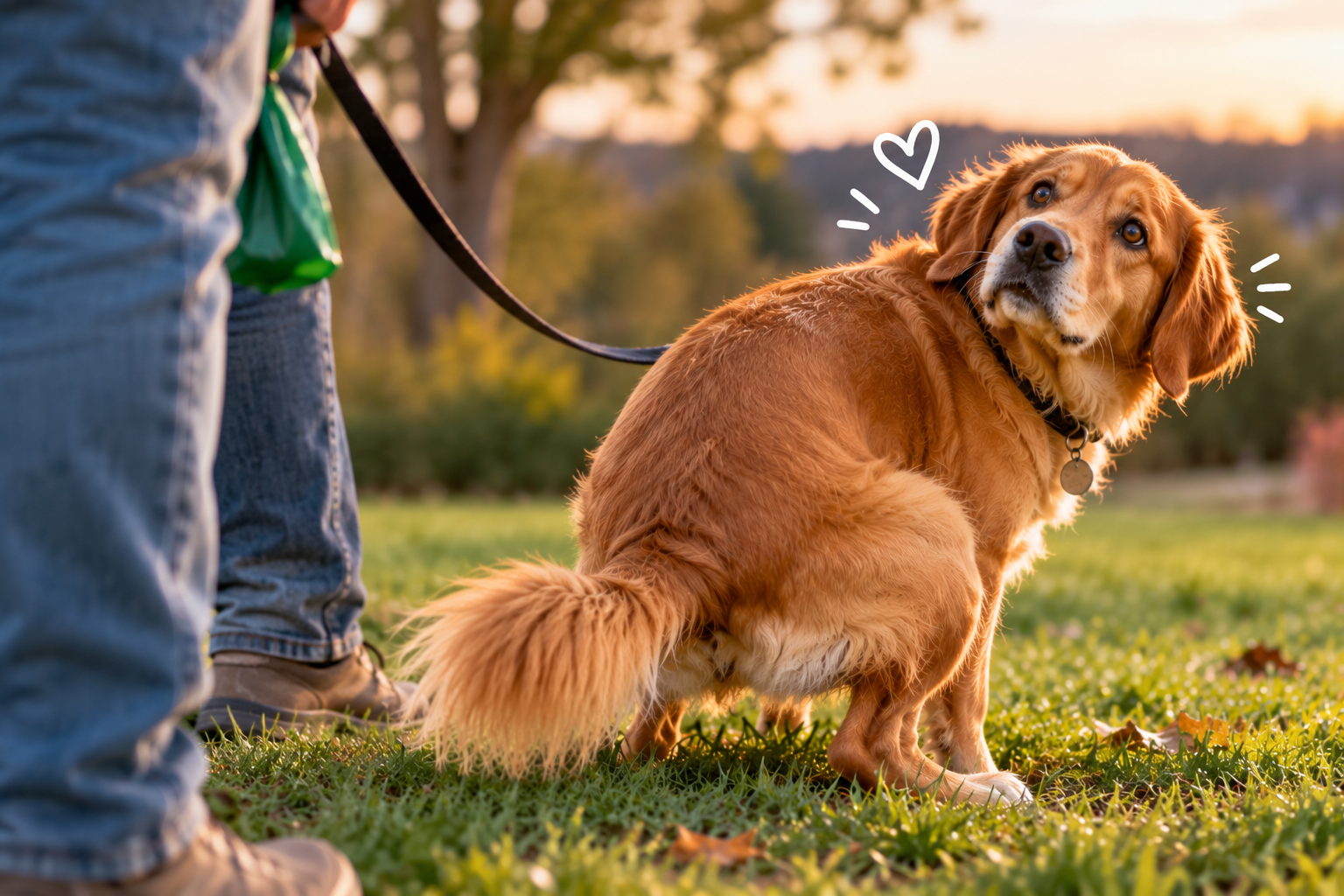
And then they turn their head and look directly into your eyes.
Not a quick glance, either.
Eye contact. Deep, unwavering eye contact.
You’re standing there thinking, Buddy, I love you more than almost anything on Earth, but I don’t think we need to share this moment.
So why do dogs stare at their owners while they poop?
The slightly disappointing—but scientifically responsible—answer is that we don’t know for certain. Even veterinarians don’t have one proven explanation for why some dogs do it. There are several reasonable possibilities, though, and your dog’s normal routines can provide some clues.
They May Simply Be Checking Where You Are
Dogs pay an incredible amount of attention to us.
Where are you standing? Are you walking away? Did you grab the leash? Is your hand moving suspiciously close to the treat pocket?
Dogs use eye contact for many reasons, including getting information and anticipating things they want.
So your dog’s famous poop stare may not carry some profound secret message.
They may simply be keeping tabs on you.
Which means you’re interpreting the moment as:
Why is my dog staring into my soul while taking a dump?
And your dog may essentially be thinking:
Still there? Cool.
They May Know What Happens Next
Dogs are ridiculously good at learning routines.
Consider your dog’s bathroom sequence.
Go outside → sniff everything → poop → human picks it up → continue walking.
Or perhaps:
Poop → praise → treat → go back inside.
If something predictable usually happens after your dog finishes, looking at you could be connected to that learned routine. One veterinary explanation is that dogs may retain associations created during housetraining, when eliminating in the appropriate place was followed by praise or rewards.
Your dog therefore might not be saying:
Protect me during this vulnerable moment, Father.
They might be saying:
You brought the good treats today, right?
Frankly, that sounds pretty dog-like.
Maybe They Feel Safer Knowing You’re Nearby
Another commonly proposed explanation is that eliminating puts a dog in a relatively vulnerable position, so some dogs may look toward their trusted person for reassurance. Veterinarians interviewed by PetMD describe this as a plausible theory—but importantly, a theory rather than a proven explanation for every dog that does it.
That’s an important distinction.
The internet loves turning interesting dog behavior into universal translations:
Dog does X = dog is telling you Y.
Real dogs aren’t quite that convenient.
One dog may glance toward their person because they’re monitoring the environment. Another may anticipate a reward. Another may have developed the habit years ago.
And another may simply happen to be facing you while nature takes its course.
Your Dog Probably Isn’t Embarrassed
We should clear this one up because humans are exceptionally talented at projecting human social rules onto dogs.
Your dog probably isn’t staring at you because they’re thinking:
This is humiliating. Please don’t tell the Labrador next door.
Dogs don’t appear to experience embarrassment in the same way humans do, and behavior that people interpret as guilt or embarrassment can instead reflect things like stress, appeasement or responses to human cues.
Your dog has also watched you use the bathroom without respecting a single boundary.
So perhaps we shouldn’t expect modesty from the animal that occasionally walks into the bathroom, makes eye contact and sits down to supervise.
Look at the Whole Dog, Not Just the Eyes
This is one of our favorite rules at The Bark Clinic:
Don’t decode one behavior. Decode the situation around it.
A stare by itself doesn’t tell you everything.
Look at the rest of your dog’s body.
A dog casually glancing at you with a loose body is giving you very different information from a dog that appears tense, crouched or uncomfortable.
Signs associated with canine stress can include changes such as a tucked tail, rigid posture, ears pulled back, panting when the dog isn’t hot, lip licking, unusual yawning, pacing or avoidance. Context matters because many individual behaviors can mean different things in different situations.
If your dog has always looked at you during bathroom breaks and otherwise seems perfectly comfortable?
Congratulations.
You may simply have a dog who believes pooping should be a team-building exercise.
Should You Stare Back?
This raises an important question of etiquette.
Your dog has initiated eye contact.
Do you reciprocate?
Do you look toward the horizon?
Do you pretend to check your phone?
Do you whisper, You’ve got this, buddy?
There’s no requirement to participate in the staring contest. Veterinary guidance notes that maintaining eye contact during the moment isn’t inherently harmful, but you’re also perfectly free to look somewhere else if the intimacy has become excessive.
Personally, we support whichever option allows everyone involved to retain the greatest amount of dignity.
Pay Attention When the Bathroom Routine Changes
Here’s where this ridiculous topic becomes genuinely useful.
While the staring itself usually isn’t the important part, changes in your dog’s bathroom habits can be.
If your dog suddenly seems uncomfortable, repeatedly strains, develops diarrhea, has difficulty passing stool, changes their elimination habits substantially, or shows other concerning symptoms, that’s worth paying attention to rather than writing it off as another weird dog behavior.
Watching your dog’s bathroom habits can provide useful information about their health, and veterinary sources specifically recommend noticing meaningful changes.
You don’t need to analyze every bowel movement like you’re submitting evidence to a federal investigation.
But knowing what’s normal for your dog makes it easier to recognize when something isn’t.
The Bark Clinic Bottom Line
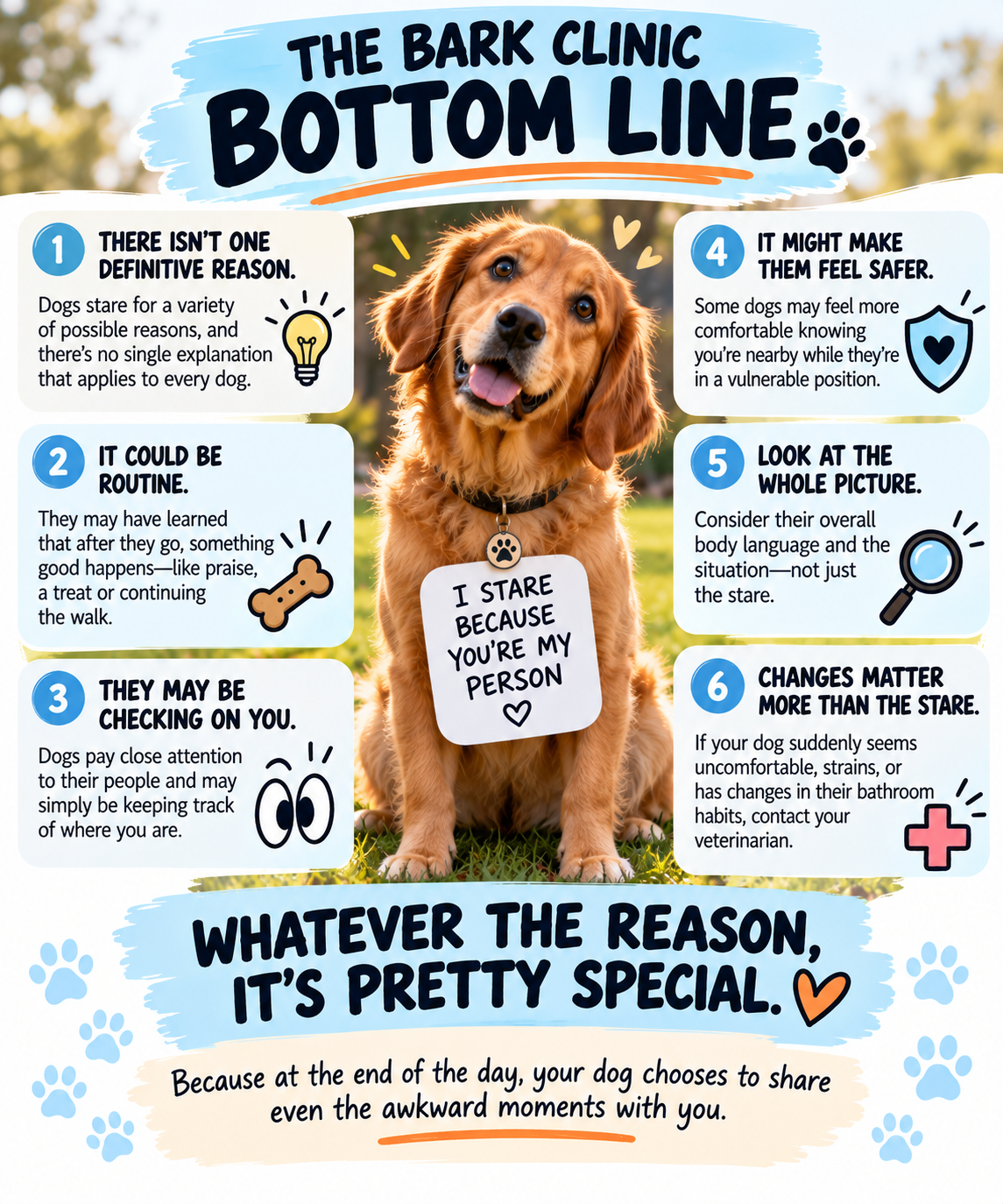
Why does your dog stare at you while they poop?
Maybe they’re checking where you are. Maybe they’re anticipating what comes next. Maybe your presence is reassuring. Maybe it’s simply a deeply established habit.
We don’t know that there’s one answer that applies to every dog.
What we do know is that dogs pay close attention to their people, behavior makes more sense when viewed in context, and dog ownership occasionally requires maintaining eye contact with another living creature while holding a tiny plastic bag you’ll soon fill with poop.
Nobody mentioned that part in the adoption brochure.
But here we are.
And apparently we’re doing this together. 🐶💩
This article is educational and is not a substitute for veterinary care. If your dog is unwell, contact your veterinarian.
Keep reading
Why Does My Dog Take Food Out of Their Bowl to Eat Somewhere Else?
Your dog has a perfectly good food bowl, so why does dinner always end up on the carpet? Discover seven possible explanations for this quirky habit and when it might signal a problem.
Read article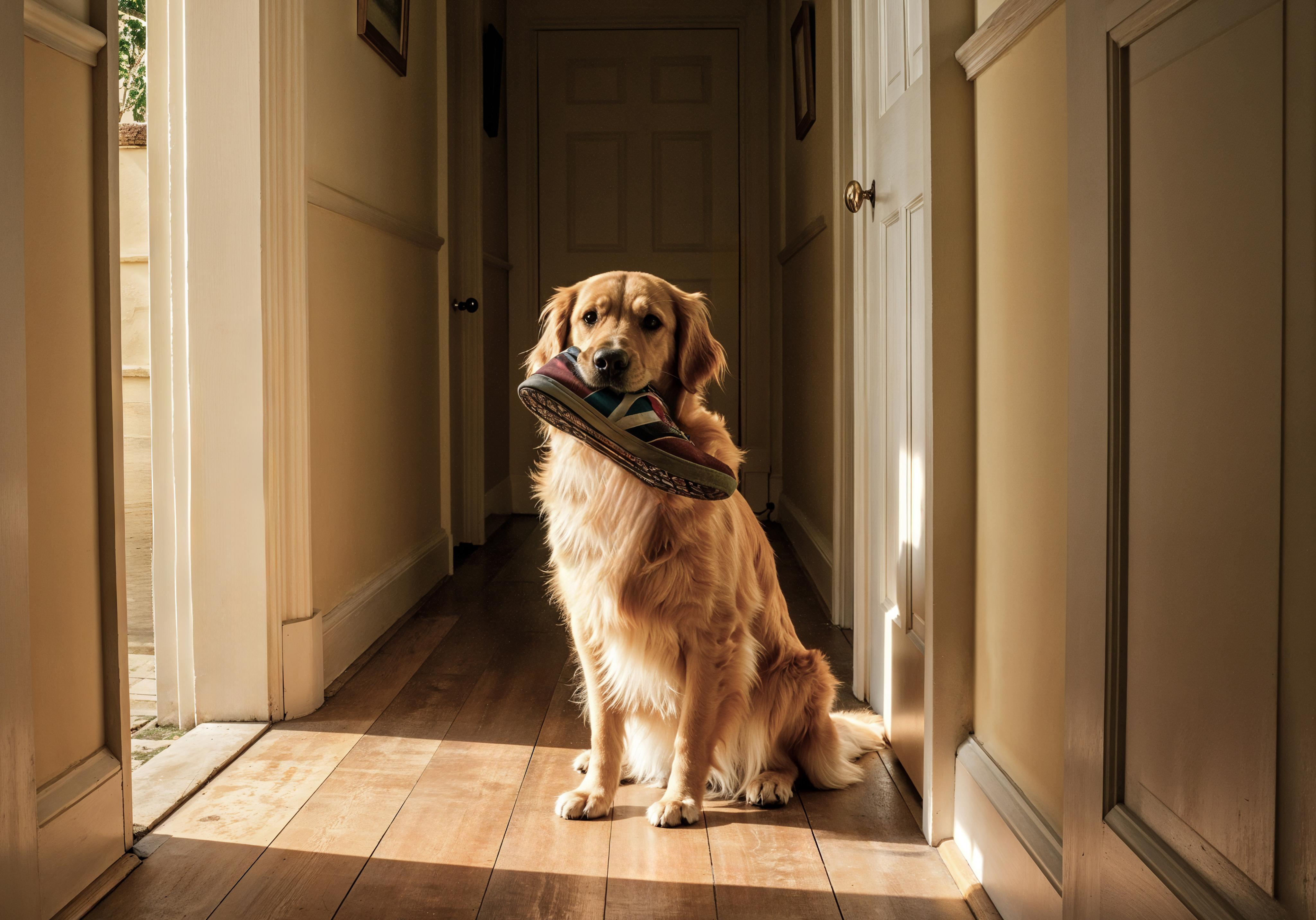
Why Does My Dog Steal My Shoes but Never Chew Them?
Your dog has a bed full of toys, yet somehow your favorite sneaker keeps disappearing. Here's why dogs steal shoes without destroying them—and what this quirky habit might mean.
Read article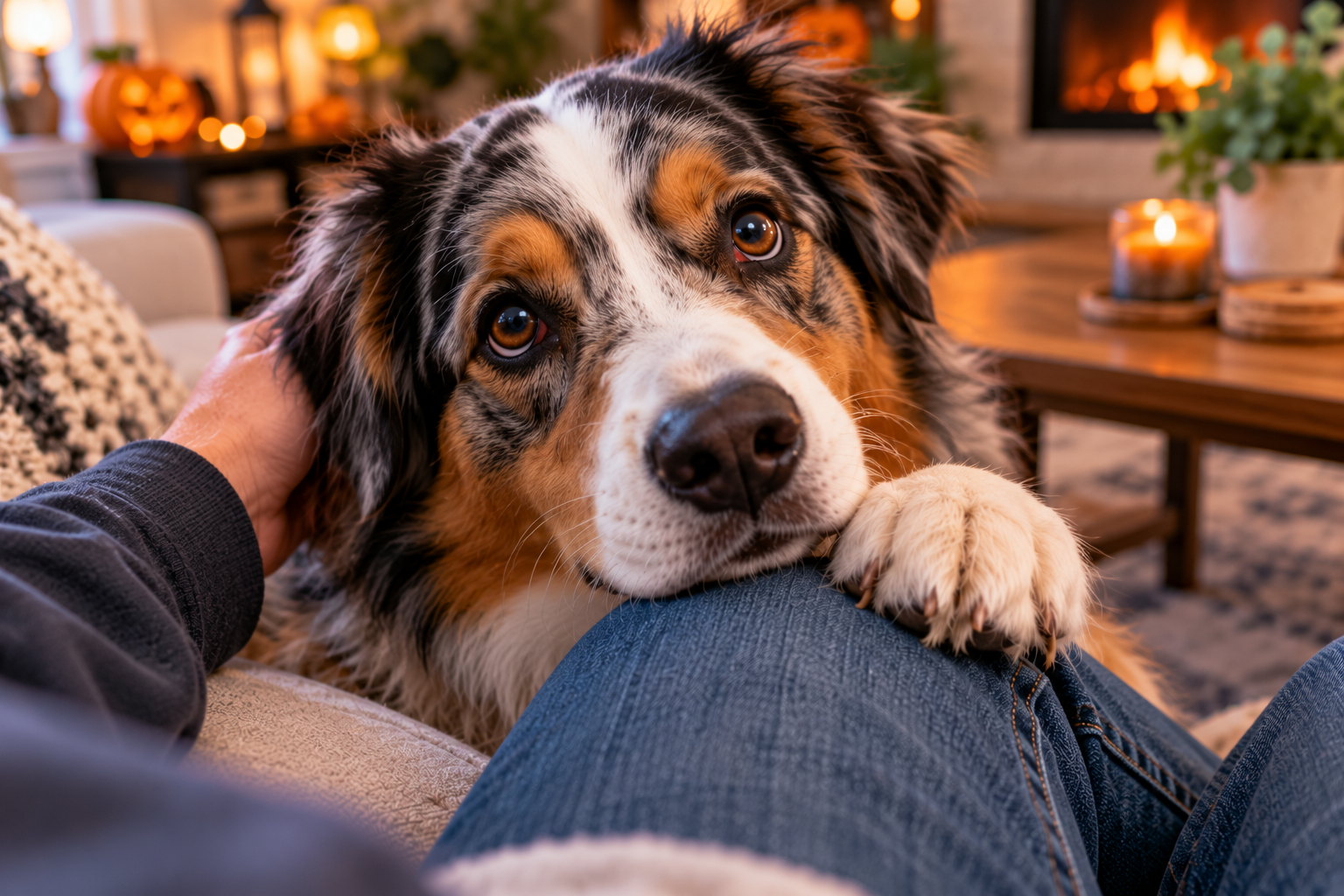
Why Does My Dog Put a Paw on Me? 6 Common Meanings
Why does your dog put a paw on you? Discover six possible meanings, from affection to attention, and how to respond to repeated pawing.
Read article