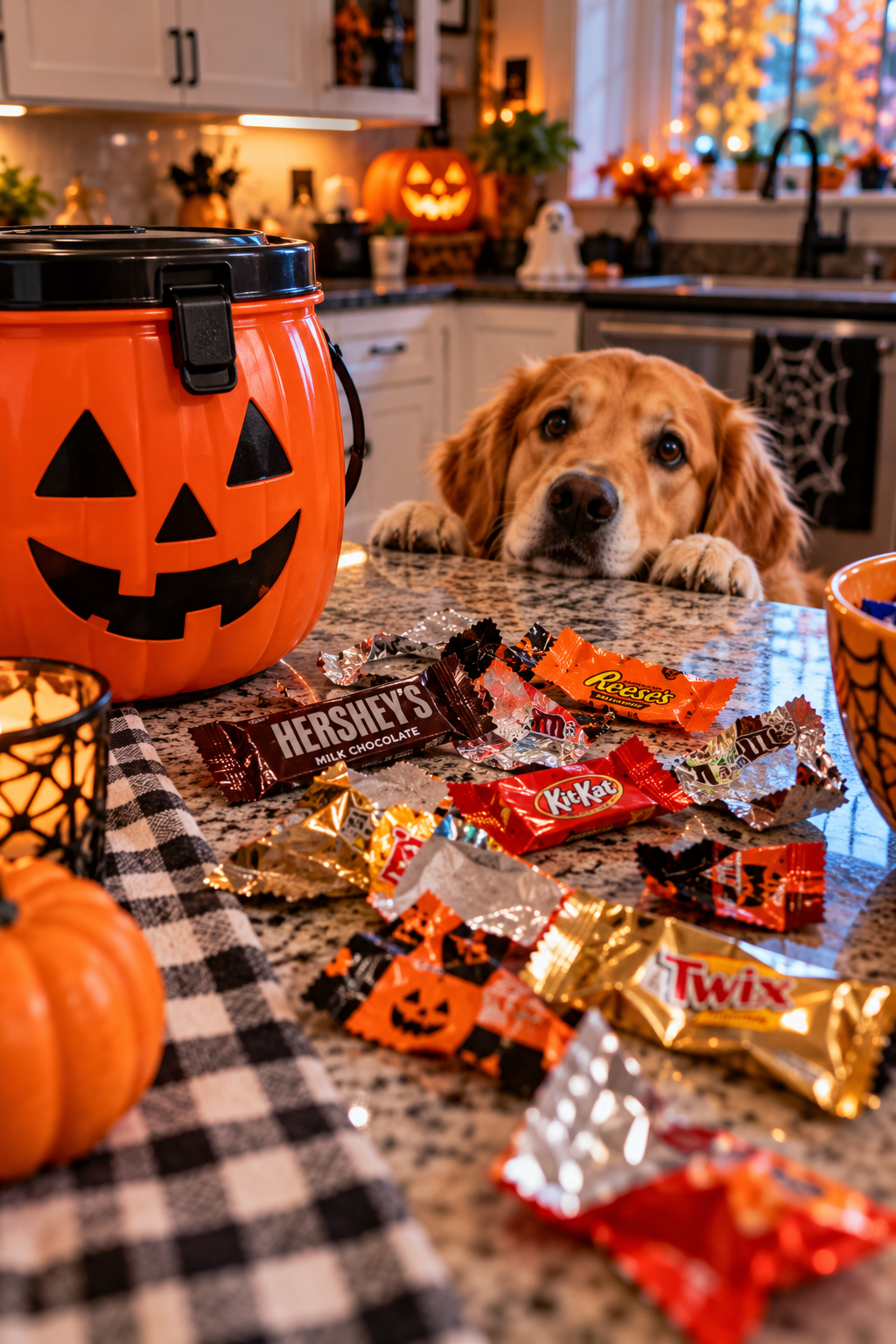
Your dog has performed the classic Halloween magic trick: making candy disappear, wrapper and all. It is tempting to think the wrapper will simply pass. Sometimes small objects do pass, but foil, plastic, and cellophane can also irritate the digestive tract or cause a blockage. The candy inside may be an even more urgent problem.
Step 1: Figure out exactly what went missing
Check the packaging and count what you can. Was it one tiny wrapper or an entire handful? Foil or plastic? Was the candy chocolate, sugar-free, or made with raisins? Save the label or take a picture. Your veterinarian needs the most accurate details possible.
Step 2: Call your veterinarian promptly
Contact your veterinarian or an emergency clinic for guidance, especially if your dog swallowed multiple wrappers, a large piece, or candy containing chocolate, xylitol, or raisins. Do not wait for symptoms when a potentially toxic ingredient may be involved. Animal poison control can help assess exposure risk.
Step 3: Do not try home fixes
Do not induce vomiting, give oil, or offer bulky food to “push it through” unless your veterinary team tells you to. These approaches can create new problems and may delay the right treatment.
Signs a wrapper may be causing trouble
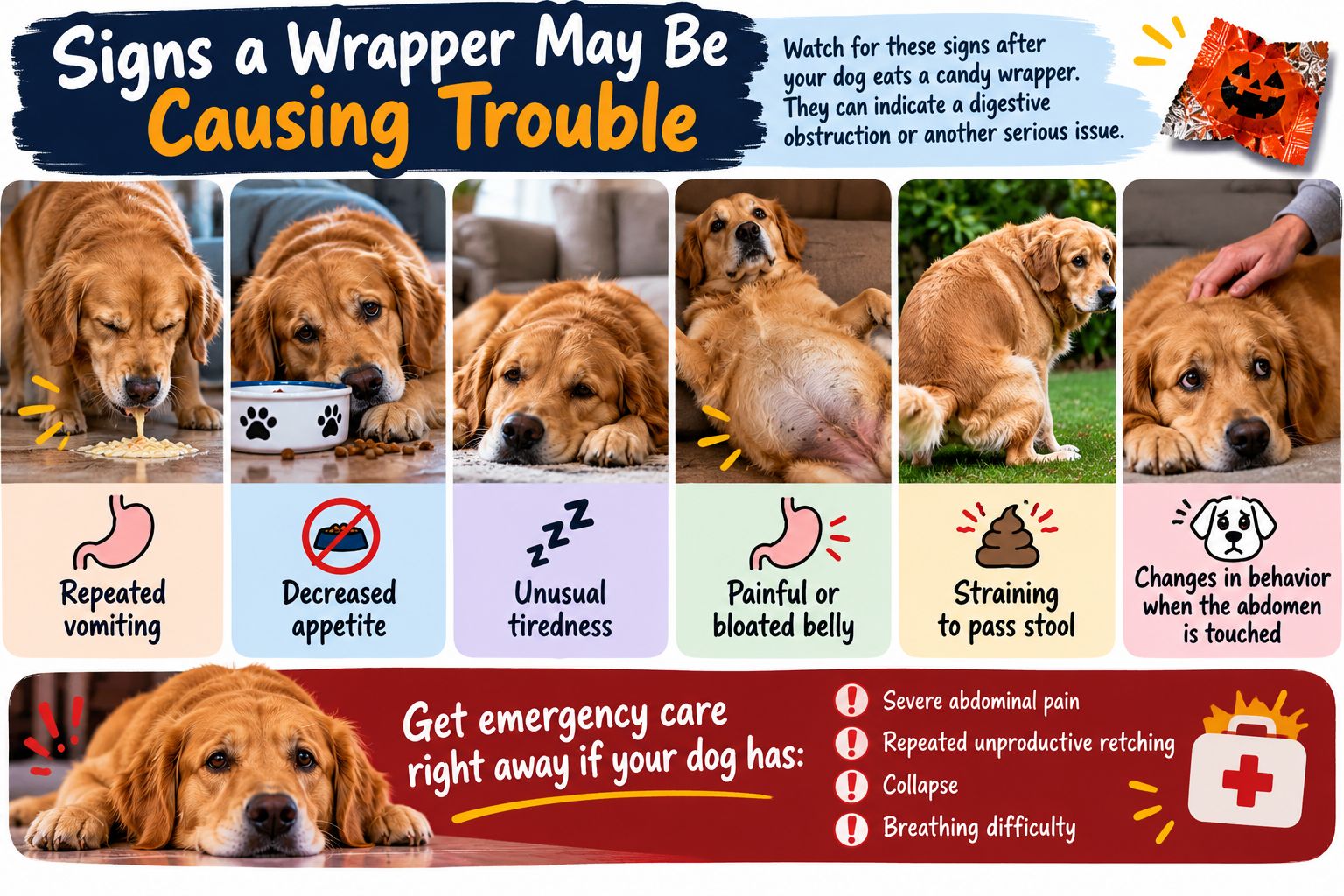
Watch for repeated vomiting, decreased appetite, unusual tiredness, a painful or bloated belly, straining to pass stool, or changes in behavior when the abdomen is touched. These can be signs of a digestive obstruction or another illness. A dog with severe abdominal pain, repeated unproductive retching, collapse, or breathing difficulty needs emergency care.
What happens at the veterinary clinic?
Your veterinarian may ask about the type and size of the wrapper, when it was swallowed, and your dog’s symptoms. Depending on the case, they may recommend examination, imaging, monitoring, or treatment to remove an object. Some plastics do not show clearly on plain X-rays, so the vet may use additional methods if needed.
What about the candy itself?
Chocolate contains compounds that can be toxic to dogs. Xylitol, sometimes listed as birch sugar, can cause dangerous low blood sugar and liver injury. Raisins can cause kidney damage. Even non-toxic candy can lead to gastrointestinal upset, especially in large quantities. Do not assume the wrapper is the only concern.
How to prevent the next candy-bucket raid
Keep Halloween candy in a closed cabinet rather than on a coffee table. Ask children to throw wrappers into a lidded bin, and check under furniture after parties. If your dog is a determined scavenger, manage access with a gate or closed door while candy is out.
The Bark Clinic takeaway
A missing candy wrapper is not automatically an emergency, but it is not something to dismiss without considering size, material, candy ingredients, and symptoms. Your veterinarian can help determine the safest next step. Keep our Halloween safety checklist handy before the next round of trick-or-treating.
FAQ: How long does a candy wrapper take to pass?
There is no reliable timeline that proves a swallowed wrapper is safe. Do not use a wait-and-see countdown instead of veterinary guidance.
FAQ: My dog seems normal. Should I still call?
Yes, particularly when you are unsure how much was swallowed or the candy contained a risky ingredient. Early advice can prevent delays.
This article is educational and is not a substitute for veterinary care. If your dog is unwell, contact your veterinarian.
Keep reading
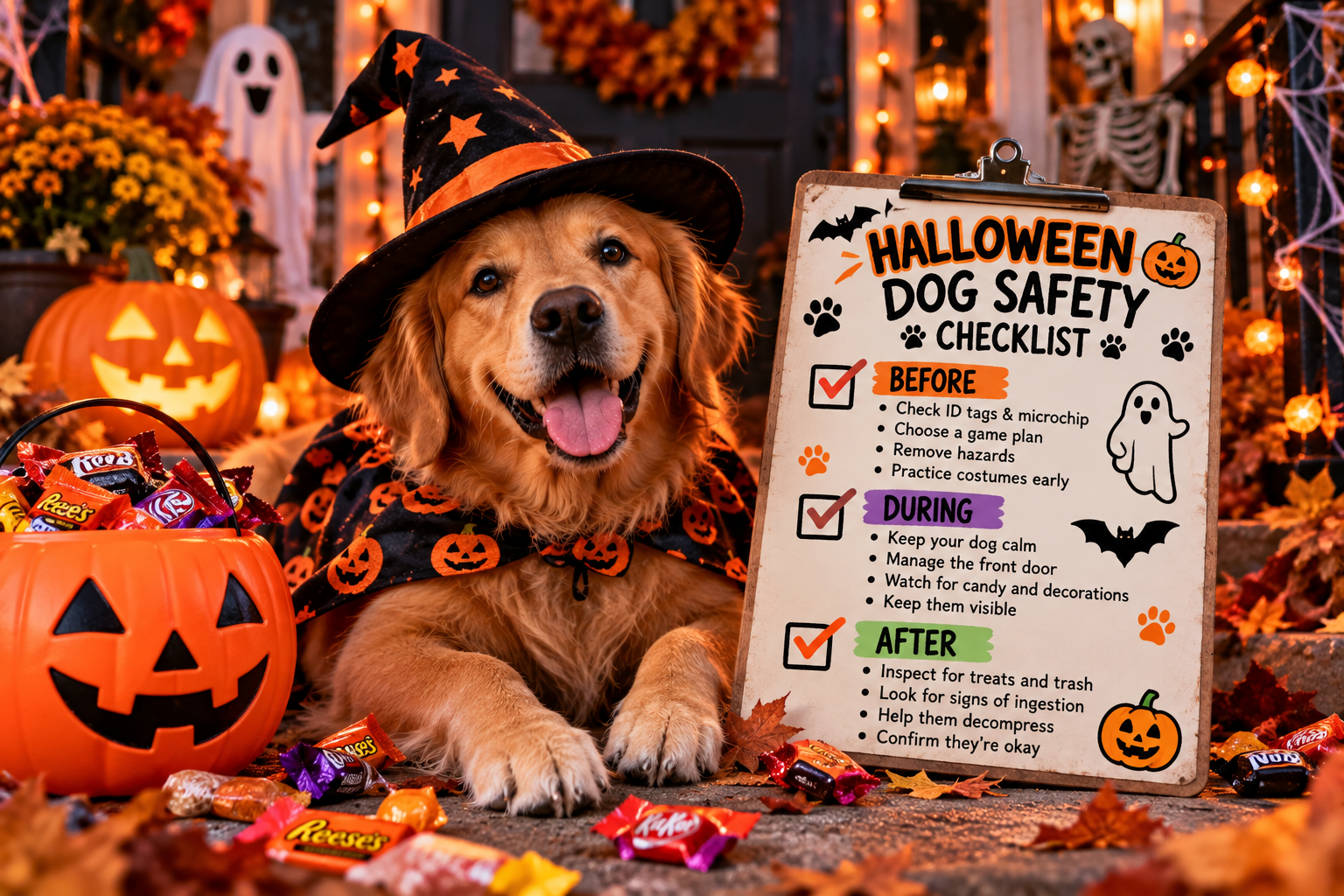
The Ultimate Halloween Dog Safety Checklist: Before, During & After Trick-or-Treating
Halloween is full of fun—and a surprising number of dog hazards. Use this before-during-after checklist to keep the candy, costumes and chaos from becoming an emergency.
Read article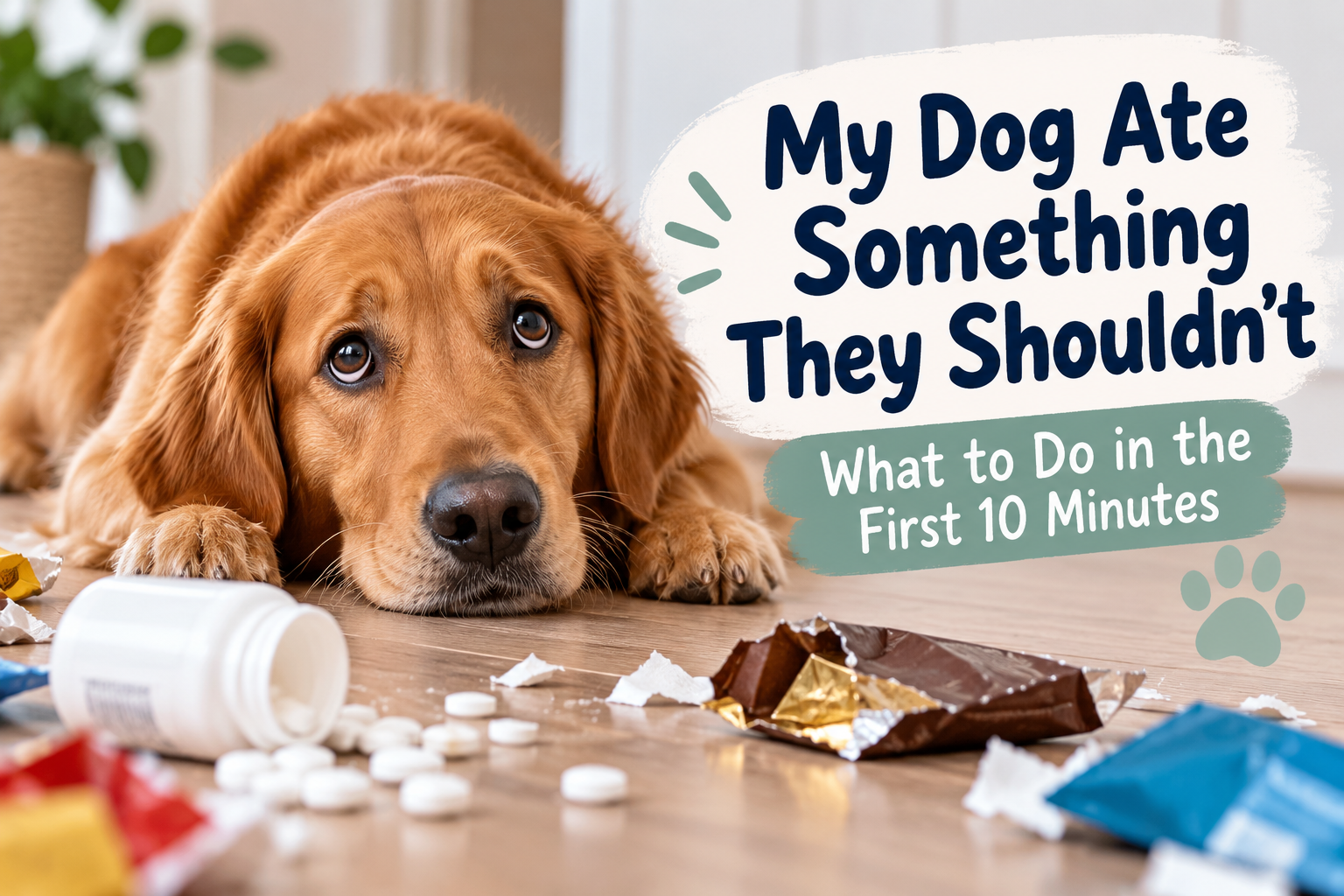
My Dog Ate Something They Shouldn’t: What to Do in the First 10 Minutes
Did your dog eat something they shouldn’t? Here’s what to do in the first few minutes, what information to gather, what not to try at home, and when to seek emergency veterinary help.
Read article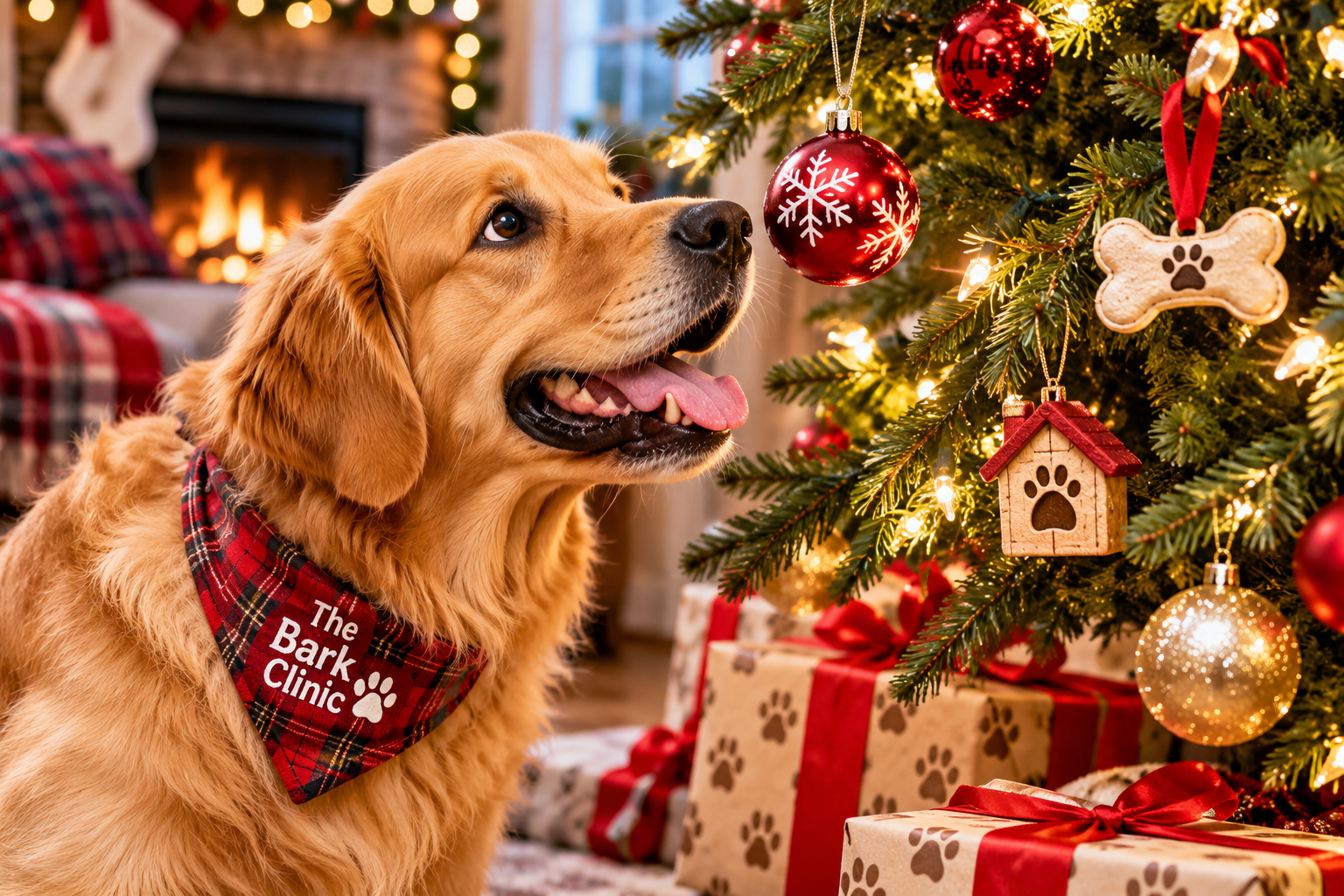
Your Dog Thinks the Christmas Tree Is a Giant Toy: 10 Ways to Prevent Holiday Disasters
Your Christmas tree is a festive masterpiece. Your dog thinks it's an amusement park. Here's how to keep your decorations standing and your pup safe this holiday season.
Read article