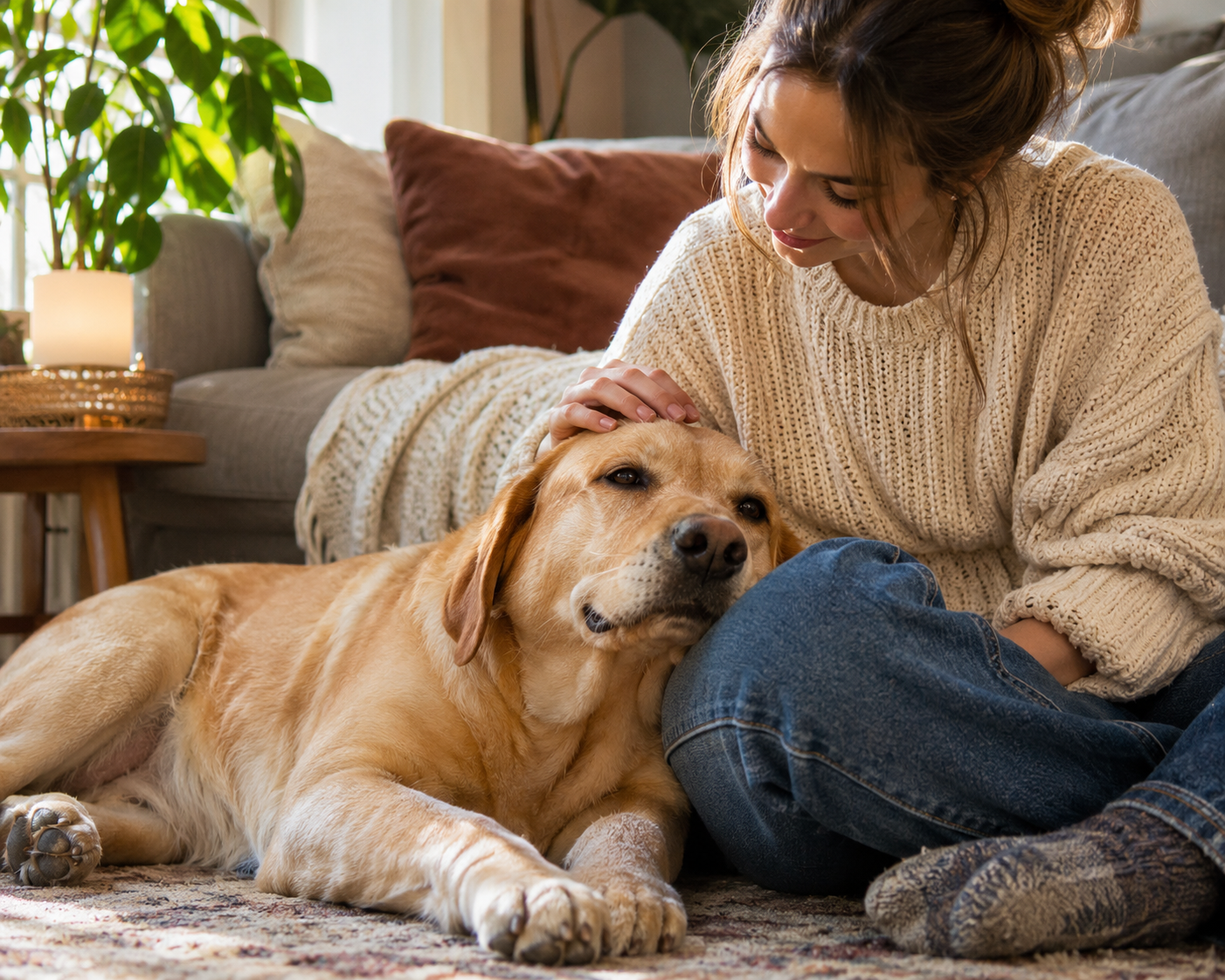
7 Strange Things Dogs Do When They Really Trust You (And What They Mean)
Your dog has some questionable habits.
They follow you into the bathroom. They sleep in positions that look like orthopedic emergencies. They insist on sitting directly on your feet, despite having an expensive memory foam dog bed approximately three feet away.
And sometimes, they stare at you like they're trying to remember where they buried your car keys.
But here's something wonderful about dogs: Some of their strangest behaviors can be signs that they feel safe, comfortable, and connected to you.
Dogs don't express affection and trust exactly the way humans do. They communicate through body language, physical closeness, daily routines, and the choices they make when they're around us.
Of course, no single behavior proves that your dog trusts you. Context matters, and every dog has a different personality.
Still, if your dog regularly shows several of these seven behaviors while looking happy and relaxed, there's a good chance you've become one of their favorite people.
Even if they occasionally treat you like an unpaid personal assistant.
1. They Sleep in Ridiculously Vulnerable Positions Around You
Let's begin with the dog who is currently upside down on your couch.
Their legs are pointing in four different directions. Their tongue is hanging out. Their belly is completely exposed.
They look like somebody dropped a stuffed animal down a flight of stairs.
And they're having the best nap of their life.
Why it can be a sign of trust:
Dogs are naturally more vulnerable when they're sleeping. A dog who comfortably stretches out, sleeps deeply, or relaxes on their back in a familiar environment may be showing that they feel secure.
Relaxed muscles, soft facial features, and an absence of tension are especially encouraging signs.
However, sleeping positions aren't foolproof indicators of emotion. Dogs also change positions to regulate temperature or simply because they're comfortable.
The Bark Clinic verdict: If your dog sleeps belly-up beside you like they've personally paid the mortgage, they're probably feeling pretty comfortable.
What about dogs who sleep curled up?
Don't worry. A dog who prefers sleeping in a little cinnamon-roll position isn't necessarily less trusting.
Some dogs naturally prefer curling up, leaning against furniture, or sleeping in enclosed spaces.
The important thing is whether your dog appears comfortable and can rest without constantly monitoring their surroundings.
And whether they've left you approximately six inches of mattress.
2. They Lean Their Entire Body Against You
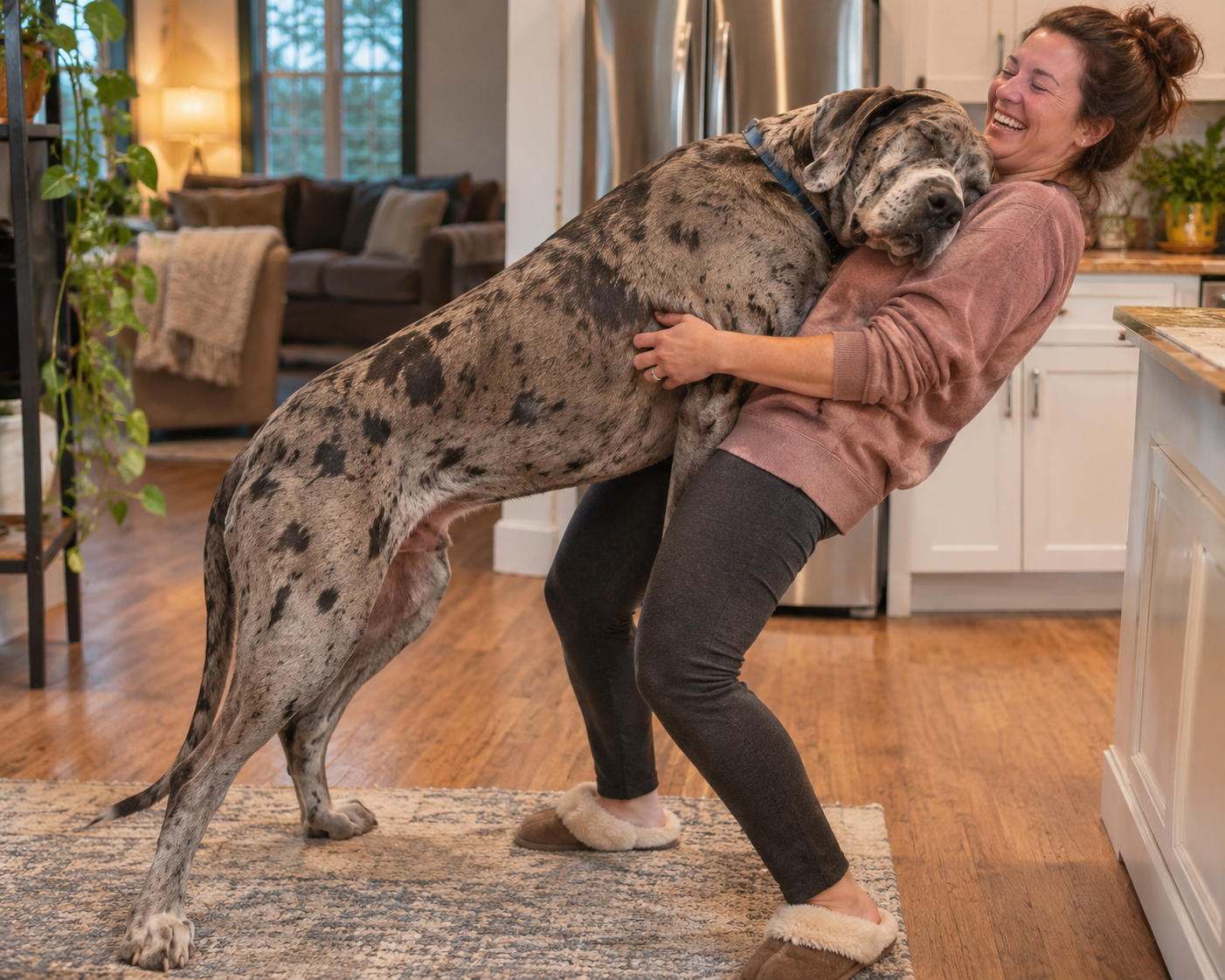
You're standing in the kitchen.
Suddenly, something heavy presses against your leg.
It's your dog.
Not just leaning a little.
We're talking full-body contact, as though they've decided you're a load-bearing wall.
You shift your weight.
They adjust accordingly.
Apparently, you're furniture now.
Why it can be a sign of trust:
Some dogs enjoy physical contact with people they feel comfortable around. Leaning can be a way to seek affection, attention, or reassurance.
If your dog voluntarily approaches, presses gently against you, and appears relaxed, the interaction may reflect a positive relationship.
But leaning isn't always affectionate. Dogs may also seek closeness when they're anxious, uncertain, or looking for something specific.
Look at the full picture.
A loose body, soft expression, and willingness to move away are more reassuring than a stiff posture or frantic need for contact.
The Bark Clinic verdict: Congratulations. You've been promoted from dog owner to emotional support wall.
Your compensation package includes unlimited fur and occasional drool.
3. They Follow You Into the Bathroom Like You're on a Dangerous Mission
There are certain mysteries in life.
What happened to the missing sock?
Why does the dog bark at absolutely nothing?
And why does your dog believe you need supervision to use the bathroom?
You stand up from the couch.
Your dog stands up.
You walk down the hallway.
Your dog follows.
You enter the bathroom.
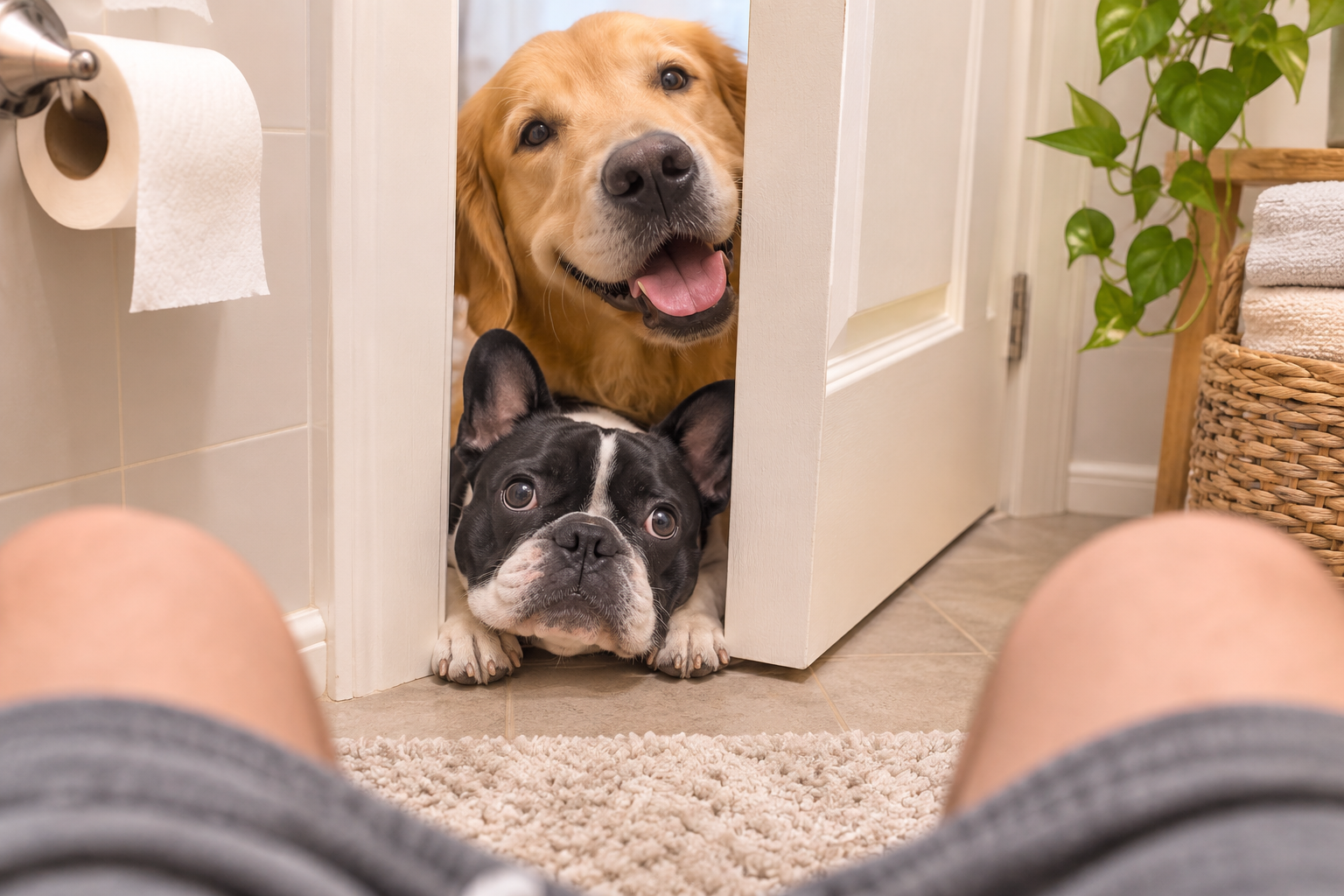
Your dog arrives three seconds later, deeply concerned that you've attempted a solo expedition.
Why it can be a sign of trust:
Dogs are social animals, and many enjoy spending time near familiar people.
Following you from room to room can reflect companionship, curiosity, learned routines, or anticipation of something exciting.
After all, you've probably been responsible for some pretty remarkable events.
Dinner.
Walks.
Treats.
Opening the refrigerator.
But there's an important distinction between a dog who chooses to follow you and one who becomes distressed when you're out of sight.
If your dog panics when separated from you, barks excessively when alone, destroys objects during departures, or struggles to settle independently, the behavior could indicate separation-related distress rather than simply a close bond.
The Bark Clinic verdict: Your dog trusts you with their entire heart.
They just don't trust you to visit the bathroom without a security escort.
4. They Show You Their Belly and Sometimes Demand Rubs
Picture this.
Your dog walks over, dramatically collapses beside you, rolls onto their back, and points all four paws toward the ceiling.
They look like they're auditioning for a role in a Victorian fainting scene.
You reach down.
The tail starts wagging.
The tongue appears.
The belly-rub department is officially open.
Why it can be a sign of trust:
A dog who voluntarily rolls onto their back with a loose, relaxed body may be comfortable enough to expose a vulnerable area.
Some dogs also learn that rolling over is an excellent strategy for requesting attention.
However, this behavior needs careful interpretation.
Exposing the belly does not automatically mean a dog wants to be touched.
Dogs sometimes roll onto their backs as an appeasement signal when they feel intimidated or uncomfortable.
A dog who is stiff, freezing, or showing signs of stress through their body language may be asking for space.
A comfortable dog, on the other hand, is more likely to have relaxed muscles, soft eyes, and an easygoing expression.
When in doubt, pause and allow your dog to choose whether they want more interaction.
The Bark Clinic verdict: Belly rubs are a privilege, not a constitutional right.
Always obtain permission from the belly's legal owner.
5. They Bring You Their Favorite Toy Without Asking You to Throw It
Your dog approaches carrying their most prized possession.
Maybe it's a tennis ball.
Maybe it's a squeaky duck.
Maybe it's a stuffed dinosaur that has somehow survived six months of aggressive dental examinations.
They walk over, place it near you, and stare.
You pick it up to throw it.
They look offended.
Apparently, you have misunderstood the presentation.
Why it can be a sign of trust:
Bringing objects to people can serve several purposes.
Some dogs want to play fetch. Others want attention, interaction, or simply to share an activity.
A dog who repeatedly approaches you with their favorite toy may associate your presence with enjoyable experiences.
It's tempting to interpret the behavior as your dog sharing something precious, but we can't know their exact motivation from the toy alone.
Look at what happens next.
Do they eagerly initiate play? Settle nearby while holding the toy? Return for interaction?
Those details help explain what your dog might be communicating.
The Bark Clinic verdict: Your dog has brought you their favorite possession.
Please admire it.
No, you may not have it.
Yes, you're expected to be grateful.
6. They Look at You With Soft, Relaxed Eyes
You're watching television.
Your dog is lying beside you.
You glance over and notice they're looking directly at you.
Not the intense stare they use when you eat pizza.
Not the suspicious glare they reserve for the vacuum cleaner.
Just a soft, peaceful expression.
Maybe they blink slowly.
Maybe their eyes look slightly sleepy.
Maybe they're simply enjoying a quiet moment near you.
Why it can be a sign of trust:
Relaxed facial expressions are an important part of canine body language.
Dogs who feel comfortable often display soft eyes, neutral ears, loose muscles, and natural breathing.
Some dogs also seek brief, friendly eye contact with familiar people.
Research has explored how positive eye contact between dogs and humans may influence bonding-related hormones, including oxytocin.
But remember that not all eye contact means the same thing.
A hard, fixed stare accompanied by a tense body can communicate something very different.
And staring at the refrigerator probably means your dog knows where you keep the cheese.
The Bark Clinic verdict: Sometimes your dog looks at you because they feel connected.
Sometimes they look at you because you're standing between them and a sandwich.
True love is complicated.
7. They Choose to Be Near You Even When Nothing Exciting Is Happening
This might be the sweetest sign on the entire list.
You're not holding treats.
You're not preparing dinner.
You're not grabbing the leash.
You're doing something deeply uninteresting.
Maybe you're reading.
Maybe you're answering emails.
Maybe you're watching a television show your dog has absolutely no reason to care about.
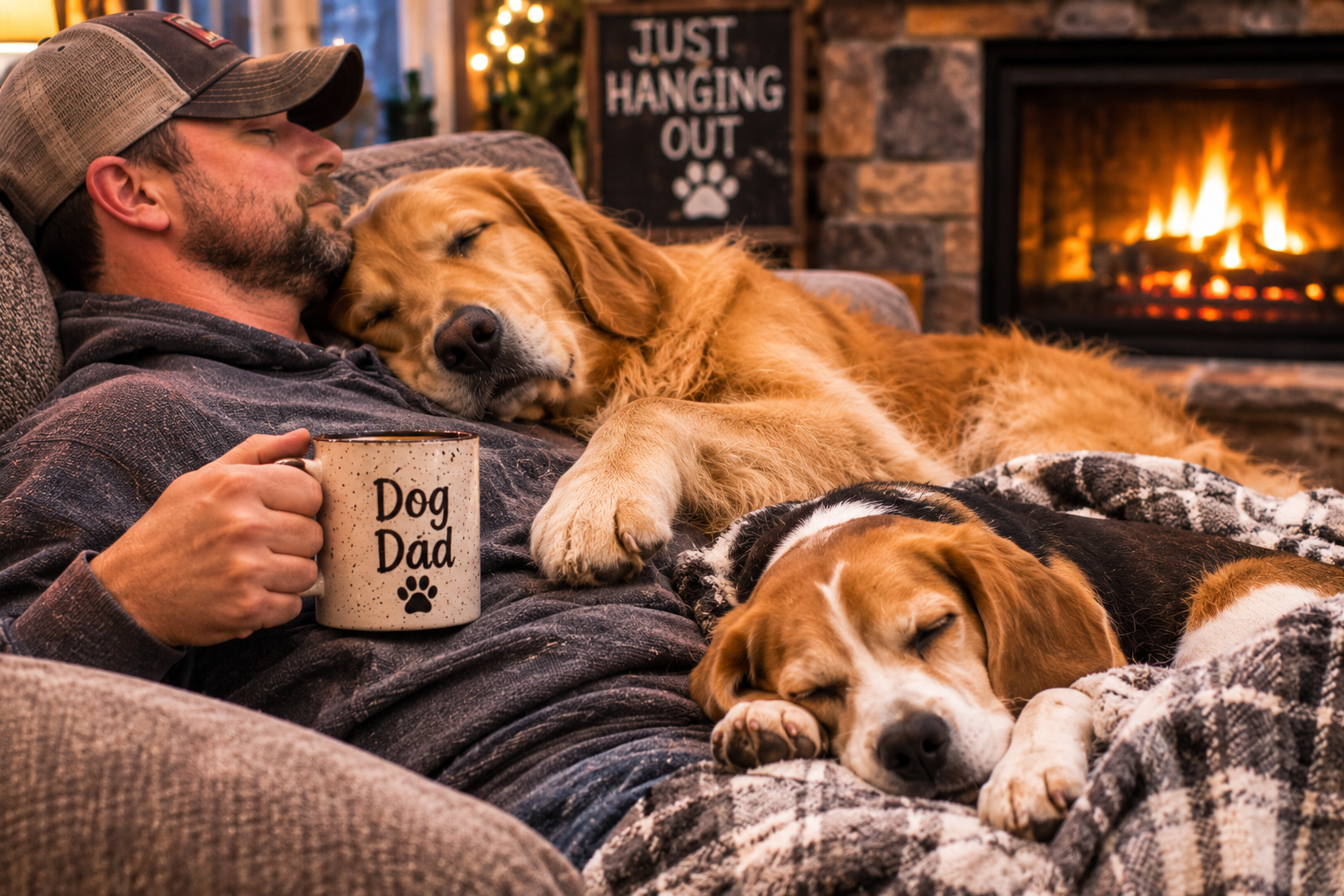
And yet, there they are.
Curled up beside your chair.
Sleeping at your feet.
Quietly resting nearby.
Why it can be a sign of trust:
A dog who willingly spends time near you without needing food, play, or immediate attention may simply enjoy your company.
Voluntary proximity, paired with relaxed body language, can be a meaningful sign of comfort and social connection.
And here's the beautiful part: Your dog doesn't necessarily need constant physical contact to feel close to you.
Some dogs are enthusiastic cuddlers.
Others prefer lying a few feet away.
Both can form strong, secure relationships with their people.
The goal isn't to create a dog who cannot function without you.
It's to build a relationship where your dog feels comfortable being close and confident enough to relax independently.
The Bark Clinic verdict: Your dog has an entire house to explore.
They chose to spend their afternoon watching you answer emails.
That's either unconditional love or a remarkably boring surveillance assignment.
We're going with love.
How Can You Tell If Your Dog Really Trusts You?
Here's where things get interesting.
Trust isn't demonstrated by one adorable behavior.
It's reflected in a pattern of positive experiences, predictable interactions, and comfortable body language.
Dogs who feel safe and secure around their people may:
Voluntarily approach for affection or interaction.
Rest comfortably nearby.
Show loose, relaxed body language.
Engage in playful activities.
Explore their environment and return to familiar people.
Recover comfortably from ordinary, mildly surprising experiences.
Choose to spend time together without being forced.
A healthy relationship also allows your dog to walk away when they want space.
A dog who trusts you doesn't need to tolerate every hug, cuddle, or belly rub.
Respecting their boundaries is part of building that trust.
5 Simple Ways to Build More Trust With Your Dog
If you're wondering how to strengthen your relationship, you don't need expensive gadgets, complicated training routines, or a professional dog whisperer.
Start with these everyday habits.
1. Keep your routines reasonably predictable
Regular meals, walks, rest, and opportunities for play can help your dog understand what to expect.
2. Use reward-based training
Reward behaviors you want to encourage. Avoid intimidation, harsh corrections, or punishment that could create fear.
3. Let your dog make safe choices
Allow them to choose whether to approach for affection, which appropriate toy to play with, or where to settle.
4. Spend time doing things your dog enjoys
Sniff walks, enrichment games, gentle play, and quiet companionship can all support a positive relationship.
5. Learn their body language
Pay attention to the difference between relaxed behavior and signs of stress.
A wagging tail alone doesn't tell the whole story. Look at posture, facial expression, movement, and the surrounding situation.
The more you understand your dog's communication, the easier it becomes to respond in ways that help them feel safe.
Frequently Asked Questions About Dog Trust
How do I know if my dog trusts me the most?
Dogs don't come with a trust ranking system.
A dog may form strong relationships with several family members for different reasons.
Look for relaxed body language, voluntary interaction, and a history of positive experiences rather than trying to determine who holds first place in the household popularity contest.
Does my dog trust me if they sleep next to me?
Sleeping comfortably near you can suggest your dog feels safe in your presence.
However, sleeping preferences vary, and some dogs simply prefer cooler floors, quieter rooms, or their own beds.
Why does my dog lean against me?
Leaning may be a request for affection, attention, reassurance, or physical contact.
If your dog is relaxed and voluntarily approaches, it can be a positive social behavior.
If they appear distressed or unusually clingy, consider whether something else is affecting their comfort.
Does showing their belly mean my dog trusts me?
Sometimes, but not always.
A relaxed dog may expose their belly while resting or requesting affection. A fearful dog may perform a similar-looking behavior to communicate discomfort.
Always consider the dog's complete body language before responding.
Can a rescue dog learn to trust a new owner?
Yes. Many rescue dogs develop strong relationships with new caregivers.
The process may take time, especially for dogs who have experienced instability, fear, or limited socialization.
Patience, predictable routines, gentle handling, and positive reinforcement can help build a secure relationship.
Why does my dog follow me everywhere but refuse to cuddle?
Following and cuddling are different behaviors.
Your dog may love your company without enjoying prolonged physical contact.
Some dogs prefer companionship at a comfortable distance, and that's perfectly normal.
Final Thoughts: Your Dog Might Be Saying "I Trust You" in Their Own Weird Way
Dogs don't write thank-you cards.
They don't send heartfelt text messages.
And they certainly don't sit you down for an emotional conversation about how much your relationship means to them.
Instead, they communicate through behavior.
They choose to rest near you.
They invite you to play.
They look at you with soft eyes.
They occasionally collapse across your lap like a 70-pound weighted blanket with terrible boundaries.
Not every strange habit has a deep emotional meaning. Sometimes a dog is simply warm, curious, comfortable, or hoping for snacks.
But when these behaviors happen alongside relaxed body language and positive daily interactions, they can be wonderful reminders that your dog feels secure around you.
And that might be one of the greatest compliments a dog can give.
Because to your dog, you're not just the person who fills the food bowl.
You're part of the familiar, comforting world they call home.
Even if they're still convinced you need bathroom supervision.
The Bark Clinic provides educational information about dog behavior and well-being. If your dog's behavior changes suddenly or you notice ongoing anxiety, fear, or distress, consult your veterinarian or a qualified canine behavior professional.
This article is educational and is not a substitute for veterinary care. If your dog is unwell, contact your veterinarian.
Keep reading
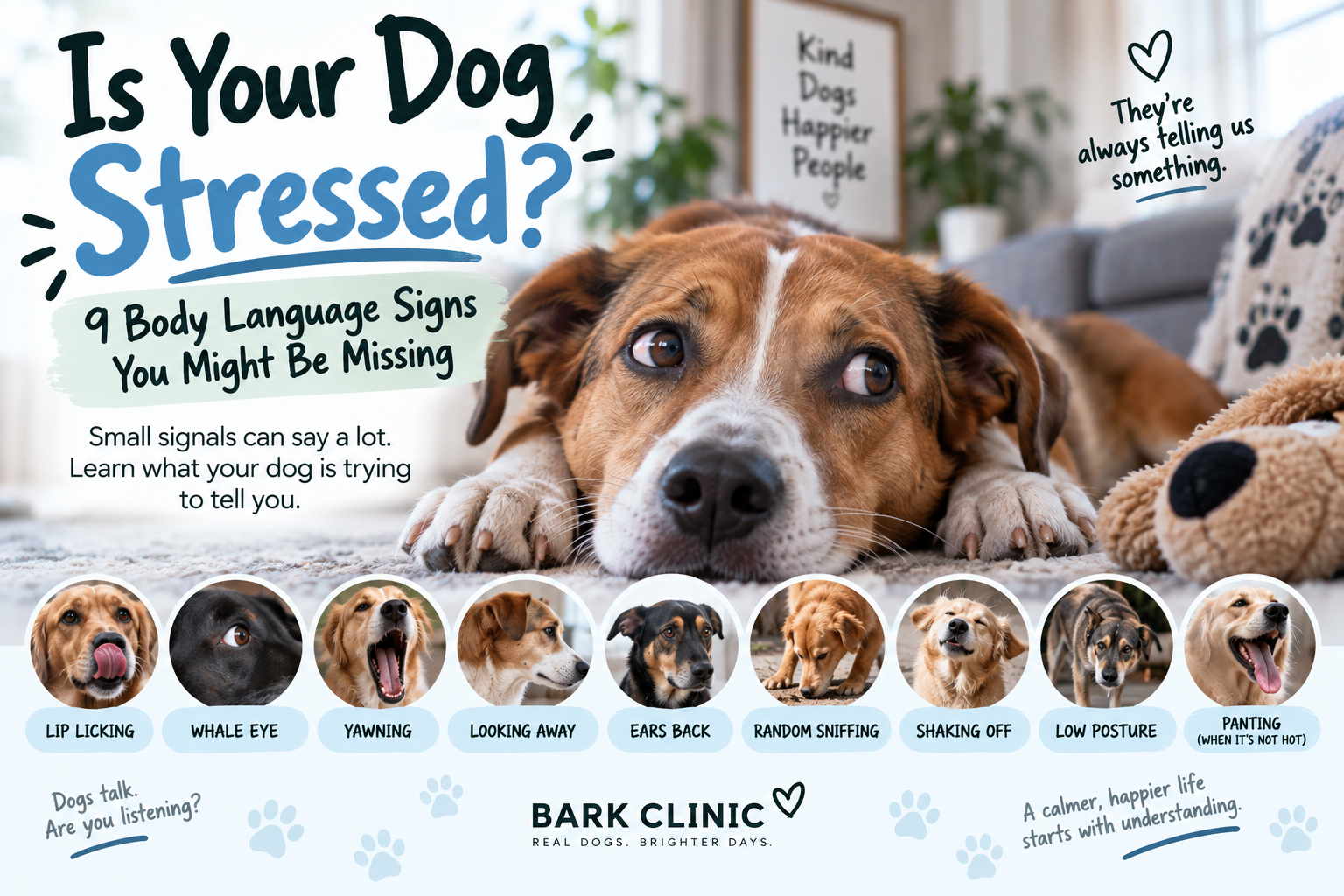
Is Your Dog Stressed? 9 Body Language Signs You Might Be Missing
Read article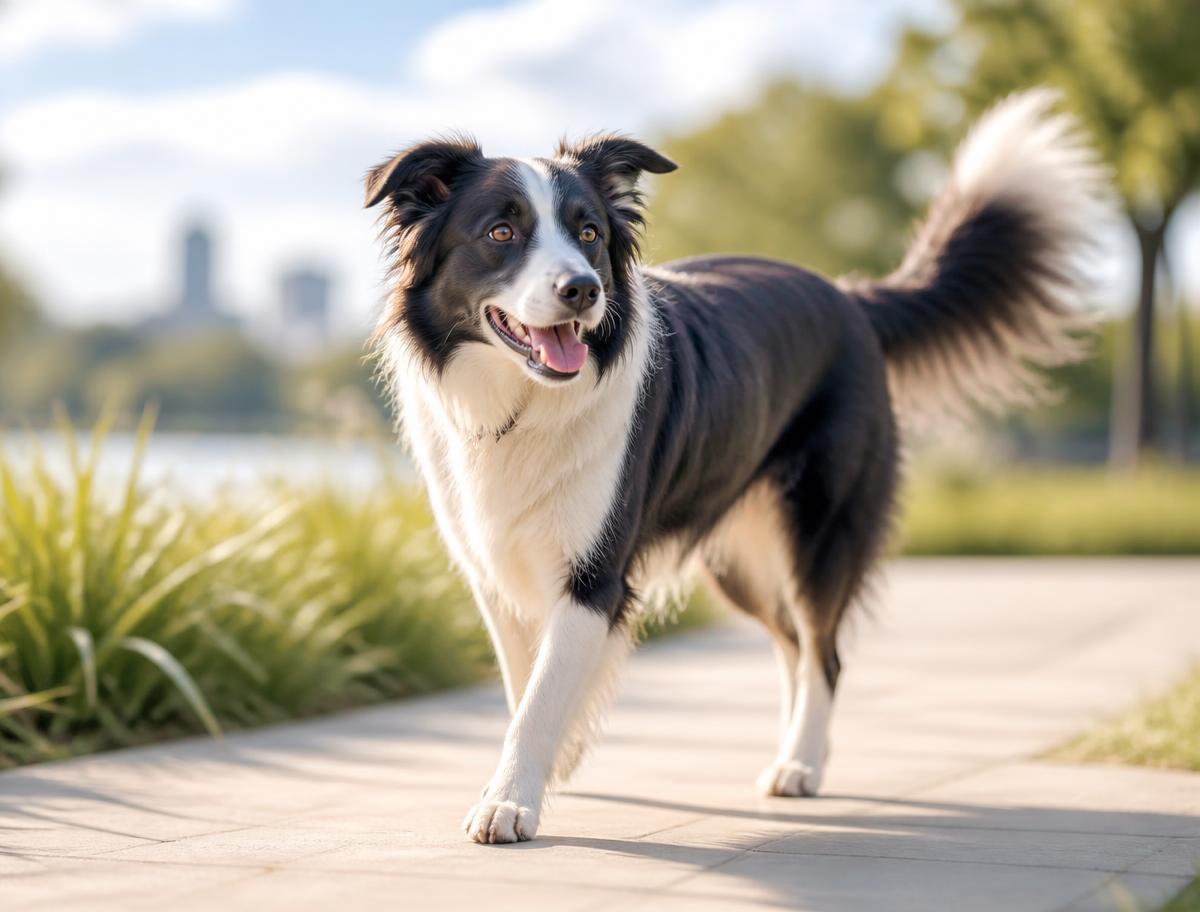
What Your Dog's Tail Is Really Telling You
A wagging tail doesn't always mean a happy dog. Learn to read speed, height, and direction — and what each combination actually signals.
Read article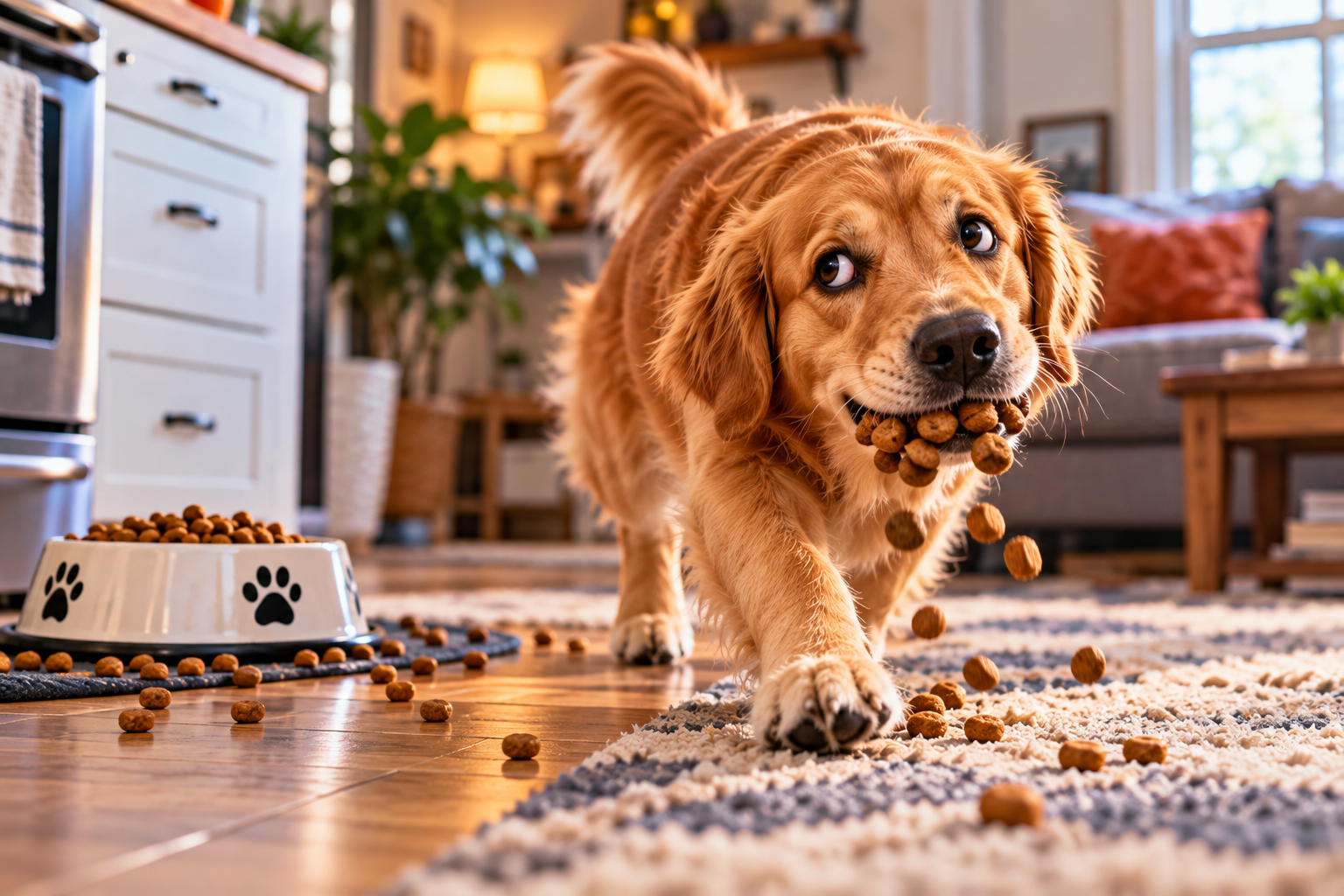
Why Does My Dog Take Food Out of Their Bowl to Eat Somewhere Else?
Your dog has a perfectly good food bowl, so why does dinner always end up on the carpet? Discover seven possible explanations for this quirky habit and when it might signal a problem.
Read article