Dog food bags are covered in confident wolves, mountain scenery and ingredients that appear to have their own publicists. The information that matters most is usually printed in smaller type on the back.
Learning how to read a dog food label does not mean choosing food by one magical ingredient. It means checking whether the diet is complete and balanced for your dog's life stage, understanding what the required numbers can and cannot tell you, and discussing individual needs with your veterinarian.
Start With the Nutritional Adequacy Statement
Look for language stating that the food is complete and balanced for a particular life stage. This statement tells you whether the product is intended to serve as a dog's main diet and identifies the dogs for whom it was formulated.
Growth or reproduction: intended for puppies or pregnant and nursing dogs.
Adult maintenance: intended for adult dogs, not growing puppies.
All life stages: formulated to meet requirements that include growth and reproduction.
Intermittent or supplemental feeding only: not intended to be the sole long-term diet unless directed by a veterinarian.
Large-breed puppies have specific nutritional considerations, so owners should look for the appropriate growth language and ask their veterinarian about a suitable diet.
Read the Guaranteed Analysis Carefully
The guaranteed analysis lists minimum percentages for crude protein and crude fat and maximum percentages for crude fiber and moisture. The words minimum and maximum matter: the figures are boundaries, not necessarily the exact amount in every serving.
The guaranteed analysis is useful for a quick overview, but comparing canned and dry foods directly can be misleading because their moisture levels are so different. A meaningful comparison may require converting nutrients to a dry-matter basis. Your veterinarian or a board-certified veterinary nutritionist can help when exact comparisons matter.
Understand the Ingredient List
Ingredients are listed in descending order by weight as they are added during manufacturing. Ingredients with more water may appear higher before cooking, so the first ingredient alone does not reveal the quality or overall nutritional value of the finished food.
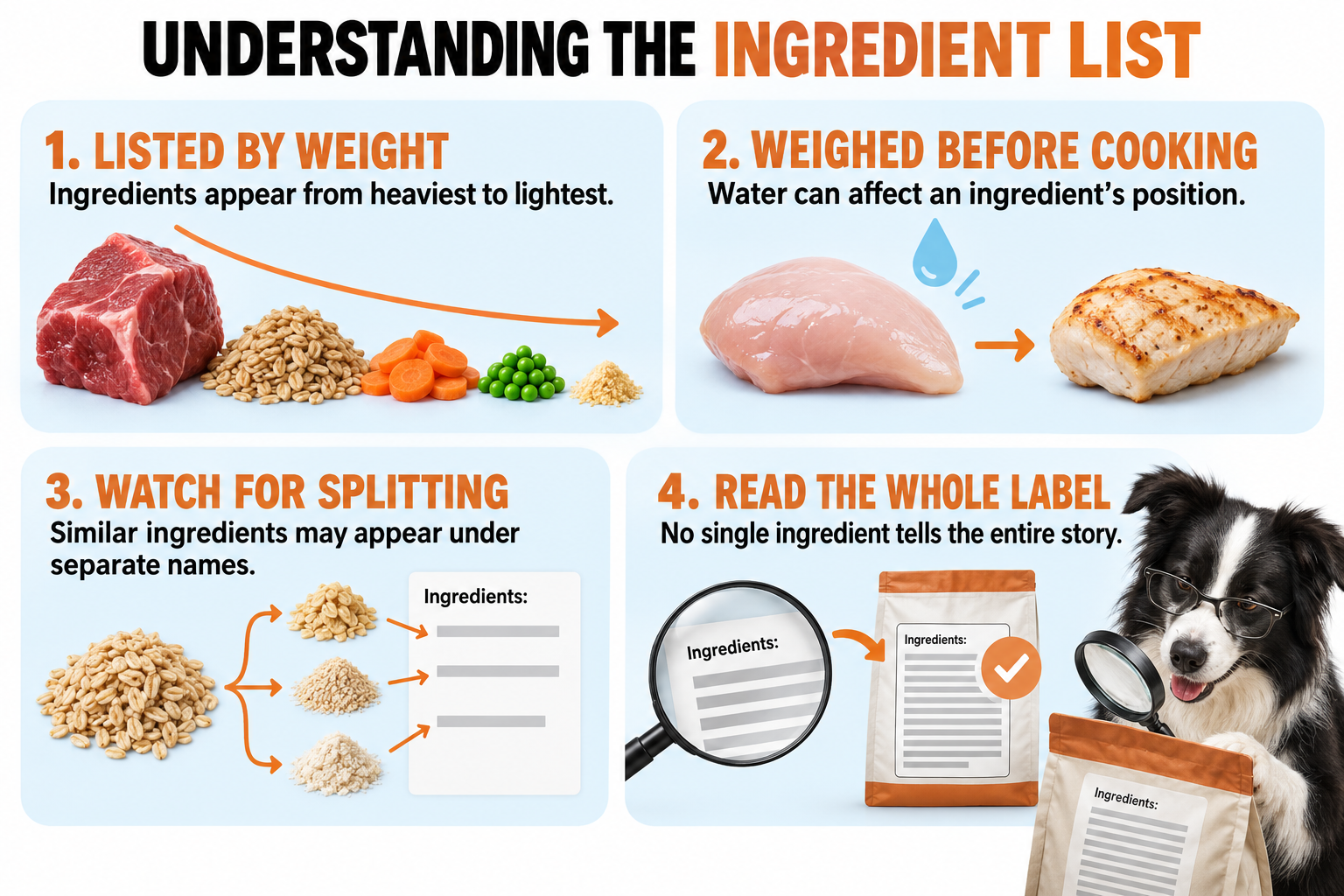
Do not let one familiar-sounding ingredient make the entire decision. Nutrients come from the full formulation, and ingredients that sound less appealing to humans can still provide useful nutrition for dogs. Marketing language such as premium, holistic or ancestral may shape how a product feels without answering whether it suits your individual dog.
Find the Calorie Content
The calorie statement may list kilocalories per cup, can, tray, piece or kilogram. In everyday nutrition language, a kilocalorie is what most people call a calorie. Use this number with a measured portion to understand what your dog actually eats.
Two foods can recommend similar-looking scoop sizes while delivering different calories. That matters when changing foods or managing weight. Transition gradually and calculate the new portion rather than automatically transferring the old number of cups.
Treat Feeding Directions as a Starting Point
Feeding directions are designed for a broad population. Your dog's energy needs can vary with age, activity, body condition, reproductive status, health and environment. Measure food accurately, monitor weight and body condition, and adjust with veterinary guidance.
Check the Manufacturer and Contact Information
A label should identify the manufacturer or distributor and provide a way to contact the company. A responsible manufacturer should be able to answer practical questions about calorie content, quality control, who formulates the food and whether the finished diet undergoes nutritional testing.
The lot number and best-by date also matter. Save the package or photograph this information after opening a new food, particularly if you transfer kibble into another container. Those details can be important if a recall or quality concern arises.
Do Not Choose a Diet by Marketing Claims Alone
Words and pictures on the front of a bag are designed to be noticed. Claims such as natural, grain-free, high-protein or limited-ingredient may describe part of the product, but they do not automatically make it the best choice for your dog.
A diet should match the dog's life stage, medical needs and ability to maintain a healthy body condition. Dogs with allergies, gastrointestinal disease, kidney disease, urinary conditions or other health concerns may need a veterinary diet rather than an over-the-counter product selected by its front label.
A 60-Second Dog Food Label Check
1. Confirm the food is complete and balanced for your dog's life stage.
2. Check calories per cup, can or serving.
3. Review the guaranteed analysis without comparing wet and dry foods at face value.
4. Read the full ingredient list, not only the first item.
5. Find feeding directions, manufacturer contact information, lot number and best-by date.
6. Ask your veterinarian whether the food fits your dog's health and body-condition goals.
The Bark Clinic Bottom Line
The best dog food label is not the one with the most beautiful chicken breast on the front. Start with the nutritional adequacy statement, life stage, calorie content and feeding directions. Use the guaranteed analysis and ingredient list as pieces of the full picture, then let your dog's health and veterinary guidance finish the decision.
Frequently Asked Questions
Does the first ingredient need to be meat?
The first ingredient reflects weight before processing and does not independently prove that a food is better or worse. Evaluate the complete formulation and the diet's nutritional adequacy.
What does crude protein mean?
Crude protein is an estimate based on the food's nitrogen content. It reports the amount, not the digestibility, amino-acid balance or overall quality of the protein.
Is grain-free food better for dogs?
Not automatically. Grain-free is a formulation characteristic, not a universal marker of quality. Choose it only when it meets an individual dog's needs and has been discussed with a veterinarian.
This article is educational and is not a substitute for veterinary care. If your dog is unwell, contact your veterinarian.