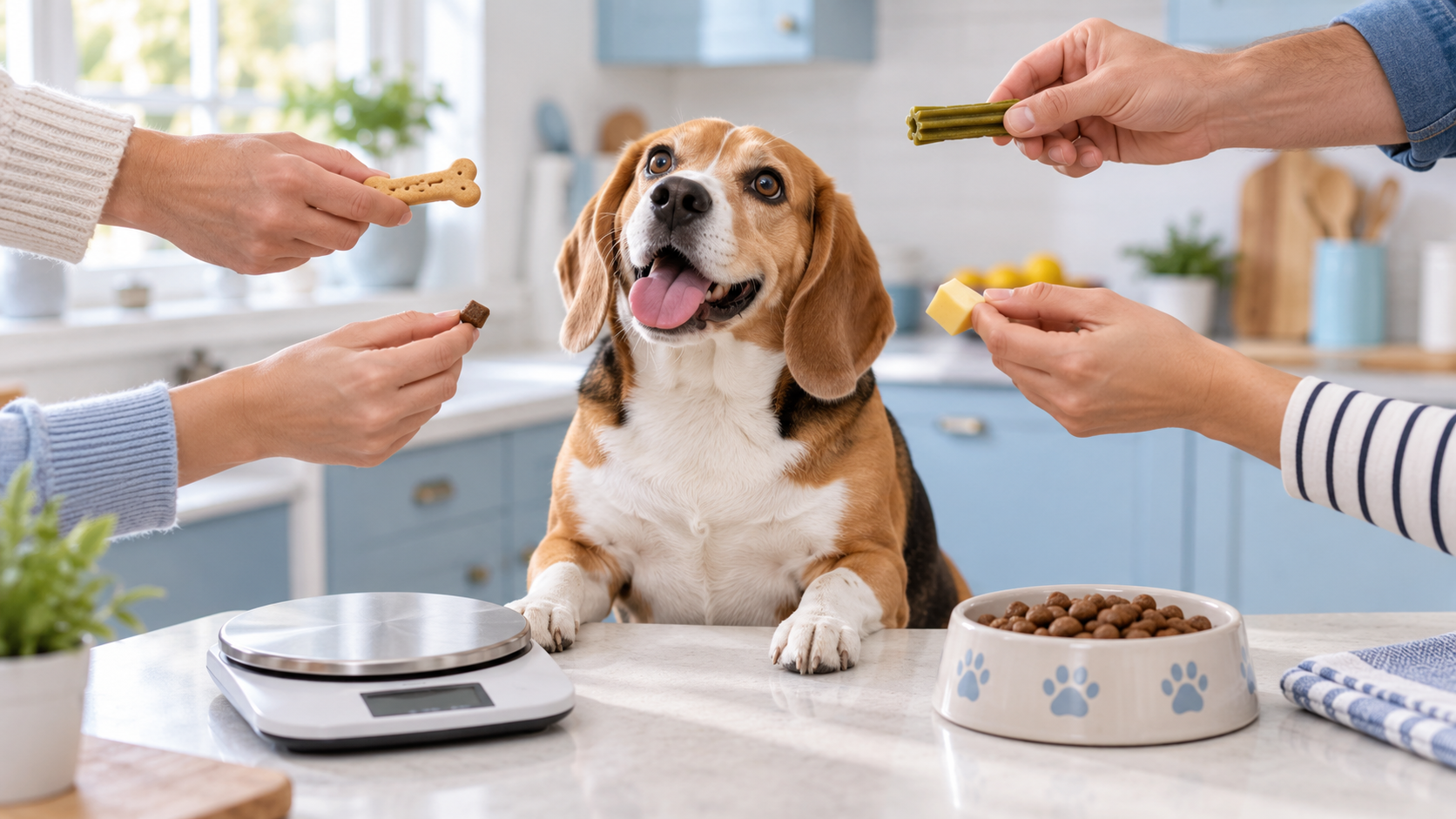
Your dog may insist that treats do not count if they are eaten directly beside the refrigerator. Unfortunately, calories remain stubbornly committed to science.
Dog treat calories can add up faster than many owners realize because the extras arrive from several directions: a biscuit after breakfast, training rewards, a dental chew, a bite of cheese and something mysteriously dropped during dinner. None may look like much on its own. Together, they can become a second meal.
How Many Treats Should a Dog Have?
Veterinary nutrition guidance commonly recommends that at least 90% of a dog's daily calories come from complete and balanced food. Treats and other extras should generally stay at 10% or less. That 10% includes commercial treats, chews, table food, food used for training and extras stuffed into enrichment toys.
The appropriate calorie target is different for every dog. Size matters, but so do age, activity, body condition, whether the dog is spayed or neutered, and any medical conditions. The feeding guide on a bag is a starting point, not a personalized verdict.
The Treats Owners Forget to Count
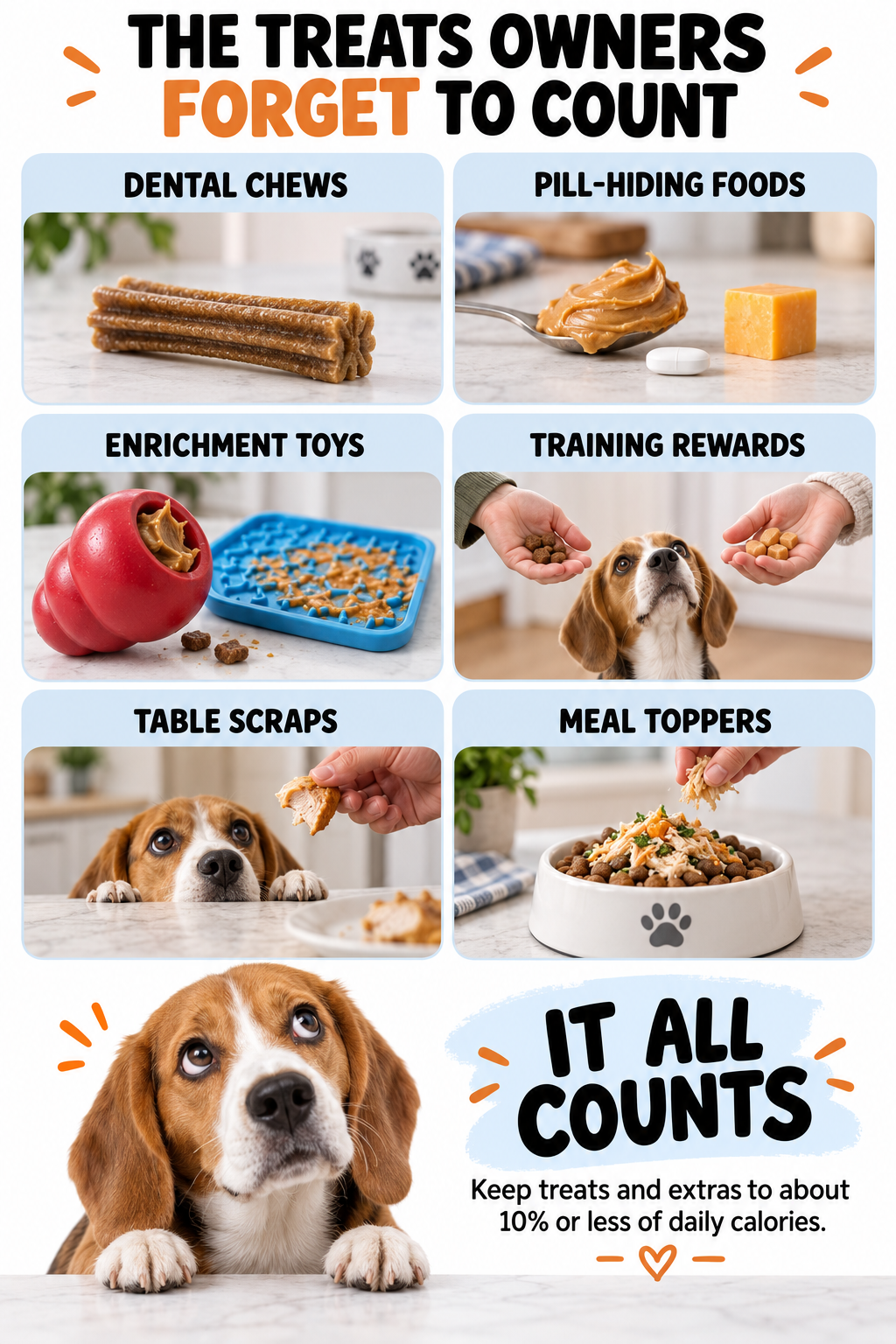
Dental chews and long-lasting edible chews
Peanut butter, cheese or deli meat used to hide medication
Food placed in puzzle toys, lick mats and frozen enrichment toys
Training rewards given by more than one person
Table scraps and bites offered while cooking
Toppers added to make regular meals more exciting
Your dog is not running a coordinated scam. Probably. But a household can easily double-reward a dog when nobody knows who already handed out the morning chew.
Why Small Dogs Feel Treat Calories More
A calorie is the same unit for every dog, but it represents a much larger share of the day for a small dog. A snack that looks tiny in a human hand may be generous for a ten-pound dog. That is why the calorie statement on the package is more useful than judging a treat by its physical size.
How to Find Calories on a Dog Treat Label
Look for a calorie content statement, often written as kilocalories per treat, per piece, per cup or per kilogram. In pet-food labeling, one kilocalorie is the unit people normally call a calorie. If the package lists calories per cup but you feed individual pieces, measure or weigh the portion instead of guessing.
If the calorie information is difficult to find, check the manufacturer's website or contact the company. A treat does not become calorie-free because the number is printed in a font that requires detective equipment.
Seven Ways to Reward Your Dog Without Overfeeding
1. Break soft treats into smaller pieces. Most dogs care about receiving a reward more than its architectural dimensions.
2. Reserve part of the dog's measured meal and use that kibble for training.
3. Choose small, lower-calorie treats when training requires frequent rewards.
4. Use praise, play, sniff breaks or access to a favorite activity when food is not necessary.
5. Pre-portion the day's treats into one container so the whole household can see what remains.
6. Count food used in enrichment toys as part of the daily plan.
7. Ask your veterinarian to calculate a calorie target if your dog needs to lose weight.
Signs the Extras May Be Too Much
Slow weight gain is easy to miss when you see your dog every day. Your veterinarian can assess body condition, but you can also watch for changes at home. You should usually be able to feel the ribs under a light layer of tissue, see a waist from above and notice an abdominal tuck from the side. Breed and coat can affect appearance, so use these as conversation starters rather than a home diagnosis.
Schedule a veterinary visit if your dog gains or loses weight without an obvious reason. Sudden changes can reflect more than snack habits.
The Bark Clinic Bottom Line

Treats are part of a happy life with dogs. The goal is not to confiscate every biscuit and replace joy with a spreadsheet. Keep extras near 10% or less of daily calories, make pieces appropriately small and count everything that goes into the dog - even the cheese they received after performing the emotionally demanding task of looking at you.
Frequently Asked Questions
Do dental chews count as treats?
Yes. Edible dental chews provide calories and should be included in the day's total.
Can I use regular dog food as training treats?
Yes. Setting aside part of a measured meal is one of the easiest ways to reward frequently without adding as many extra calories.
Are vegetables always low-calorie treats?
Some dog-safe vegetables are lower in calories than many commercial treats, but portions still matter. Avoid toxic foods and check with your veterinarian if your dog has a medical condition or prescription diet.
This article is educational and is not a substitute for veterinary care. If your dog is unwell, contact your veterinarian.