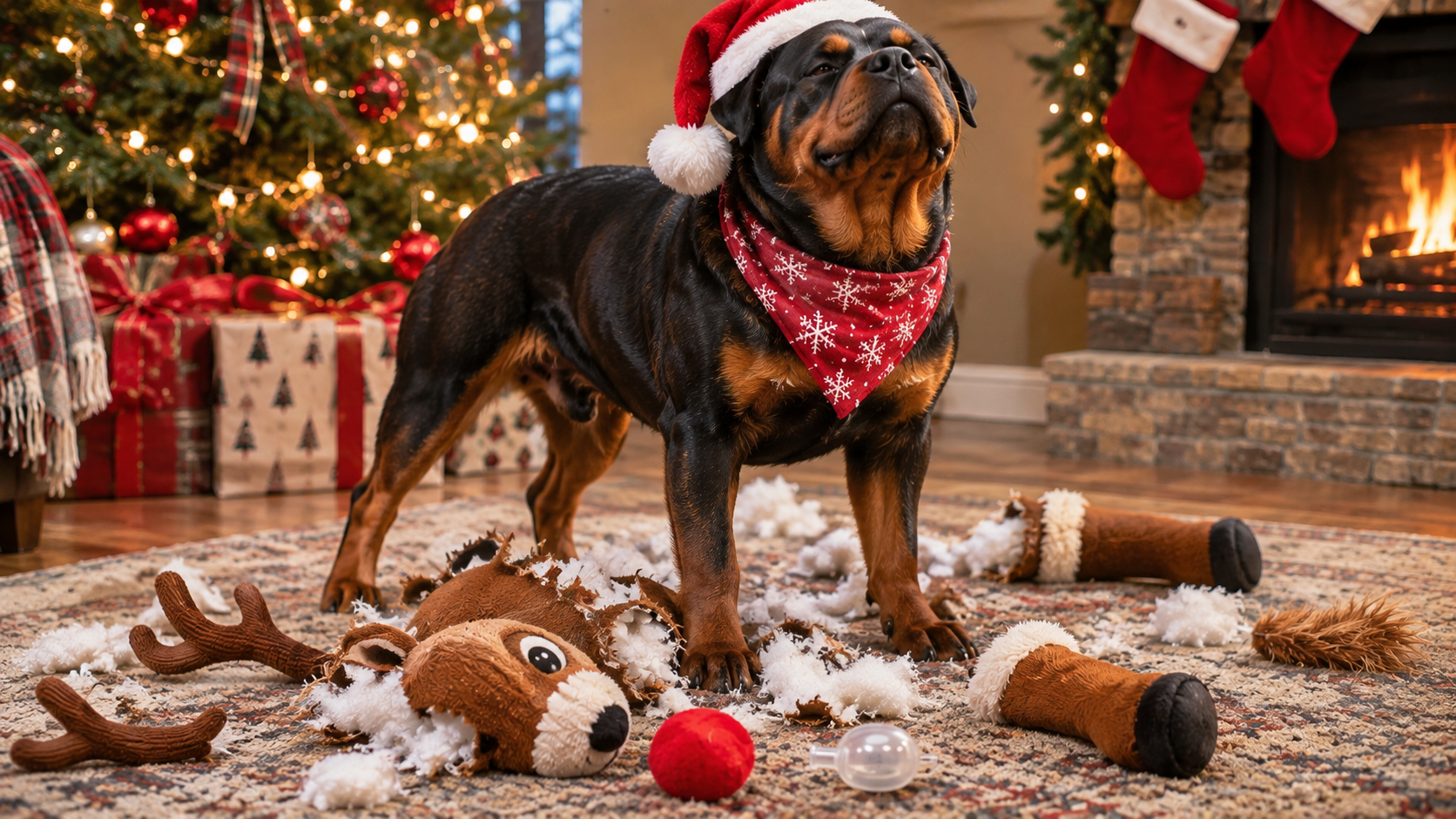
Last Christmas, you bought your dog an adorable stuffed reindeer.
It had a red nose, little antlers, and a festive squeaker.
Your dog loved it.
For approximately 43 seconds.
Then the reindeer exploded.
Stuffing everywhere.
One antler under the couch.
A squeaker mysteriously missing.
And your dog standing in the wreckage looking incredibly proud.
If this sounds familiar, you’re shopping for a dog who treats toys like demolition projects.
But there’s good news.
You don’t necessarily need tougher toys.
You need better-matched toys and activities.
Why Some Dogs Destroy Toys So Quickly
Chewing is normal canine behavior.
Dogs explore objects with their mouths, and some enjoy chewing much more intensely than others.
Destructive chewing can also be associated with boredom, frustration, stress, or inadequate opportunities for appropriate activity.
However, chewing isn’t always a simple boredom problem.
If your dog suddenly starts destroying household items, swallows objects, or shows other concerning behavioral changes, consult your veterinarian.
For otherwise healthy dogs who love shredding their presents, these ideas may help.
11 Christmas Gift Ideas for Destructive Dogs
A Durable Rubber Enrichment Toy
A well-made rubber toy designed for your dog’s size and chewing style is a reasonable starting point.
Look for flexible but sturdy construction.
Avoid toys that are small enough to swallow or that begin shedding pieces.
A Stuffable Food Toy
A stuffable toy offers something more interesting than plain chewing. Add a portion of your dog’s normal meal.
Now the toy has a job.
Your dog must work to retrieve the food.
Start easy and increase the challenge gradually.
A Heavy-Duty Food Puzzle
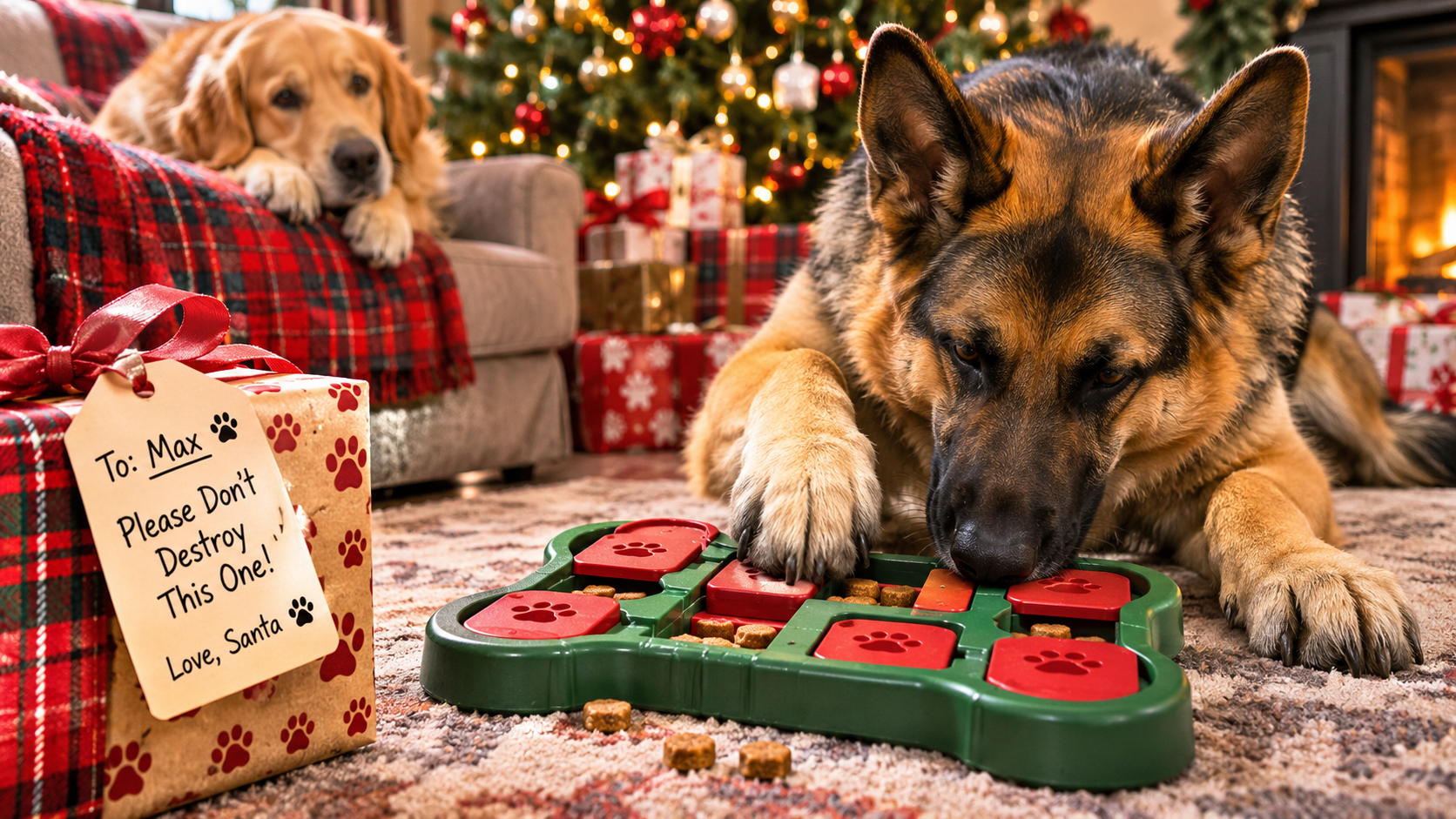
Some destructive dogs are enthusiastic problem-solvers.
Choose a puzzle with appropriately sized components and a design that doesn’t encourage your dog to chew or swallow loose pieces.
Supervise play and remove the puzzle when the activity is finished.
A Dog-Specific Rubber Ball
For dogs who love chasing things, a correctly sized rubber ball can be a better choice than a fragile plush toy.
Avoid balls small enough to lodge in the throat.
Inspect them for cracks or missing pieces.
A Supervised Tug Toy
A sturdy tug toy can provide an outlet for dogs who love pulling and gripping.
Make it a shared game.
When the session ends, put the toy away if your dog would otherwise chew it apart.
A Training Treat Pouch
This gift is technically for the human, but your dog will probably approve. A treat pouch makes it easier to reward good behavior during short training sessions. Practice simple cues, tricks, or impulse-control games.
A dog who enjoys having a task may appreciate the attention more than another stuffed squirrel.
A Sniffing Adventure
No purchase required. Take your dog on a relaxed walk where they have opportunities to investigate safe smells. Let them explore at their own pace.
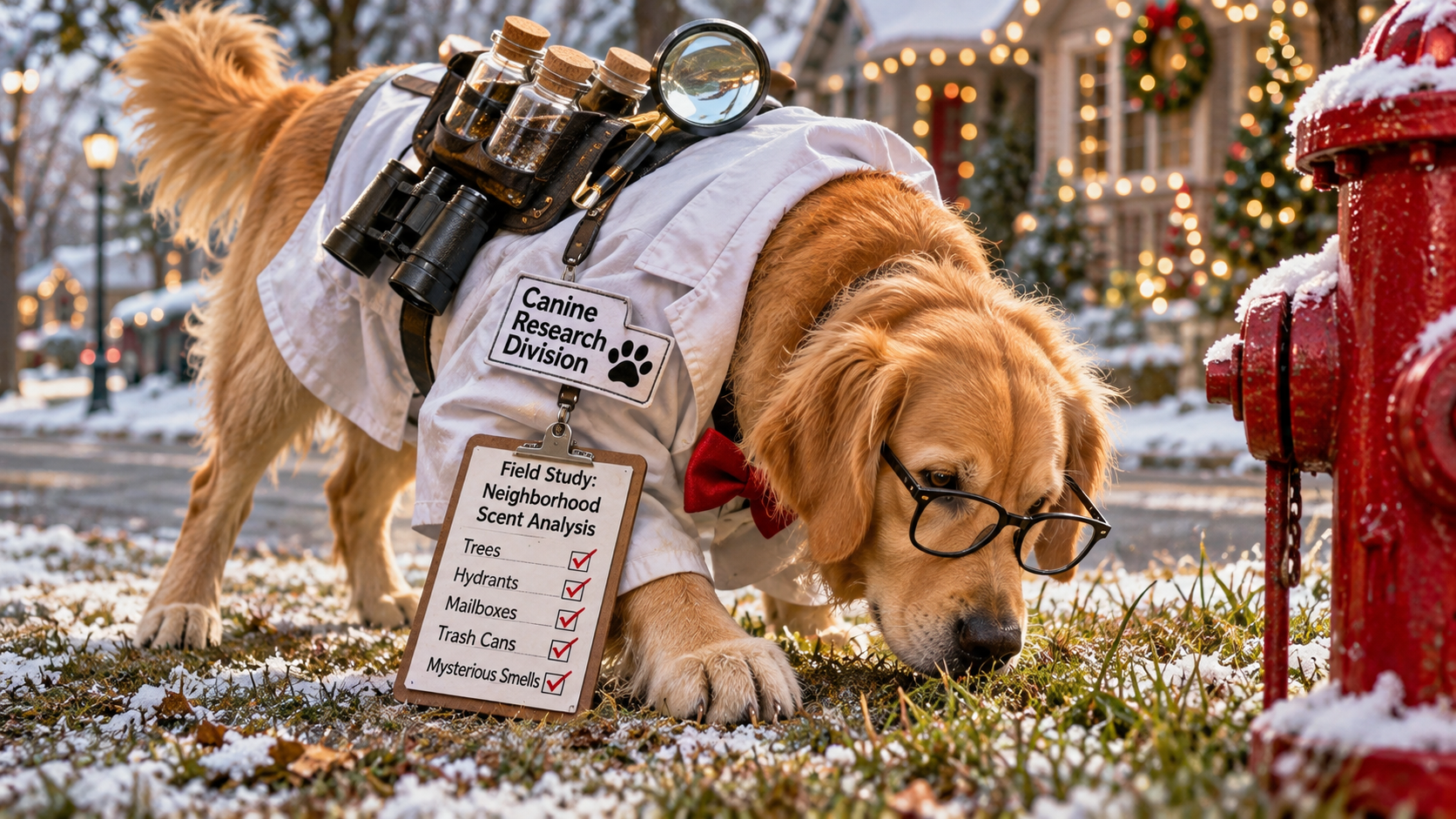
Your dog doesn’t need to set a personal speed record. They’re conducting important neighborhood research.
A Washable Feeding Mat
For food-motivated dogs who don’t chew fabric, a suitable feeding mat can turn mealtime into a searching activity.
However, dogs who shred or swallow fabric should avoid this option.
A Rotating Toy Collection
Instead of buying 12 new toys, try rotating a few safe favorites. Put some away temporarily and reintroduce them later.
Novelty can make familiar toys interesting again. Give the individual toys different names, and encourage your dog to retrieve each one specifically.
A Personalized Training Session
Book a session with a qualified reward-based trainer if destructive behavior is persistent or difficult to manage. This is particularly useful when chewing is connected to anxiety or other behavioral concerns.
Sometimes, this is the best option to protect an overzealous pup from hurting itself.
A Christmas Enrichment Basket
Combine a few carefully chosen items:
A food-dispensing toy, appropriate treats, and a simple activity guide.
Rather than filling the basket with random merchandise, build it around what your dog enjoys.
What About Antlers, Bones, and Extremely Hard Chews?
Here’s where Christmas shopping gets tricky. A product labeled heavy-duty isn’t automatically safe. Extremely hard chews can damage teeth.
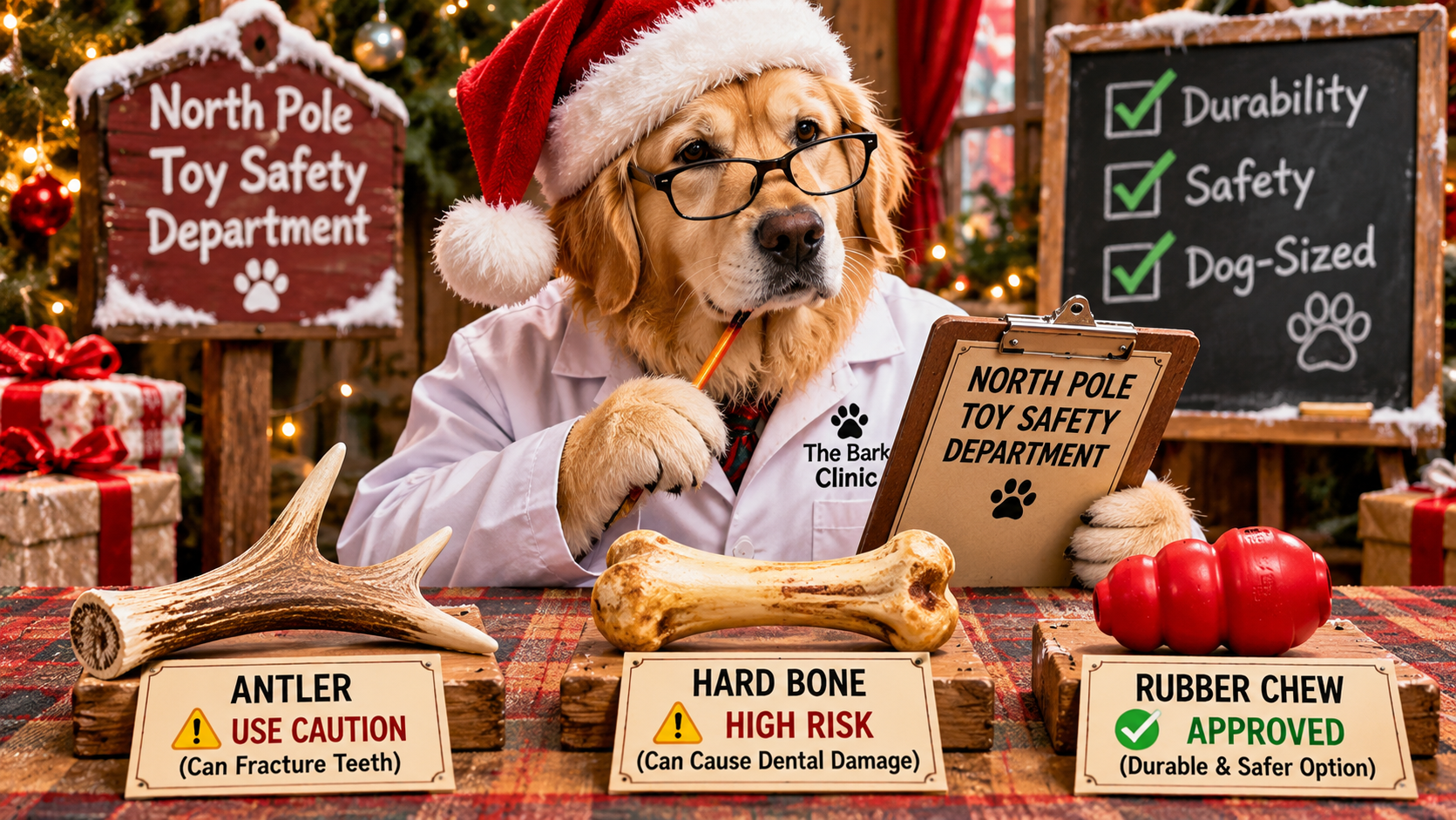
The American Kennel Club notes that hard chewing objects, including some bones and antlers, can contribute to dental fractures. It recommends choosing products appropriate for the individual dog and consulting a veterinarian when uncertain.
A toy should also be large enough to avoid becoming a choking hazard. If your dog breaks off pieces, remove the item immediately.
And if your dog swallows a toy component, contact your veterinarian promptly rather than waiting for symptoms.
What If Your Dog Destroys Everything?
A dog who destroys toys may need more than a different shopping list.
Consider whether they’re receiving enough physical activity, mental enrichment, and appropriate chewing opportunities.
Also pay attention to when the destruction happens.
If it occurs primarily when your dog is alone, separation-related distress may be involved.
If it happens during exciting play, the dog may simply need a more appropriate outlet.
Avoid punishing your dog after discovering damaged objects. Instead, manage access to unsafe items and reward appropriate behavior.
The Christmas Gift That Actually Matters
You don’t have to win a competition against your dog’s jaws.
You need to provide safe, enjoyable activities.
Your dog might never become the gentle owner of a pristine stuffed reindeer.
That’s okay.
Santa understands.
Probably.
And if your dog has already destroyed three Christmas presents, there’s always our free Naughty or Nice Dog Report Card.
The verdict may be complicated.
This article is educational and is not a substitute for veterinary care. If your dog is unwell, contact your veterinarian.
Keep reading
15 Christmas Gifts for Dogs Who Already Have Everything (Except Self-Control)
Your dog already owns 47 toys, three beds, and approximately 80% of your couch. Here’s how to find a Christmas present they’ll actually enjoy.
Read article
Your Dog Thinks the Christmas Tree Is a Giant Toy: 10 Ways to Prevent Holiday Disasters
Your Christmas tree is a festive masterpiece. Your dog thinks it's an amusement park. Here's how to keep your decorations standing and your pup safe this holiday season.
Read article
Dogs Settle the Debate: Is Die Hard a Christmas Movie?
Christmas trees. Holiday music. Explosions. One furious Chihuahua. A panel of dogs finally tackles Hollywood's most ridiculous holiday debate.
Read article