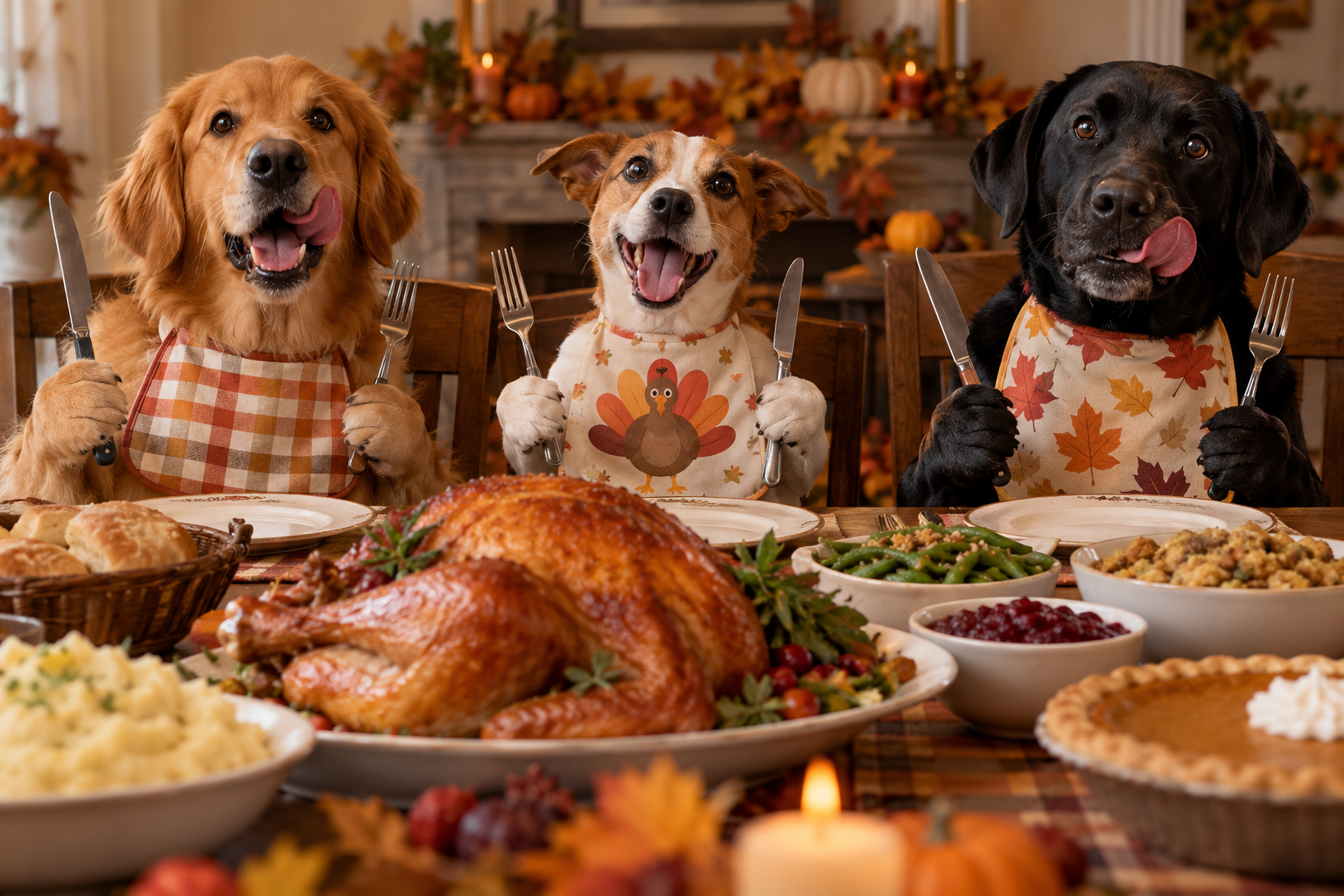
Local Golden Retriever denied a third Thanksgiving dinner. The dog, who reportedly ate breakfast 45 minutes earlier, calls the decision “a personal attack.”
We sympathize. But we also think the humans need to hold onto the serving spoon.
Thanksgiving is a glorious time of year. Family gatherings, cozy fall weather, delicious food, and at least one relative who insists everyone needs another helping of mashed potatoes.
And then there's your dog.
Sitting beneath the table. Making intense eye contact. Acting as though nobody has fed them since the previous Thanksgiving.
But before you surrender a plate to your furry dinner guest, there's something important to know: Not everything on your Thanksgiving table is safe for dogs.
Some holiday foods make perfectly reasonable occasional treats. Others can cause serious digestive problems, poisoning, or an emergency trip to the veterinarian.
Here's how to let your dog enjoy Thanksgiving without turning the holiday into a medical drama.
Can Dogs Eat Thanksgiving Dinner?
Yes, dogs can enjoy small portions of certain Thanksgiving foods, but they shouldn't eat a traditional Thanksgiving dinner.
Plain, fully cooked turkey without skin or bones, unseasoned vegetables, and a little plain pumpkin are generally safe options for healthy dogs.
However, many holiday recipes contain ingredients dogs should avoid, including onions, garlic, excessive fat, chocolate, grapes, and raisins.
The safest approach? Serve your dog's regular food and add a small, dog-friendly holiday treat if appropriate.
Your dog may disagree with this policy. Fortunately, they don't get a vote.
The Safe Base: Stick to Their Regular Dinner
Your dog's usual complete-and-balanced food should remain the main course, even on Thanksgiving.
If your veterinarian hasn't recommended dietary restrictions, you can offer a few small, plain extras.
Dog-friendly Thanksgiving options include:
Turkey: Fully cooked, boneless, skinless, and free of seasoning.
Green beans: Plain, cooked or raw, cut into manageable pieces.
Carrots: Plain and chopped into appropriately sized pieces.
Sweet potatoes: Fully cooked without butter, sugar, or seasoning.
Pumpkin: A small spoonful of 100% plain pumpkin puree, not pumpkin pie filling.
Keep extras small. Treats and other foods outside your dog's regular balanced diet should generally account for no more than 10% of their daily calories, and a Thanksgiving treat may need to be much smaller.
Even safe foods can cause stomach upset when introduced suddenly.
The Bark Clinic rule: If Grandma's recipe calls for three sticks of butter, your dog doesn't need a sample.
Foods That Must Stay on the Human Table
Some Thanksgiving dishes are risky because they're rich or heavily seasoned. Others contain ingredients that are genuinely toxic to dogs.
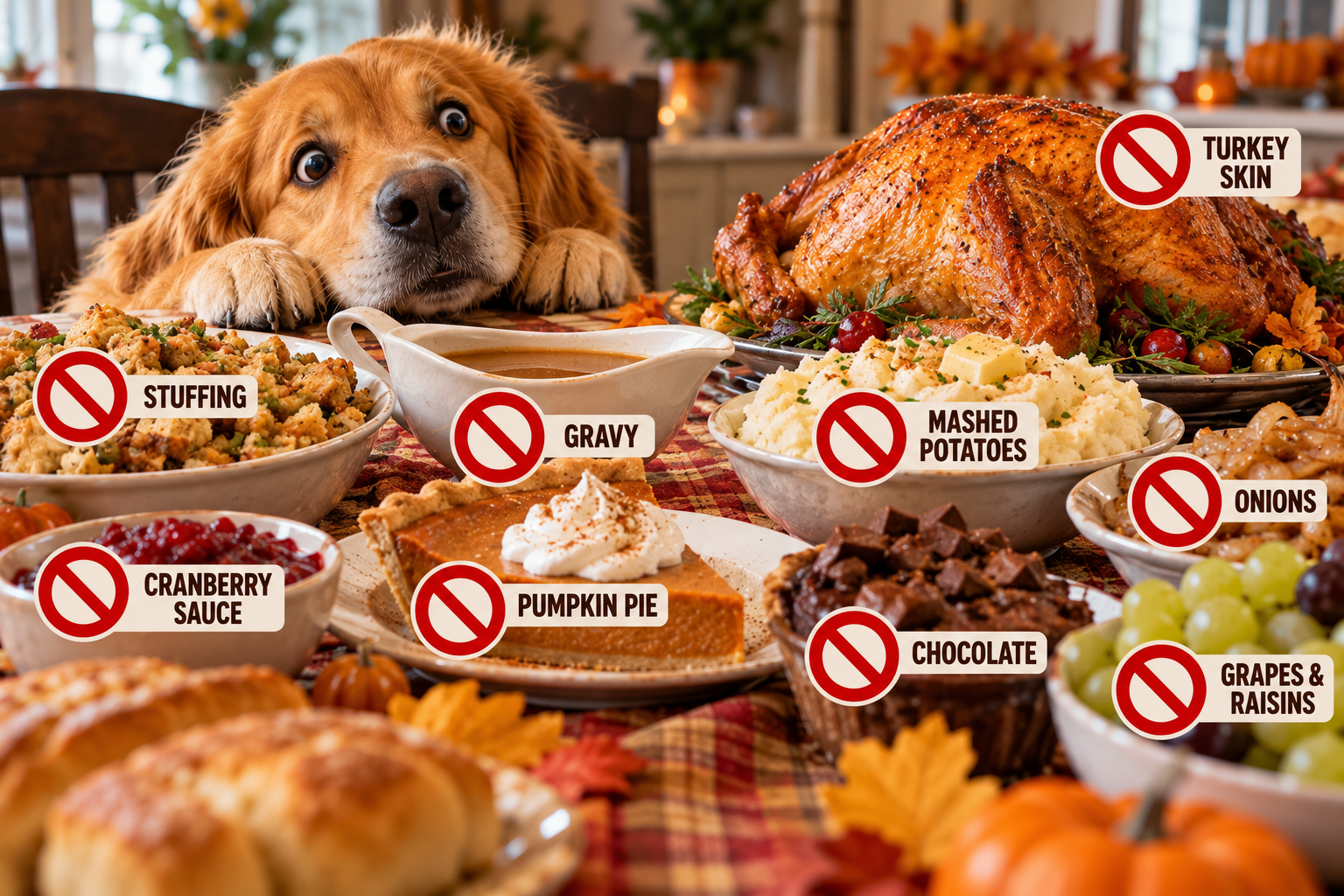
Here's what to watch for.
⛔Stuffing: A Delicious Little Danger Zone
Stuffing frequently contains onions, garlic, or both.
These ingredients are toxic to dogs and can damage red blood cells, potentially causing anemia.
Cooking doesn't make onions or garlic safe.
⛔Gravy and Turkey Skin: Too Much of a Good Thing
Rich gravy, turkey skin, butter, and fatty meat drippings can cause vomiting or diarrhea.
In some dogs, high-fat foods can also trigger pancreatitis, a potentially serious inflammation of the pancreas.
Your dog doesn't need gravy. They're already convinced every meal is a five-star dining experience.
⛔Turkey Bones: Absolutely Not
Cooked poultry bones can splinter, potentially causing choking, digestive injuries, or intestinal blockages.
Keep the turkey carcass and discarded bones out of reach, including in the trash.
⛔Grapes and Raisins: A Serious Emergency
Grapes and raisins can cause acute kidney injury in dogs.
The dangerous amount is unpredictable, so don't assume a small quantity is harmless.
If your dog eats either, contact a veterinarian or animal poison-control service immediately.
⛔Chocolate, Alcohol, and Xylitol: Keep Away
Holiday desserts and drinks can hide dangerous ingredients.
Chocolate contains substances that can affect a dog's heart and nervous system.
Alcohol can cause severe poisoning.
Xylitol, a sweetener sometimes listed as birch sugar, can cause a dangerous drop in blood sugar and liver damage.
Keep desserts, cocktails, and sugar-free treats securely away from curious noses.
⛔Raw Yeast Dough: A Rising Problem
Unbaked yeast dough can expand inside a dog's stomach, causing dangerous bloating.
Fermenting yeast also produces alcohol, creating another potentially life-threatening risk.
⛔Pumpkin Pie: Sorry, Buddy
Plain pumpkin and pumpkin pie are not the same thing.
Pumpkin pie typically contains sugar, fat, and spices. Some recipes may also contain dangerous sweeteners.
Skip the pie and offer a little plain pumpkin puree instead.
What About Mashed Potatoes and Cranberry Sauce?
These foods aren't automatically poisonous, but their ingredients matter.
Plain, cooked potatoes may be acceptable in tiny portions. Traditional mashed potatoes, however, often contain butter, cream, salt, garlic, or onion.
Likewise, plain cranberries aren't generally toxic to dogs, but cranberry sauce can contain large amounts of sugar or additional ingredients that make it unsuitable.
When you don't know exactly what's in a dish, don't share it.
The 5-Second Thanksgiving Food Test
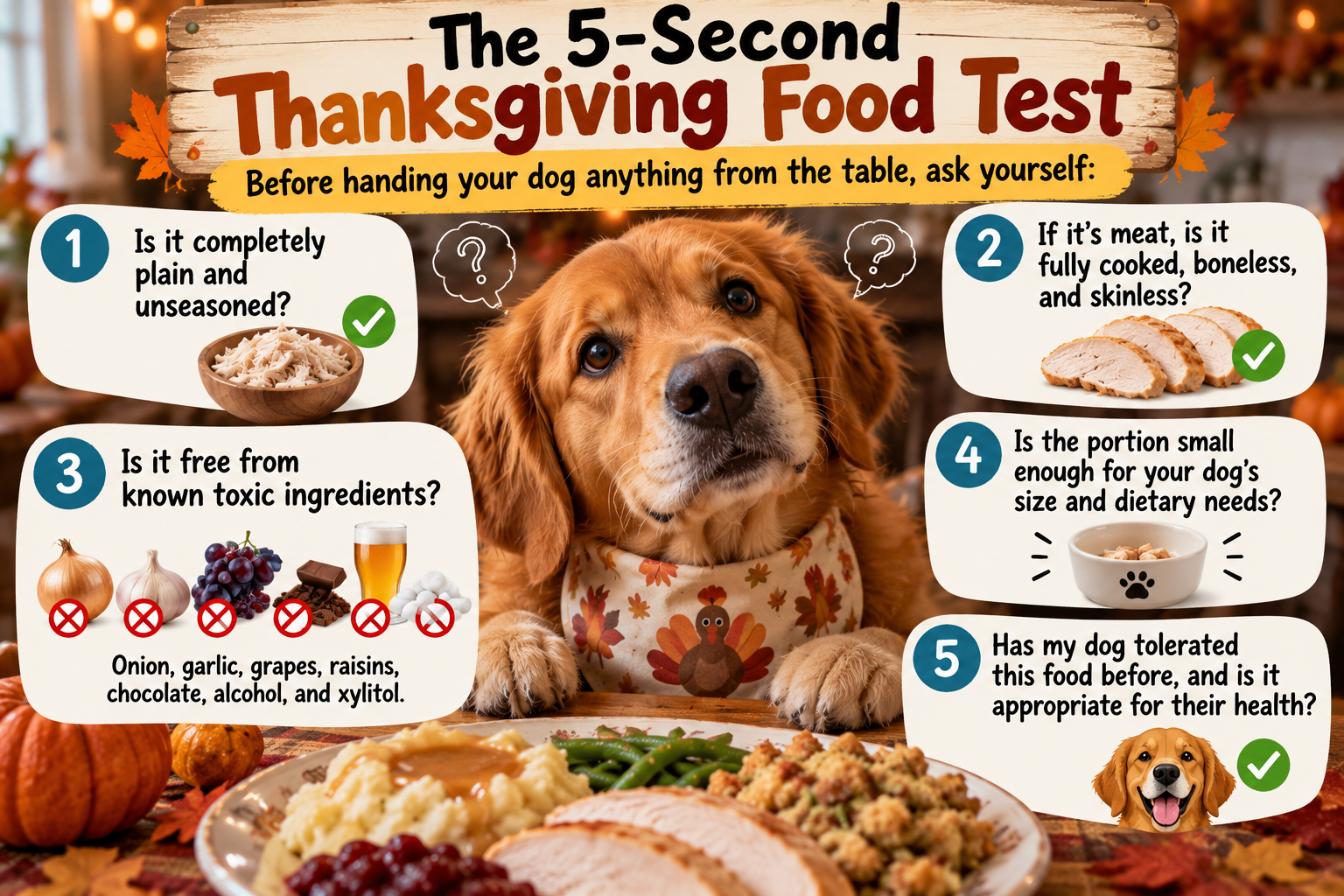
Before handing your dog anything from the table, ask yourself:
Is this food completely plain and unseasoned?
If it's meat, is it fully cooked, boneless, and skinless?
Is it free from known toxic ingredients, including onion, garlic, grapes, raisins, chocolate, alcohol, and xylitol?
Is the portion small enough for my dog's size and dietary needs?
Has my dog tolerated this food before, and is it appropriate for their health?
If any answer is "no" or "I'm not sure," skip it.
And remember: passing this checklist doesn't guarantee a food is safe. Some foods are unsuitable for dogs even without added seasoning.
One more suggestion: Explain the rules to guests before dinner begins.
There's always one relative who believes sharing half a plate of stuffing is an act of love.
How to Include Your Dog Without Sharing the Feast
Thanksgiving doesn't have to revolve around table scraps.
Give your dog their usual meal in a puzzle feeder, prepare a small dog-safe treat, or offer a favorite enrichment activity while everyone eats.
If your dog gets overwhelmed by visitors, provide a quiet place where they can relax away from the excitement.
And if they spend the evening dramatically staring at the turkey?
That's okay, too.
Being mildly disappointed is not a medical emergency.
What to Do If Your Dog Eats Something Dangerous
If your dog eats grapes, raisins, xylitol, chocolate, raw yeast dough, or another potentially toxic ingredient, act immediately.
Don't wait for symptoms.
Remove access to the food and keep your dog away from further exposure.
Contact your veterinarian, emergency animal hospital, or animal poison-control service.
Save packaging or ingredient information if available.
Estimate how much your dog ate and when.
Never induce vomiting or give home remedies unless instructed by a veterinary professional.
For suspected poisoning in the United States:
ASPCA Animal Poison Control: 888-426-4435
Pet Poison Helpline: 855-764-7661
Both offer 24-hour assistance, and consultation fees may apply.
If your dog is collapsing, having seizures, struggling to breathe, or experiencing other severe symptoms, seek emergency veterinary care immediately.
Frequently Asked Questions
Can dogs eat Thanksgiving turkey?
Yes. Small amounts of fully cooked, plain, boneless, skinless turkey are generally safe for healthy dogs. Avoid seasoned turkey, skin, bones, and fatty scraps.
Can dogs eat Thanksgiving mashed potatoes?
Plain cooked potatoes may be okay in small amounts, but mashed potatoes containing garlic, onion, excessive butter, or cream should be avoided.
Can dogs eat stuffing?
It's best not to share stuffing. Many recipes contain onions, garlic, excess fat, and other ingredients unsuitable for dogs.
Can dogs eat pumpkin pie?
Skip pumpkin pie. A small amount of plain, unsweetened pumpkin puree is a better choice for dogs who tolerate it.
What should I do if my dog eats Thanksgiving leftovers?
Identify what was eaten and how much. If the leftovers contain toxic ingredients, bones, or a large amount of fatty food, contact your veterinarian promptly. Don't wait for symptoms after a suspected toxic exposure.
A Happy Thanksgiving Is a Safe Thanksgiving
Your dog doesn't need a mountain of mashed potatoes or an extra helping of stuffing to feel included.
A little attention, their favorite toy, a safe treat, and some quality family time are more than enough.
Will they still stare at you like you've committed an unforgivable betrayal?
Absolutely.
But keeping them healthy is worth the dramatic performance.
Happy Thanksgiving from The Bark Clinic, where we believe every dog deserves a seat at the family celebration—even if they don't get their own gravy boat.
Sources and Further Reading
American Animal Hospital Association: Thanksgiving Foods Pets Should Avoid
Cornell University College of Veterinary Medicine: First Aid for Poisonous Substances
Educational content only. This article is not a substitute for individualized veterinary advice.
This article is educational and is not a substitute for veterinary care. If your dog is unwell, contact your veterinarian.
Keep reading
Five Thanksgiving Side Dishes Dogs Can Enjoy—With One Big Catch
These Thanksgiving sides can become tiny dog-friendly treats when prepared separately and without the ingredients that make casseroles so delicious to humans.
Read article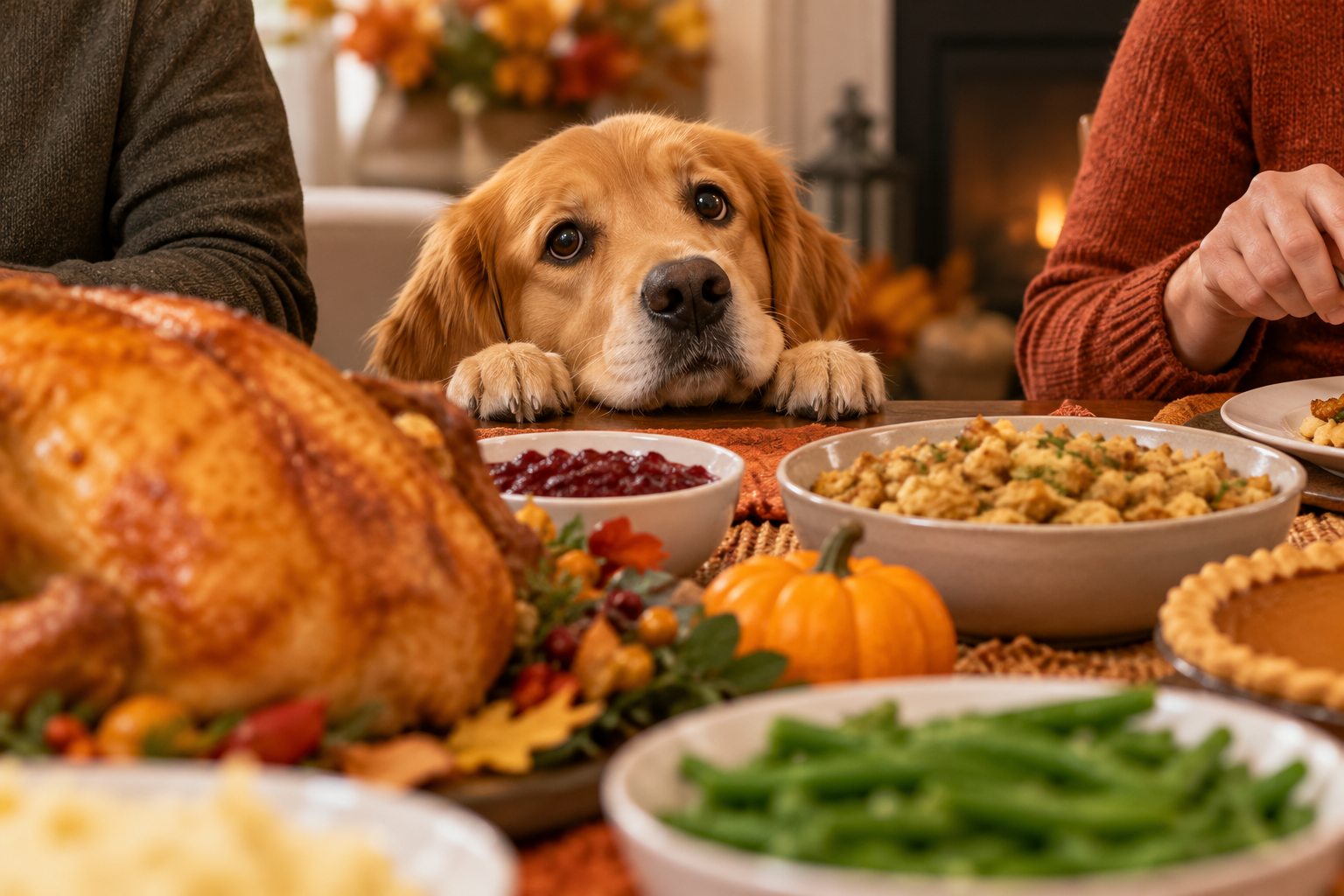
How to Stop Your Dog Begging at Thanksgiving Dinner
The turkey is on the table, and your dog has appointed themselves head of quality control. Here is how to make dinner calmer without scolding.
Read article
Can Dogs Eat Apples? A Safe Snacking Guide
Apples can be a crisp occasional snack for many dogs, but the core and seeds should be removed. Here's the simplest way to prepare them safely.
Read article